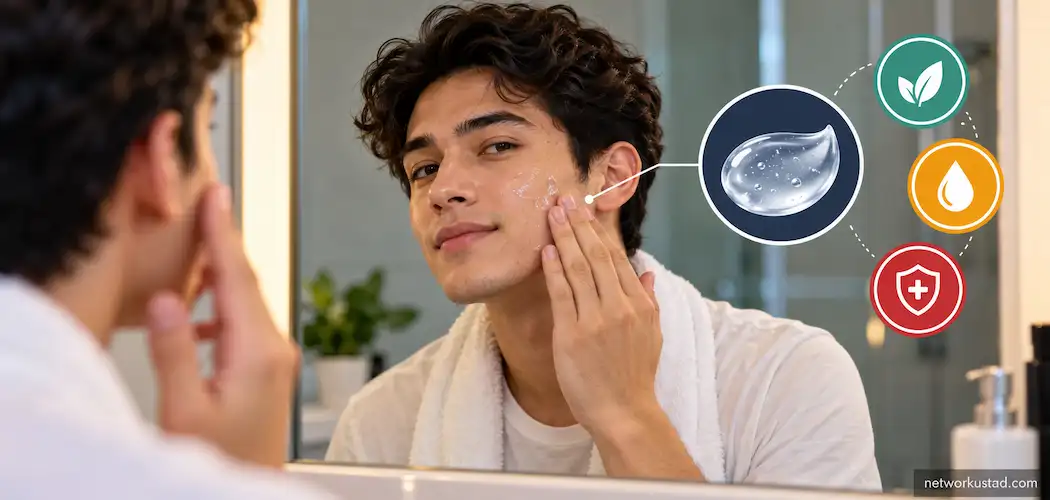
Acne clearing gels are one of the most common over-the-counter options people reach for first. They’re accessible. They don’t need a prescription. And they generally feel lighter on skin than a cream does. That accessibility is genuinely useful. But it’s worth being honest about something most product pages won’t tell you: the clinical evidence behind several of these gels’ active ingredients is weaker than their marketing suggests. That doesn’t mean they’re not worth trying. It just means your expectations should match what’s actually known, not confident claims that outrun the research.
Acne itself is frustrating enough without adding unrealistic expectations on top of it. Knowing which claims about acne clearing gels are solidly backed, which are reasonable but unproven, and which are mostly marketing language helps you build a routine you’ll actually stick with — rather than one built on hype that fizzles out after a few disappointing weeks.
1. They Target Acne-Causing Bacteria and Inflammation
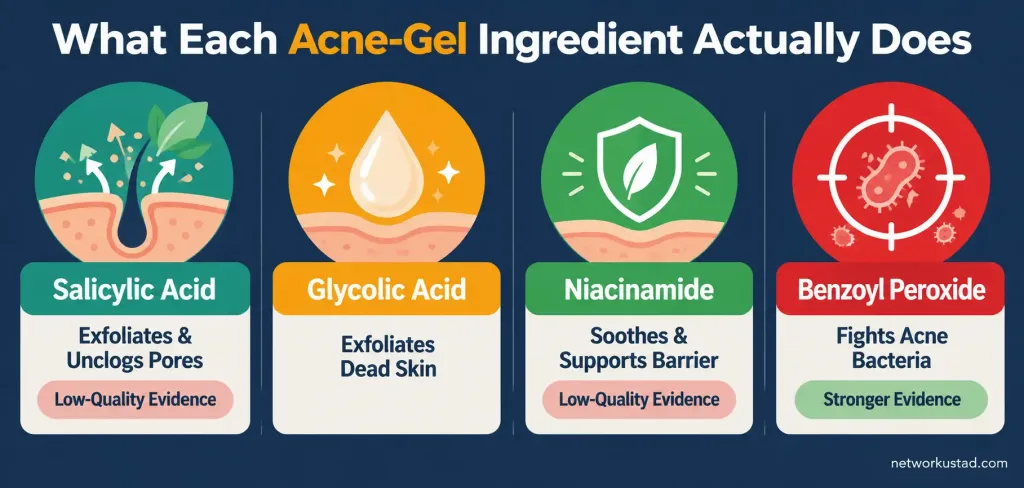
Salicylic acid is the most common active ingredient in acne clearing gels. It’s a beta-hydroxy acid that works mainly as an exfoliant. It clears dead skin and debris from pores, which indirectly reduces the environment acne-causing bacteria thrive in. Worth being precise here: salicylic acid’s main job is exfoliation, not directly killing bacteria the way benzoyl peroxide does.
A 2020 Cochrane systematic review found the clinical evidence for salicylic acid’s effectiveness against acne is weak overall — only low-quality studies exist, and there’s no solid head-to-head data against benzoyl peroxide. That doesn’t mean it doesn’t help. Plenty of people see real improvement using it. But “the research is limited” is the more honest framing than treating it as a proven cure.
2. They Help Remove Dead Skin Cells
Many acne clearing gels also include glycolic acid and niacinamide alongside salicylic acid. Both are used for their exfoliating and skin-barrier-supporting properties. Niacinamide has a reasonable safety profile and some evidence of reducing inflammation. But the same 2020 Cochrane review found its evidence for acne specifically is also low-quality — most studies found it performs about the same as topical antibiotics like clindamycin, not clearly better. Regular, gentle exfoliation is genuinely useful for skin prone to clogged pores. It’s just a supporting mechanism, not a guaranteed fix on its own.
3. They Can Help With Clogged Pores
Clogged pores form from a mix of excess oil, dead skin cells, and bacteria. They’re a central part of how acne develops. Ingredients that clear that buildup can meaningfully reduce new breakouts over time. Gels made for acne-prone skin are usually non-comedogenic, meaning they’re less likely to clog pores further. That’s one of the more legitimate reasons a gel might suit oily or acne-prone skin better than a heavier cream.
4. They May Help Fade Acne Marks Over Time
Consistent use of salicylic acid can help fade post-acne marks and discoloration as skin cell turnover increases. Standard dermatological guidance suggests waiting at least six to eight weeks before judging results. This is a gradual process, not a quick fix. Setting that expectation early avoids a common mistake: giving up after two weeks because nothing’s visibly changed yet, when that timeline was never realistic to begin with.
5. Some Are Developed With Dermatologist Input
Some acne gel brands are formulated or reviewed with dermatologist involvement. That’s worth looking for specifically, rather than assuming every product deserves that credibility by default. A product claiming to be “dermatologist approved” without naming which dermatologist, or what the approval actually covered, is a marketing claim — not a clinical one. Checking the actual ingredient list and concentration against established guidance is a more reliable way to judge a product than the approval label alone.
6. Gel Formulations Suit Oily and Combination Skin Better Than Creams, Generally
Gels tend to be oil-free and lighter than creams. That generally makes them a better fit for oily or acne-prone skin that doesn’t need extra moisturizing. This isn’t a universal rule, though. Very dry or sensitive skin may find a gel too drying on its own. Dermatology sources generally recommend pairing any active-ingredient treatment — gel or cream — with a basic daily moisturizer and sunscreen, to manage the irritation and sun sensitivity that come with exfoliating acids.
What the Research Actually Supports (and Doesn’t)
It’s worth being direct about the evidence picture here, since product marketing rarely volunteers this context. A 2020 Cochrane review looked at salicylic acid, niacinamide, and azelaic acid for acne. Azelaic acid had the strongest supporting evidence of the three. Salicylic acid and niacinamide had only low- or very-low-quality evidence overall. That means their real-world effectiveness, compared to other acne treatments, remains genuinely uncertain — not firmly established. Benzoyl peroxide has somewhat stronger research support for directly fighting acne-causing bacteria. But it comes with tradeoffs of its own: it can bleach fabric and hair, and it tends to cause more noticeable dryness than salicylic acid for some users.
None of this means acne clearing gels are ineffective. Many people genuinely see improvement using them, and personal response to skincare varies a lot. The honest answer to “do these work” is: often, to a meaningful degree — but the clinical evidence for several common ingredients is weaker than marketing claims suggest. That’s worth knowing before committing to a two-month course of any product.
Safety Considerations Worth Knowing Before Starting
A few practical safety points are commonly left out of product marketing entirely:
- Patch test first. Apply a small amount to a discreet patch of skin and wait 24 to 48 hours before using it on your full face — especially if you have sensitive skin or haven’t used exfoliating acids before.
- Start low and slow. Begin with a lower-strength product used once daily, rather than the maximum strength right away. This reduces the risk of excess dryness while your skin adjusts.
- Pair with sunscreen. Salicylic acid and glycolic acid both increase sun sensitivity. Daily sunscreen is standard guidance here, not an optional extra.
- Be cautious during pregnancy or breastfeeding. Clinical guidance generally advises caution with salicylic acid during breastfeeding, since data on how much passes into breast milk is limited. Check with a healthcare provider first.
- Watch for drug interactions. Salicylic acid can interact with certain medications, including aspirin and some diabetes medications, mainly when used over large areas of skin or at high concentrations. Worth knowing, even if it’s most relevant to extensive use rather than a small facial application.
- Stop for a real reaction. Persistent redness, swelling, or a rash that doesn’t resolve within a few days means it’s time to stop the product and check with a healthcare professional — not push through in hopes it’s just “purging.”
Ingredient Combinations Worth Knowing About
Some acne clearing gels combine salicylic acid with other ingredients meant to offset its drying effect. Hyaluronic acid is a common addition, since it draws moisture into skin without clogging pores. Centella asiatica and aloe vera show up often too, mainly for their calming effect on irritated skin. None of these additions change how well salicylic acid itself works against acne. They just make the overall experience more comfortable, which matters for whether someone actually sticks with a product long enough to see results.
Tea tree oil is another ingredient that shows up in some gels, marketed as a natural antibacterial. The evidence here is thinner still than for salicylic acid, and tea tree oil carries its own risk of skin irritation and allergic reaction in some people. It’s not something to rule out entirely, but it’s not a reason to pick one gel over another based on marketing language alone, especially when a well-formulated salicylic acid gel already has a longer track record behind it.
How to Actually Choose One
Skip whatever gel makes the most dramatic claims in its marketing. Check the actual ingredient list and concentration against your own skin type instead. Salicylic acid around 0.5%–2% is a reasonable starting concentration for most people. Niacinamide is generally well-tolerated alongside it. Anyone with genuinely sensitive or very dry skin may do better starting lower, or talking to a dermatologist before committing to a daily exfoliating-acid routine. And if acne is moderate to severe, or hasn’t responded after a couple of months of consistent over-the-counter use, a dermatologist visit is worth the step up. Prescription retinoids, oral antibiotics, and isotretinoin exist for cases that gels simply can’t address.
Common Mistakes People Make With Acne Clearing Gels
A few patterns show up often enough to name directly. Layering several actives at once — a salicylic acid gel, a benzoyl peroxide spot treatment, and a glycolic acid toner, all in one routine — is a common way to end up with irritated, overly dry skin. Sometimes it looks worse than the acne it was meant to treat. Introducing one active at a time, and giving it several weeks before adding another, makes it far easier to tell what’s actually helping. Switching products every one or two weeks is another frequent mistake. Most topical treatments need six to eight weeks before a fair judgment can be made. Constant switching resets that clock every time, so nothing ever gets properly evaluated.
Overuse is a third common issue. Applying a gel more often than directed, or at a higher concentration than skin has adjusted to, usually produces more irritation — not faster results. Skin that’s visibly red, tight, or flaking isn’t a sign the product is “working harder.” It’s a sign it’s being used too aggressively. Acne clearing gels work on a timeline set by skin cell turnover, not by how much product you use. More isn’t better once a reasonable frequency is established.
The Bottom Line
Acne clearing gels can genuinely help with mild to moderate acne, clogged pores, and gradual fading of acne marks. Their lighter, oil-free formulation is a real advantage for oily and acne-prone skin specifically. But the honest caveat is this: the clinical evidence behind their most common active ingredients — salicylic acid and niacinamide especially — is weaker than most marketing suggests. That argues for realistic expectations and patient, consistent use, not a dramatic transformation in a couple of weeks.
Frequently Asked Questions
How long does it take to see results from acne clearing gels?
Generally six to eight weeks of consistent use, based on standard dermatological guidance. Results depend on gradual skin cell turnover, not an immediate effect.
Is salicylic acid actually proven to work for acne?
It helps many people, but the clinical evidence is weaker than commonly assumed. A 2020 Cochrane review found only low-quality evidence for its effectiveness, with no solid data comparing it directly against benzoyl peroxide.
Are acne clearing gels better than creams?
Generally yes for oily or acne-prone skin, since gels are typically oil-free and lighter. For very dry or sensitive skin, a cream-based formulation may actually feel more comfortable.
Do I need to use sunscreen with an acne clearing gel?
Yes. Salicylic acid and glycolic acid both increase skin’s sun sensitivity, so daily sunscreen is standard guidance here — not an optional extra.
Is it safe to use acne clearing gels while pregnant or breastfeeding?
Check with a healthcare provider first. Clinical guidance generally advises caution with salicylic acid during breastfeeding specifically, since data on how much passes into breast milk is limited.
When should I see a dermatologist instead of relying on over-the-counter gels?
If moderate to severe acne hasn’t improved after a couple of months of consistent use, a dermatologist can offer options over-the-counter gels aren’t designed to provide — prescription retinoids, oral antibiotics, or isotretinoin.