Food delivery apps are a crowded, genuinely competitive space, and the honest cost to build a food delivery app varies enormously depending on scope — far more than a single number can capture. This breaks down real, sourced ranges by development stage, region, and app complexity, rather than quoting one vague figure and calling it a day.
How Many People Actually Use These Apps
A January 2025 YouGov survey found 28.2% of Americans order from a food delivery app at least weekly, with another 44% ordering less often and 24.5% never having used one at all. Usage skews heavily by age and location: nearly two in five Gen Z and Millennial respondents order weekly, compared to just 10% of Baby Boomers, and weekly use is more than twice as common in urban areas (39.2%) as in rural ones (15.3%). DoorDash and Uber Eats lead consumer consideration, at 27.4% and 24.1% respectively. The market is real and competitive, but it’s also concentrated among younger, urban users — worth knowing before assuming a new app will have broad, even demand.
What a Food Delivery App Actually Needs to Launch
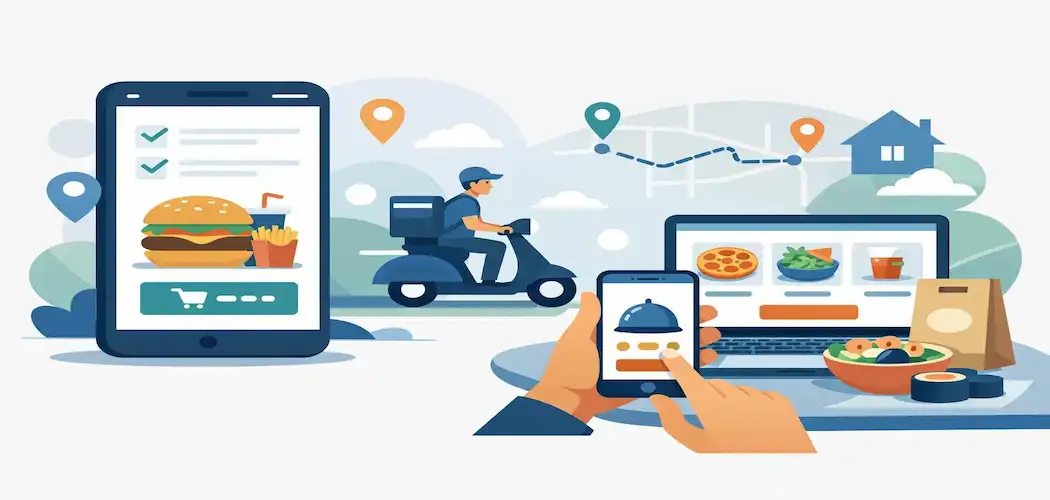
A functioning food delivery platform needs three connected pieces working together: a customer-facing app for browsing restaurants and placing orders, a restaurant dashboard for managing menus and incoming orders, and a driver app for accepting deliveries and navigation. Core features on the customer side include restaurant search and filtering, a menu and cart system, payment processing, and order tracking. The restaurant dashboard needs menu management, order notifications, and basic sales reporting. The driver app needs job acceptance, GPS navigation, and an earnings view. Skipping any one of these three pieces isn’t really an option — a food delivery platform without a working driver-assignment system isn’t actually a food delivery platform yet.
Real Cost to Build a Food Delivery App, By Development Stage
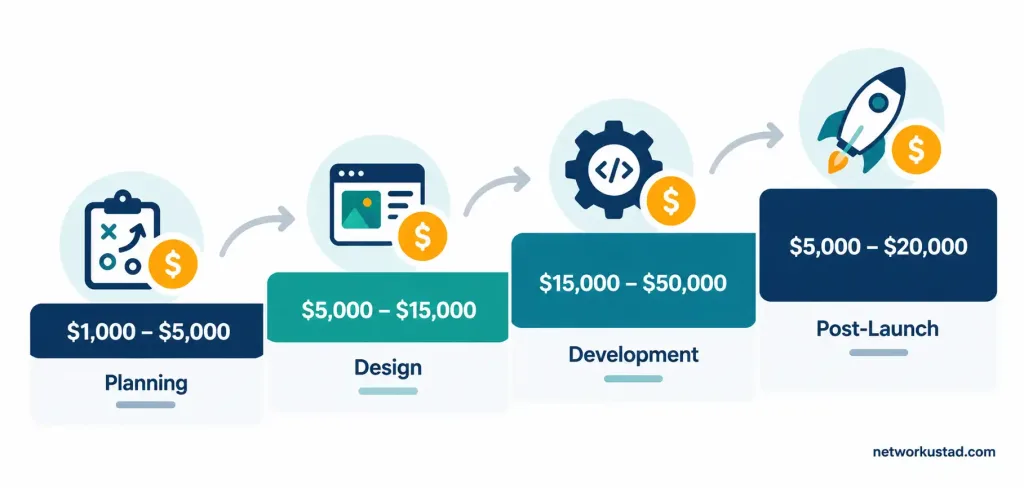
Industry guides on the cost to build a food delivery app break this down by stage rather than one lump figure, and that breakdown is genuinely more useful for planning a budget. Pre-development planning — market research, idea validation, choosing a tech stack — typically runs $2,000 to $10,000. UI/UX design, which varies heavily by number of screens and level of polish, runs roughly $5,000 to $15,000.
The actual app development stage is where complexity drives the biggest swing: a simpler app with fewer features can run $3,000 to $15,000, while a fully-featured app with real-time tracking, in-app payments, and multi-role dashboards can run $10,000 to $20,000 or more per platform (customer app, restaurant dashboard, and driver app are often priced as separate builds). Post-launch maintenance and bug fixes are typically billed hourly on an ongoing basis rather than as a fixed quote.
Why Developer Location Changes the Total So Much
Where your development team is based changes the total cost to build a food delivery app more than almost any other single factor. Based on current offshore development rate benchmarks, a mid-level full-stack developer runs roughly $85–135/hour in the United States, $50–80/hour in Eastern Europe, and $20–52/hour in India. That’s not a small gap — the same scope of work can cost two to five times more depending purely on where the team is located, before any difference in feature complexity enters the picture.
This doesn’t mean cheaper is automatically the right call: communication overhead, time zone alignment, and quality control all factor into whether an offshore team actually saves money once project management time is accounted for, not just the hourly rate on paper.
MVP First, Full Platform Later
Nearly every credible development-cost guide on this topic recommends starting with a minimum viable product rather than building every planned feature before launch, and that advice holds up. An MVP covering core ordering, payment, and basic driver assignment lets you validate real demand in your specific market before committing to the full budget a complete platform requires. Given how concentrated food-delivery-app usage actually is — weekly users skew young and urban, per the YouGov data above — validating demand in your actual target market before building advanced features (loyalty programs, multi-restaurant marketplaces, predictive delivery-time estimates) is a genuinely practical way to avoid overspending on features nobody in your specific market ends up using.
Picking a Development Partner
A few concrete questions matter more than a glossy portfolio when vetting a development company or freelancer for this kind of project. Ask for examples of previous food-delivery or on-demand logistics apps specifically, not just general app-development experience — the real-time driver-assignment and multi-party payment logic in this category has specific pitfalls that generic e-commerce app experience doesn’t prepare a team for.
Ask how they structure the three-app build (customer, restaurant, driver) and whether they’re priced and delivered separately or as one bundled engagement. And get a stage-by-stage cost breakdown like the one above in writing, rather than a single lump quote, so you can see exactly where the budget is going and renegotiate scope on any individual stage if needed.
Common Mistakes When Budgeting for This
A few patterns show up often enough in failed or over-budget food delivery app projects to name directly. Underestimating the driver-app complexity is one of the most common — real-time GPS tracking, automatic order assignment by proximity and rating, and in-app earnings tracking are genuinely harder to build well than they look from the outside, and cutting corners here is what makes an app feel broken to the people actually doing the deliveries.
Treating the MVP stage as optional, and trying to launch with every planned feature at once, is a second common mistake that routinely blows past initial budgets. A third is picking a developer purely on hourly rate without checking their specific experience with multi-party payment splitting (restaurant, driver, platform commission) and real-time order-status syncing, both of which are easy to underestimate until they’re actually being built.
Native Apps vs. Cross-Platform: Another Cost Lever
The choice between building native iOS/Android apps separately or using a cross-platform framework like Flutter or React Native is another factor that meaningfully changes the cost to build a food delivery app. Native development generally delivers smoother performance and easier access to device-specific features (like background location tracking for the driver app, which matters a lot for this category specifically), but it effectively doubles the build since iOS and Android are developed separately.
Cross-platform frameworks share most of the codebase across both platforms, which can meaningfully reduce the overall cost to build a food delivery app at the expense of some platform-specific polish. For a first launch validating demand in one market, cross-platform is usually the more budget-conscious choice; a platform planning aggressive growth across both app stores from day one may find the native route pays for itself later in performance and easier scaling.
Ongoing Costs Beyond the Initial Build
The upfront cost to build a food delivery app isn’t the end of the budget conversation, and treating it as the final number is a common planning mistake. Server and cloud hosting costs scale with order volume and active users, so a successful app’s infrastructure bill grows over time rather than staying fixed. Payment processing fees, typically a percentage of each transaction plus a flat fee, apply to every order and should be modeled into unit economics from the start rather than treated as a rounding error.
App store fees (Apple and Google both take a cut of in-app purchases, though delivery-order payments processed outside the app store’s own payment system are usually exempt) and ongoing customer support staffing are two more costs that don’t show up in a development quote but absolutely show up in a real operating budget within the first few months of launch.
Putting a Realistic Budget Together
Pulling the stages above into one realistic range: a lean MVP covering one platform type (say, cross-platform customer and driver apps with a basic restaurant dashboard) tends to land somewhere in the $25,000–$60,000 range all-in, including planning and design, when built by a mid-cost offshore team.
A fuller-featured launch with native apps, advanced real-time tracking, and a polished restaurant dashboard built by a US-based team can run well past $100,000 before any marketing or operating costs are factored in. Neither number is “the” cost to build a food delivery app — they’re two realistic end points on a genuinely wide spectrum, and where a specific project lands depends on the exact combination of scope, platform choice, and development-team location covered throughout this article.
The Bottom Line
There’s no single honest answer to what a food delivery app costs — it depends on your feature scope, which of the three connected apps you’re building, and where your development team is based, with that last factor alone capable of doubling or tripling the total. Starting with an MVP, getting a stage-by-stage cost breakdown rather than one lump quote, and vetting developers specifically for food-delivery or on-demand logistics experience are the concrete steps that actually keep a project on budget, more so than any single dollar figure this article — or any other — could responsibly give you upfront.
How Market Niche Affects the Cost to Build a Food Delivery App
Not every food delivery app needs to compete head-on with DoorDash and Uber Eats for every restaurant in a city. A narrower niche — delivery for a single restaurant chain, a specific cuisine category, or a specialized market like pet food or specialty dietary needs — generally needs fewer features at launch than a full multi-restaurant marketplace, which lowers the realistic cost to build a food delivery app for that specific use case.
A single-restaurant app doesn’t need the restaurant-discovery and multi-vendor cart logic a marketplace app requires, which removes real development time and cost. The trade-off is market size: a niche app reaches a smaller potential user base than a full marketplace, so the lower build cost needs to be weighed against a correspondingly smaller addressable market before deciding which approach actually makes more financial sense for a given business.
Frequently Asked Questions
How much does it cost to build an app like Uber Eats or Bolt?
It depends heavily on scope and location. A simple app can run $3,000–$15,000 for development alone, while a fully-featured platform with real-time tracking and multi-role dashboards can run $10,000–$20,000+ per app (customer, restaurant, and driver apps are often built and priced separately), plus design and planning costs on top.
Why does developer location matter so much for cost?
Hourly rates vary enormously: roughly $85–135/hour for a mid-level developer in the US versus $20–52/hour in India, based on current offshore rate benchmarks. The same project scope can cost two to five times more depending purely on where the development team is based.
Should I build an MVP first or launch with every feature?
Start with an MVP. It lets you validate real demand in your specific market — which, per recent survey data, skews toward younger, urban users — before committing to the full development budget a complete feature set requires.
What’s the most commonly underestimated part of building a food delivery app?
The driver app’s real-time logic — GPS tracking, automatic order assignment by proximity and rating, and earnings tracking. It looks simpler from the outside than it actually is to build reliably.
What should I ask a development company before hiring them?
Ask for specific food-delivery or on-demand logistics app experience, not just general app-development work, and request a stage-by-stage cost breakdown in writing rather than a single lump quote.