
Vegan cream cheese has moved from a niche health-food item to something you’ll find in most regular grocery stores now, usually made from a base of cashews, tofu, coconut, or tapioca starch instead of dairy. If you’re wondering whether it’s actually a healthier choice, or just a different one, here’s what the numbers and the current nutrition guidance actually say.
What Vegan Cream Cheese Is Made From
Most plant-based cream cheese brands build their base from one of a few ingredients: soaked and blended cashews, tofu, coconut cream, or tapioca starch, sometimes combined with a small amount of coconut oil for texture. The exact nutrition profile varies quite a bit between brands and bases, so the numbers below reflect a fair range rather than one fixed figure — it’s worth checking the label on whatever product you’re actually buying, since a cashew-based spread and a coconut-oil-based one can differ noticeably in fat content.
Who It Can Genuinely Help: Lactose Intolerance
This is the clearest, least debatable benefit. Dairy cream cheese contains lactose, and people with lactose intolerance lack enough of the enzyme needed to digest it properly, which can lead to bloating, gas, or stomach discomfort after eating it. A plant-based cream cheese made without dairy sidesteps that problem entirely, since there’s no lactose in it to begin with. If stomach discomfort after dairy is the reason you’re considering a switch, this is the one claim in this guide that holds up unconditionally.
Comparing the Actual Nutrition Numbers
Here’s where accuracy matters, because some figures circulating about dairy cream cheese online are simply wrong. Per 100 grams, regular dairy cream cheese contains roughly:
- 343 calories
- 5.8 grams of protein
- 33.5 grams of total fat, of which about 19.7 grams is saturated fat
- 101 milligrams of cholesterol
- 97 milligrams of calcium
Those are the correct figures, according to USDA nutrition data. Cream cheese is not meaningfully high in protein (5.8 grams per 100g is a modest amount, not a protein-rich food), and its cholesterol content is measured in milligrams, not grams — a distinction worth getting right, since the two are off by a factor of a thousand.
Plant-based versions typically run lower in saturated fat when the base is cashew or tofu rather than coconut, since coconut oil itself is high in saturated fat despite being plant-derived. They’re also naturally free of dietary cholesterol, since cholesterol is only found in animal products. On the other hand, most vegan cream cheeses are lower in protein and calcium than the dairy version unless a brand specifically fortifies them, so if either of those nutrients matters to your diet, it’s worth checking the label rather than assuming the plant-based version automatically wins on every measure.
Where the Heart Health Connection Actually Comes From
The American Heart Association recommends keeping saturated fat under 6% of total daily calories — roughly 13 grams or less per day on a 2,000-calorie diet — and suggests replacing saturated-fat-heavy foods with plant-based alternatives as one way to work toward that target. A cashew- or tofu-based cream cheese, used in place of the dairy version, can be one small piece of reducing overall saturated fat intake, which is a reasonable, evidence-based dietary goal for heart health.
That said, this is a general dietary guideline, not a claim that vegan cream cheese itself prevents heart disease, and no single food swap determines heart health outcomes on its own. If you have specific cardiovascular risk factors or concerns, that’s a conversation for a doctor or registered dietitian, who can look at your full diet and health history rather than one ingredient swap in isolation.
Filling Nutrient Gaps: What’s Realistic to Expect
Some plant-based cream cheese brands fortify their products with added calcium or vitamin B12, since both nutrients are naturally more concentrated in dairy and animal products and can be harder to get enough of on a fully plant-based diet. If filling those specific gaps matters to you, check the nutrition label for added calcium or B12 rather than assuming a plant-based product automatically contains them — many don’t, since fortification is a deliberate manufacturing choice, not an inherent feature of being dairy-free.
Allergen Considerations Worth Checking
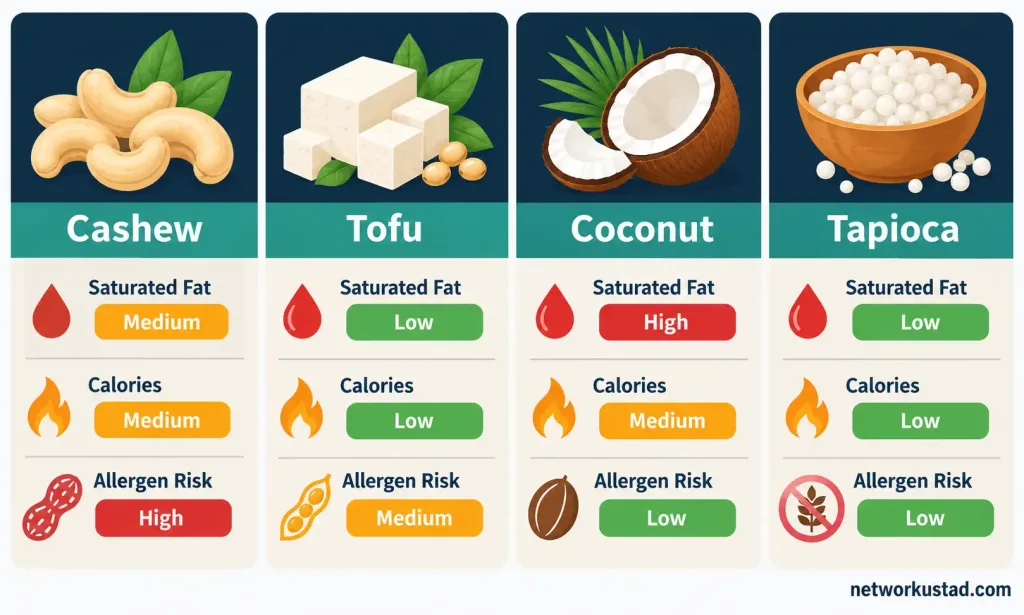
Switching to vegan cream cheese for a dairy allergy or intolerance can introduce a different allergen depending on the base ingredient. Cashew- and other tree-nut-based versions aren’t suitable for anyone with a tree nut allergy, and tofu-based versions contain soy, which is itself a common allergen. If you’re switching away from dairy specifically because of a dairy allergy rather than lactose intolerance, it’s worth checking the base ingredient carefully rather than assuming any “dairy-free” label automatically means allergen-free in a broader sense — the two aren’t the same thing, and swapping one allergen for another isn’t a real solution.
A Claim Worth Being Skeptical Of
You may come across claims online that vegan cream cheese specifically reduces prostate cancer risk. This isn’t something current, reliable nutrition research actually supports as a specific claim about this particular food, and it’s the kind of overreaching health claim worth treating with real skepticism wherever you see it. Broader dietary patterns — like overall intake of saturated fat, red meat, and dairy — have been studied in relation to various health outcomes with mixed and still-developing evidence, but that’s a very different, much more cautious claim than saying one specific product reduces a specific disease’s risk.
Comparing the Common Bases Side by Side
Not all vegan cream cheese is built the same way, and the base ingredient changes the nutrition profile more than most labels make obvious at a glance.
Cashew-based versions tend to be creamy and rich-tasting, with a moderate fat content that’s mostly unsaturated rather than saturated. They’re often among the lower-saturated-fat options on the shelf, though they can be higher in calories overall due to the natural fat content of cashews themselves.
Tofu-based versions are usually the lowest in overall fat and calories among common bases, and some brands use this base specifically to market a lighter product. The tradeoff is often a slightly less rich mouthfeel compared to cashew or coconut versions, which some people notice and others don’t mind at all.
Coconut-based versions can taste closer to traditional cream cheese in texture, but coconut oil is naturally high in saturated fat, which somewhat undercuts the saturated-fat benefit that makes plant-based swaps appealing to begin with. If lowering saturated fat specifically is your goal, a coconut-based vegan cream cheese may not get you there as effectively as a cashew or tofu-based one.
Tapioca-starch-based versions are often used as a thickener alongside one of the other bases rather than as the sole ingredient, mainly to improve texture and spreadability rather than to change the nutrition profile meaningfully on its own.
Reading the Label Matters More Than the Word “Vegan”
“Vegan” describes what’s absent from a product, not what nutritional benefit is present in it. A vegan cream cheese can still be high in saturated fat (if coconut-based), high in sodium, or low in the protein and calcium a dairy version would have provided. None of that makes it a bad choice — it just means the word “vegan” on its own doesn’t tell you much about the nutrition facts underneath it, and the actual label is where the useful information lives.
This matters particularly for added sugars and stabilizers, which some brands include to improve shelf life and texture. These additions aren’t inherently harmful in the amounts typically used, but they’re worth knowing about if you’re specifically comparing products rather than just picking whichever one is available.
Everyday Uses and Storage
Vegan cream cheese behaves similarly to the dairy version in most everyday uses: spread on bagels or toast, blended into dips, folded into baked goods, or used as a base for dairy-free cheesecake. Most brands recommend refrigeration after opening and suggest using the product within one to two weeks, similar to dairy cream cheese, though it’s worth checking the specific packaging, since shelf-stabilized plant-based products can sometimes differ from this general guidance.
How It Fits Into an Actual Diet
Vegan cream cheese works as a direct substitute almost anywhere dairy cream cheese would go — on toast, in baking, in dips, or as a sandwich spread — without needing any real adjustment to how you’d use it. If you’re newly avoiding dairy, whether for lactose intolerance, a vegan diet, or any other personal reason, it’s a genuinely convenient swap rather than a significant lifestyle change, and most people find the transition easier than they expect once they settle on a base ingredient and brand they actually like the taste of.
If you’re considering it specifically for a health goal, like lowering saturated fat intake or managing cholesterol, it’s worth treating it as one small piece of a broader dietary pattern rather than a single fix, and checking in with a doctor or dietitian if you have specific health conditions those changes are meant to address.
Why People Switch in the First Place
Beyond lactose intolerance, people choose plant-based cream cheese for a range of personal reasons that are worth naming plainly, since the right choice really does depend on your actual reason for switching. Some are following a vegan or plant-based diet for ethical or environmental reasons unrelated to nutrition specifically.
Some have a dairy allergy rather than lactose intolerance, in which case the allergen-check point above matters a lot. Others are simply trying to reduce saturated fat or dietary cholesterol as part of a broader dietary change, in which case the base-ingredient comparison above is the most useful part of this guide for you specifically. None of these reasons require the others to also apply — it’s fine to switch for taste preference or ethical reasons alone, without needing a specific health justification to back it up.
Frequently Asked Questions
Does vegan cream cheese have less cholesterol than regular cream cheese?
Yes — plant-based cream cheese contains no dietary cholesterol at all, since cholesterol is only found in animal-derived foods. Regular dairy cream cheese contains about 101 milligrams per 100 grams.
Is vegan cream cheese higher in protein than regular cream cheese?
Generally no. Regular cream cheese isn’t a high-protein food to begin with (around 5.8 grams per 100 grams), and most plant-based versions are similar or somewhat lower unless a brand specifically adds extra protein.
Can vegan cream cheese help with lactose intolerance?
Yes, reliably. Since it contains no dairy and therefore no lactose, it avoids the digestive discomfort that lactose intolerance causes with dairy products.
Does eating vegan cream cheese prevent heart disease or cancer?
No single food does that. Lower saturated fat intake is a reasonable general goal for heart health, and plant-based cream cheese can be one small part of that, but specific disease-prevention claims about one product aren’t supported by current evidence. Speak with a doctor about your individual risk factors.
The Bottom Line
Vegan cream cheese is a genuinely useful swap for anyone avoiding dairy, especially for lactose intolerance, and it’s typically lower in saturated fat and free of dietary cholesterol compared to the dairy version. It’s generally not higher in protein or calcium unless specifically fortified, and it isn’t a standalone fix for heart disease or cancer risk, whatever claims you might come across online. Check the label on whatever brand you’re buying, since plant-based bases vary meaningfully in their actual nutrition profile, and pick the version that genuinely fits your reason for switching in the first place, whether that’s taste, ethics, allergies, or a specific dietary goal.