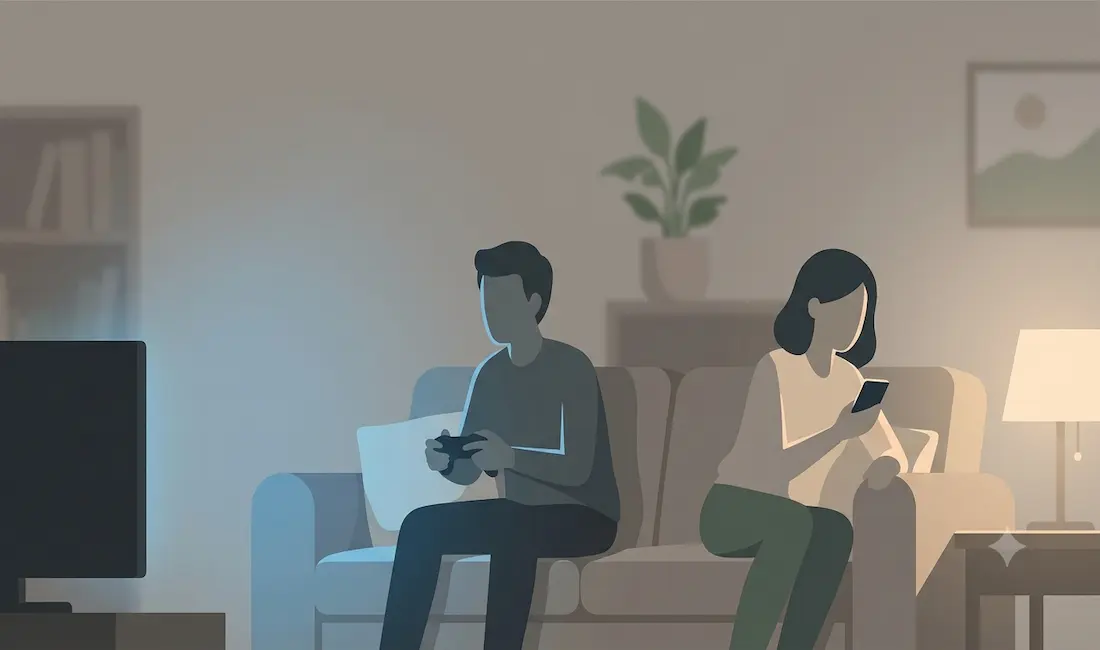
Video games are one of the most popular leisure activities among both adults and children today. For most people, gaming is a healthy hobby with no negative effect on their relationships. For a smaller group, however, gaming can become a genuine source of marital conflict, and in some documented cases, a contributing factor in divorce.
This article looks at what research and legal case data actually show about video games and relationship breakdown, the specific behaviors that create conflict, and evidence-based approaches for couples navigating this issue.
What the Data Actually Shows
Claims about video games and divorce are often exaggerated or presented without sourcing. Here is what verifiable research and reporting actually indicate:
- A widely cited UK study by Divorce Online found that among women who cited “unreasonable behaviour” as their reason for divorce, 15% specifically named a partner’s video gaming habit as the issue. World of Warcraft and Call of Duty were the two most frequently named games in that study.
- The Entertainment Software Association’s 2024 data found that 61% of Americans play video games on a weekly basis, and 78% of American households have played at least one video game, underscoring how mainstream gaming has become across age groups and family structures.
- In 2018, CNBC reported that more than 200 couples in the United Kingdom cited a partner’s Fortnite addiction as a contributing factor in their divorce filings that year. While this is a small fraction of overall UK divorces, it was notable enough to draw attention from family law practitioners and researchers.
- The World Health Organization formally recognised “gaming disorder” as a diagnosable condition in its International Classification of Diseases (ICD-11) in 2018, defining it as a pattern of gaming behaviour characterised by impaired control over gaming, increasing priority given to gaming over other activities, and continuation of gaming despite negative consequences.
- The American Psychiatric Association’s DSM-5 similarly identifies “Internet Gaming Disorder” as a condition warranting further clinical research, reflecting a broader professional consensus that excessive gaming can, in a subset of people, meet clinical criteria similar to other behavioural addictions.
It is worth being clear about what these figures do and do not show. They do not indicate that gaming is a leading or common cause of divorce overall. They show that among people who already cite behavioural issues as their reason for divorcing, gaming appears as a named factor in a meaningful minority of cases, and that clinical bodies now recognise excessive gaming as a genuine behavioural health concern in some individuals.
How Gaming Becomes a Source of Marital Conflict
Research and family counselling literature point to several specific mechanisms through which gaming habits create relationship strain, distinct from gaming itself being inherently harmful.
Time displacement. When gaming consistently displaces time that would otherwise go toward a partner, shared responsibilities, or family activities, resentment tends to build gradually rather than emerging as a single conflict. Partners frequently describe feeling deprioritised rather than any single incident being the trigger.
Reduced socialisation outside gaming. When online gaming communities become a person’s primary source of social connection and communication, in-person relationships, including the marital relationship, can atrophy from lack of investment. This is consistent with broader research on behavioural addiction, where a substitute source of reward and social connection gradually displaces existing relationships.
Financial strain. Modern games frequently include microtransactions, subscriptions, and in-game purchases that can accumulate significant costs if unmanaged. Combined with potential impacts on work performance or productivity from excessive time spent gaming, financial strain is a recurring theme in accounts of gaming-related marital conflict.
Parenting disengagement. When a parent’s gaming habit consistently takes priority over childcare responsibilities or quality time with children, this creates a second, compounding source of family strain beyond the marital relationship itself.
Underlying relationship or mental health issues. Family therapists frequently note that excessive gaming can be a symptom rather than a root cause, functioning as an escape from pre-existing marital dissatisfaction, depression, anxiety, or unaddressed conflict rather than the original source of the problem. Addressing only the gaming behaviour without addressing what it may be masking is a common reason interventions fail.
Evidence-Based Approaches for Couples
For couples navigating conflict related to gaming, mental health and family therapy professionals generally recommend the following approaches, in rough order of escalation:
Open, non-accusatory conversation. Address the pattern directly and specifically, focused on the impact on the relationship and shared responsibilities rather than framing it as a character judgement about the person or the hobby itself. Naming specific behaviours and their effects, such as missed commitments or reduced time together, tends to be more productive than general criticism of “playing too much.”
Establish agreed boundaries together. Rather than one partner unilaterally imposing limits, couples counselling literature consistently recommends collaboratively setting boundaries around gaming time, financial spending, and protected time for the relationship and family, with both partners having input into what is reasonable.
Involve gaming as a shared activity where appropriate. For couples where gaming itself is not the core issue, but rather feeling excluded from a partner’s hobby, playing together, choosing games that both partners enjoy, or setting aside specific times for a partner to game without resentment from the other side can reduce conflict meaningfully.
Seek professional support when gaming meets addiction criteria. If gaming behaviour matches WHO or DSM-5 criteria for gaming disorder, meaning impaired control, escalating priority over other life domains, and continuation despite clear negative consequences, this generally requires professional treatment rather than household-level negotiation. Licensed therapists specialising in behavioural addiction, and in some cases dedicated gaming addiction treatment programmes, are the appropriate resource at this stage.
Couples or family therapy. Where gaming conflict is intertwined with broader relationship dissatisfaction, a licensed marriage and family therapist can help identify whether gaming is the primary issue or a symptom of an underlying relational problem that needs to be addressed directly.
When to Seek Professional Help
If gaming-related conflict in your relationship involves any of the following, consider speaking with a licensed therapist or counsellor rather than attempting to resolve it alone:
- Consistent neglect of work, financial, or childcare responsibilities tied to gaming time
- Escalating arguments that do not resolve despite repeated conversations
- A partner who acknowledges the problem but reports being unable to control their gaming despite wanting to
- Signs of depression, anxiety, or withdrawal from previously enjoyed activities and relationships in either partner
- Financial strain from gaming-related spending that is affecting the household
A therapist experienced in behavioural addiction can help distinguish between a gaming habit that needs boundary-setting and one that reflects a clinical gaming disorder requiring structured treatment. Couples therapy can also help address whether gaming is the primary conflict or a symptom of deeper relationship dissatisfaction that predates the gaming behaviour itself.
Conclusion
Video games themselves are not inherently harmful to relationships, and the large majority of the roughly 61% of Americans who play games weekly do so without any negative impact on their marriage or family. Where conflict does arise, it is rarely about gaming in isolation, and more often reflects unmanaged time, unaddressed financial strain, reduced investment in the relationship, or gaming functioning as an escape from a pre-existing issue. The research-backed path forward for most couples is open communication and collaboratively set boundaries; for the smaller subset of cases where gaming meets clinical criteria for gaming disorder, professional treatment is the appropriate next step rather than attempting to resolve it through willpower or household rules alone.
Frequently Asked Questions
How common is it for video games to actually cause divorce?
Video games are rarely the sole or primary cause of a divorce. The most frequently cited figure, from a UK Divorce Online study, found that 15% of women who cited “unreasonable behaviour” as their divorce reason specifically named a partner’s gaming habit, which represents a meaningful minority within an already narrower category of divorce reasons, not a majority or even a large share of divorces overall. In most documented cases, gaming-related conflict is intertwined with other issues such as reduced time together, financial strain, or gaming functioning as an escape from pre-existing relationship dissatisfaction, rather than being an isolated cause on its own.
What is gaming disorder and how is it different from just playing a lot of video games?
Gaming disorder is a condition formally recognised by the World Health Organization in its ICD-11 classification since 2018, defined by three core features: impaired control over gaming behaviour, increasingly giving gaming priority over other life activities and interests, and continuing to game despite experiencing clear negative consequences. Playing video games frequently, even for many hours a week, does not by itself meet this clinical threshold if a person maintains control over their behaviour and gaming is not causing significant harm to their relationships, work, or wellbeing. The American Psychiatric Association’s DSM-5 similarly identifies Internet Gaming Disorder as a condition warranting clinical attention, reflecting a professional consensus that excessive gaming can, for a subset of people, function similarly to other behavioural addictions.
What should I do if my partner’s gaming is affecting our relationship?
Start with a direct, specific, non-accusatory conversation about the particular impacts you are experiencing, such as reduced time together or missed responsibilities, rather than a general criticism of gaming as a hobby. Family therapy literature consistently recommends that couples collaboratively establish boundaries together rather than one partner unilaterally imposing rules, since boundaries set jointly are more likely to be respected and sustained. If conversations are not resolving the conflict, or if your partner’s gaming appears to meet criteria for gaming disorder, such as an inability to control the behaviour despite wanting to and clear negative consequences, a licensed therapist experienced in behavioural addiction or couples counselling is the appropriate next step.
Can playing video games together actually help a relationship?
Yes, for many couples, shared gaming can be a positive activity rather than a source of conflict. Playing games together, choosing titles both partners genuinely enjoy, and treating gaming as a form of shared leisure time rather than one partner’s separate, exclusive activity can reduce the sense of exclusion that often underlies gaming-related resentment. This approach works best when gaming itself is not the core problem, but rather one partner feeling left out of an activity the other partner values; it is less effective as a solution when gaming has progressed to a clinical addiction requiring professional treatment.
Is video game addiction a real, medically recognised condition?
Yes. The World Health Organization formally added “gaming disorder” to its International Classification of Diseases (ICD-11) in 2018, establishing it as a diagnosable behavioural health condition alongside other recognised addictions. The American Psychiatric Association’s DSM-5 similarly lists Internet Gaming Disorder as a condition for further study, reflecting growing clinical consensus. This medical recognition means that when gaming behaviour meets diagnostic criteria, primarily impaired control, escalating priority over other activities, and continuation despite negative consequences, it is a legitimate condition that responds to professional treatment, similar to other behavioural addictions, rather than something that can necessarily be resolved through willpower or informal household agreements alone.
If you are concerned that gaming addiction is affecting your relationship or family, a licensed marriage and family therapist or a counsellor specialising in behavioural addiction can provide an assessment and appropriate treatment options. This article is intended for general informational purposes and does not constitute medical, psychological, or legal advice.