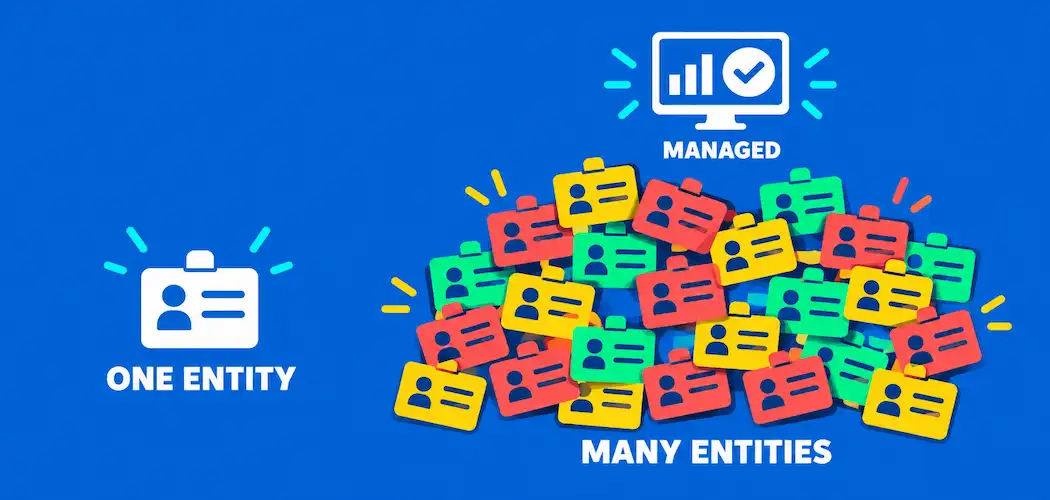
Every business that transacts in regulated financial markets eventually runs into the same requirement: a Legal Entity Identifier, or LEI. Getting one is straightforward. Keeping it current — renewed, accurate, and compliant — across one entity or thousands is where manual processes start costing real time and real risk. This guide covers what LEI management software actually does, why it matters for compliance, and how several established providers in this space compare.
What Is a Legal Entity Identifier?
A Legal Entity Identifier is a unique 20-character alphanumeric code used to identify legal entities participating in financial transactions worldwide. It’s administered under a global framework overseen by the Global Legal Entity Identifier Foundation (GLEIF), with actual issuance handled by accredited Local Operating Units (LOUs) around the world. An LEI is specific to one entity, cannot be reused or reassigned, and does not replace a company’s national business registry number — it’s a separate, internationally standardized identifier layered on top.
Organizations that participate in regulated financial transactions are generally required to maintain a current, valid LEI, and failure to do so can mean real regulatory and financial consequences — rejected transactions, compliance penalties, and reputational damage with counterparties and regulators alike.
Why Manual LEI Management Becomes a Real Problem
A single LEI is manageable by hand. Dozens or hundreds across a growing organization, a financial institution serving many clients, or a compliance firm managing identifiers on behalf of others, is a different problem entirely:
Renewal tracking becomes genuinely difficult at scale — LEIs require annual renewal, and a missed renewal means a lapsed, non-compliant identifier at exactly the wrong moment.
Data accuracy matters continuously, not just at registration — entity details change (addresses, ownership structure, registered names), and an LEI record that falls out of sync with reality creates compliance exposure.
Administrative cost adds up quickly when it depends on dedicated staff manually tracking spreadsheets, renewal dates, and documentation across a growing identifier portfolio.
This is exactly the gap LEI management software is built to close.
What LEI Management Software Actually Does
Across the providers in this space, the core functionality is consistent:
Centralized administration — registering, renewing, and transferring LEIs from a single dashboard rather than juggling separate processes per entity.
Automated renewal alerts — proactive notifications well ahead of expiration, removing the risk of a lapsed identifier catching an organization off guard.
Bulk management tools — handling large portfolios (dozens to thousands of LEIs) through Excel uploads or API integration rather than one-by-one manual entry.
Data accuracy and validation — keeping entity records current and consistent with what’s actually on file with the issuing authority.
Comparing LEI Management Providers
Several established providers operate in this space, each with a slightly different angle:
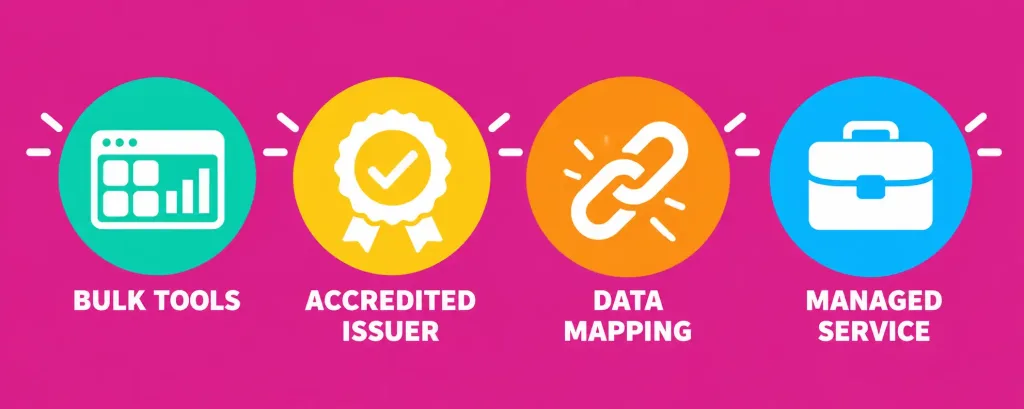
LEIAdmin, operated by LEI Register in partnership with RapidLEI (a GLEIF-accredited issuer), centralizes registration, renewal, and bulk management with API and Excel-based bulk upload options. It’s built specifically for high-volume users — banks, financial institutions, and firms managing LEIs on behalf of multiple clients — and has operated in this space since 2018, reporting over 60,000 customers served.
RapidLEI, the GLEIF-accredited issuer LEIAdmin partners with, also offers direct LEI issuance and management services, positioning itself as one of the largest accredited LEI issuers globally.
LEI Worldwide focuses on entity mapping and data-matching solutions specifically, linking an organization’s internal client and tax records directly to corresponding LEI data via API — a good fit for organizations needing LEI data integrated directly into existing internal systems rather than managed through a separate dashboard.
Deloitte’s LEI Portal offers a managed-service approach to LEI registration, renewal, and transfer, which may appeal to organizations that already work with Deloitte on broader compliance or advisory engagements and prefer a single relationship.
What to Evaluate When Choosing a Provider
A few practical questions worth asking any LEI management provider before committing:
Accreditation and partnership. Confirm the provider works with a genuinely GLEIF-accredited issuing LOU — this isn’t optional, since an LEI’s validity depends on proper issuance through the accredited framework.
Bulk management capability. If you’re managing more than a handful of LEIs, confirm the platform genuinely supports bulk operations (API access, spreadsheet upload) rather than requiring manual entry at scale.
Renewal alert timing. Ask specifically how far in advance renewal notifications go out, and whether there’s an escalation process if an initial alert goes unanswered.
Integration options. If LEI data needs to flow into existing compliance or CRM systems, confirm API access and documentation quality before assuming it will work smoothly.
Support and track record. A provider’s history serving organizations at your scale, and the responsiveness of their support team, matters more over a multi-year relationship than any single feature comparison.
Frequently Asked Questions
What is an LEI management solution?
Software that helps organizations register, renew, and maintain Legal Entity Identifiers efficiently, typically through a centralized dashboard with automated renewal tracking and bulk-management tools.
How do LEI management solutions benefit businesses?
They streamline LEI administration, reduce manual errors, improve regulatory compliance through proactive renewal tracking, and — for organizations managing many LEIs — provide centralized data analytics on counterparty and entity information.
Can LEI management solutions help with compliance?
Yes. By keeping LEI records current and sending renewal alerts well ahead of expiration, these platforms directly reduce the risk of lapsed or inaccurate identifiers triggering compliance issues.
Do I need an LEI management platform if I only have one entity?
Probably not — a single LEI is manageable through direct renewal reminders from your issuing provider. These platforms earn their value at scale, when an organization is managing many identifiers simultaneously.
What should businesses consider when choosing an LEI management solution?
Confirm the provider partners with a GLEIF-accredited issuer, evaluate bulk-management and API capabilities against your actual portfolio size, and check renewal-alert timing and support responsiveness before committing.
The Bottom Line
LEI management software solves a real, scaling administrative problem: keeping identifiers current, accurate, and compliant without dedicating disproportionate staff time to manual tracking. Several established providers — LEIAdmin, RapidLEI, LEI Worldwide, and Deloitte’s LEI Portal among them — serve this space with genuinely different strengths, and matching your actual portfolio size and integration needs against those differences is a more reliable path to the right choice than defaulting to whichever provider you heard about first.