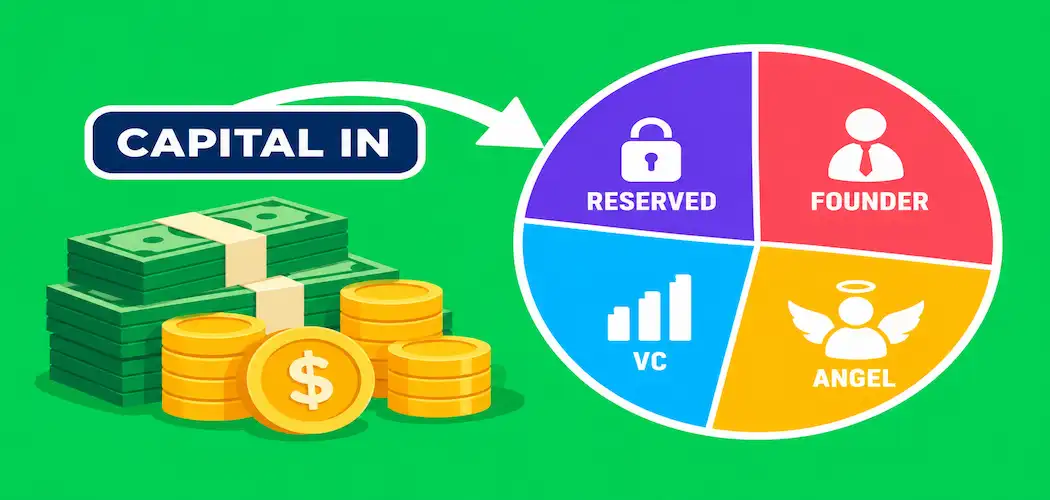
Every entrepreneur eventually hits the same wall: a genuinely good idea that needs capital to become a genuinely real business. How you find and secure that capital shapes far more than just your bank balance — it affects how much of your company you keep, how much control you retain, and how quickly you’re expected to grow. This guide covers the real funding avenues available, what investors actually look for, and how to build a case that gets taken seriously.
Finding the Right Investment Opportunities
Before chasing capital, it helps to know what you’re actually looking for. A few practices consistently separate founders who find the right funding fit from those who waste months chasing the wrong one.
Thorough market research comes first. Understanding market trends, consumer needs, and emerging industry gaps isn’t just useful for your product — it’s exactly what investors will probe hardest when evaluating your pitch. Assess the competitive landscape and realistic demand before you ever approach anyone with a checkbook.
Networking does real, practical work here. Industry conferences, startup events, and direct engagement with founders a stage or two ahead of you open doors that cold outreach rarely does. Most early-stage funding still happens through warm introductions rather than cold pitches landing in an inbox.
Staying current on where capital is actually flowing matters. Investor interest shifts with the broader technology and market landscape — AI, climate tech, and vertical SaaS have each had their moment as areas of concentrated investor attention. Knowing where that interest currently sits helps you understand which investors are actively looking in your space right now.
Don’t limit yourself to the obvious funding types. Venture capital and angel investment get most of the attention, but crowdfunding, grants, and strategic partnerships are all legitimate paths that fit different kinds of businesses better than a traditional equity raise would.
Funding Avenues: What’s Actually Available
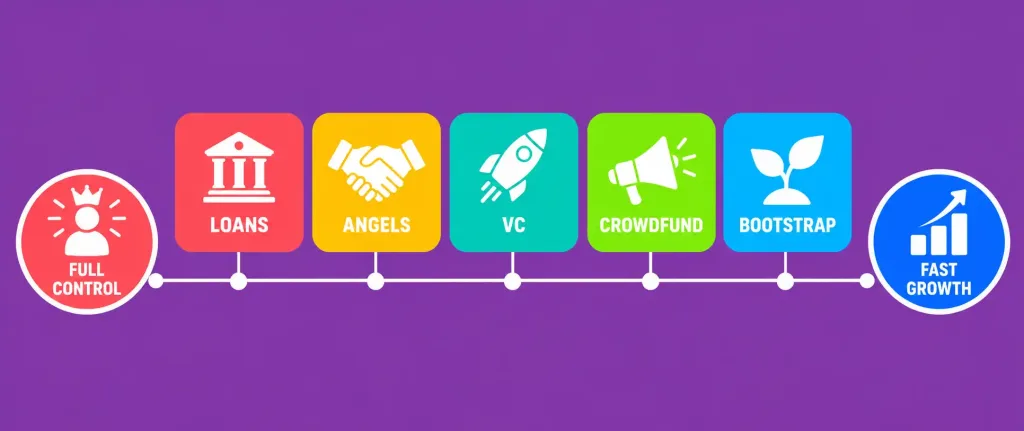
Traditional bank loans or personal savings offer stability and full control — no equity given up, no investor relationship to manage — at the cost of rigorous underwriting and, often, collateral requirements that not every founder can meet.
Angel investors are individuals investing their own capital, typically at the pre-seed or seed stage. Equity expectations vary meaningfully by source and deal size, but a reasonable general range for a seed-stage round sits somewhere around 10–25% of the company, with experienced advisors generally cautioning founders against giving up much more than a third of their company in any single early round. Typical angel check sizes run from a few thousand dollars up to several hundred thousand, often pooled across three to five investors in a single round.
Venture capital operates at larger scale and typically enters from the seed stage onward, with firms generally taking somewhere between 10% and 50% of equity depending on the round and the startup’s negotiating position. VC funding comes with more formal governance expectations — board seats, reporting requirements, and a clear expectation of rapid, scalable growth — which suits some businesses far better than others.
Crowdfunding platforms like Kickstarter and Indiegogo let you raise capital directly from individuals interested in your product, often in exchange for early access or rewards rather than equity. Beyond the money itself, a well-run campaign validates real market demand and builds an engaged early community — both genuinely valuable alongside the capital raised.
Bootstrapping — funding growth through personal savings, early revenue, or support from friends and family — keeps full ownership and control in founder hands, at the cost of slower growth and tighter resource constraints. It remains one of the most common paths for businesses that don’t need venture-scale capital to reach profitability.
Government grants and business development programs offer non-dilutive funding (meaning no equity given up at all) for businesses in specific industries or innovation categories. These are often underused simply because founders don’t realize what’s available in their region or sector — worth real research time before assuming grants aren’t an option.
Building a Compelling Case for Investors
Once you’ve identified the right funding path, the pitch itself determines whether it actually comes through.
A clear, specific value proposition matters more than enthusiasm. Investors need to understand exactly what problem you solve, for whom, and why your approach beats the alternatives — vague claims about disruption or innovation convince no one with capital on the line.
Your team is being evaluated as closely as your idea. Investors routinely say they back teams as much as concepts, because execution ability is what actually determines whether a good idea becomes a real business. Highlight relevant experience and track record directly, not just enthusiasm.
Realistic financial projections build more trust than optimistic ones. A credible revenue forecast, clear cost structure, and a specific funding ask (how much, allocated to what, tied to what milestones) signals a founder who actually understands their own business, which matters more to a sophisticated investor than an impressively large number on a slide.
Genuine passion and commitment still matter — within reason. Investors are backing a person as much as a plan, and a founder’s demonstrated resilience and personal stake in the outcome is a real factor. This holds especially true in social-impact ventures, where investors are evaluating commitment to the mission alongside the business case.
Warm introductions still outperform cold outreach. A personal recommendation from someone an investor already trusts does more for your chances than a well-written cold email ever will — which is exactly why building relationships with mentors and industry connections before you need funding pays off when you actually do.
Frequently Asked Questions
How much equity should I expect to give up in a seed round?
Ranges vary by source and deal specifics, but a reasonable general expectation is somewhere around 10–25% for a typical seed round, with most experienced advisors cautioning against giving up much more than a third of the company in any single early raise.
Is crowdfunding a real alternative to equity funding?
Yes, for the right kind of business — particularly consumer products with broad appeal. It raises capital without diluting ownership and validates real market demand, though it suits product-based businesses better than, say, enterprise software.
Do I need venture capital to grow a successful business?
No. Many successful, sustainable businesses grow through bootstrapping, revenue-based growth, or angel funding alone — VC makes sense specifically for businesses built around rapid, large-scale growth, not as a default path for every startup.
What do investors actually look for beyond the business idea?
A credible, experienced team, realistic financial projections, a clearly defined market need, and genuine founder commitment all weigh heavily — investors are evaluating execution capability, not just the concept itself.
Are government grants worth pursuing for a startup?
Often yes, and they’re commonly underused simply because founders don’t research what’s available in their specific industry or region. Non-dilutive funding is worth real investigation before assuming it doesn’t apply to your business.
The Bottom Line
There’s no single right way to fund a startup — the right path depends on how much control you’re willing to trade for capital, how fast you need to grow, and what kind of business you’re actually building. Understanding the real trade-offs between bank loans, angel and VC funding, crowdfunding, bootstrapping, and grants — rather than defaulting to whichever path gets the most attention — is what actually separates founders who fund their vision successfully from those who give up more than they needed to just to get started.