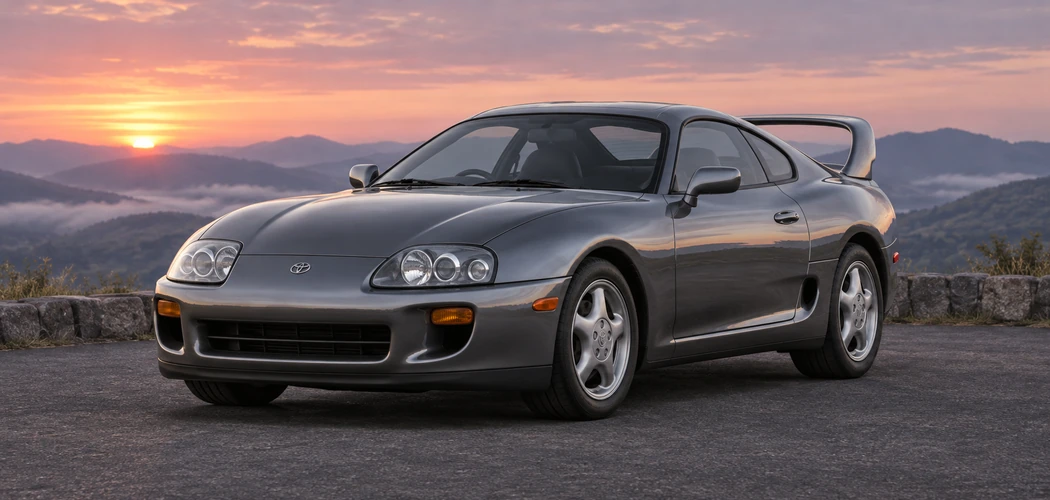
The Toyota Supra MK4, also called the A80, is the fourth generation of the Supra. Toyota sold it in the United States from 1993 through 1998, and Japanese production continued through 2002. It was a front-engine, rear-wheel-drive coupe with two versions of Toyota’s 3.0-liter 2JZ inline-six. The U.S. naturally aspirated version was rated at 220 horsepower. The U.S. twin-turbo version was rated at 320 horsepower.
That 100-horsepower difference is one reason a used listing that simply says “Supra MK4” tells you very little. The car’s original market, engine, transmission, and condition all affect what you’re buying. A naturally aspirated car can gain a turbo later, and an automatic car can be converted to a manual. If a listing asks a premium for a rare factory combination, get the paperwork before judging it by the photographs.
Toyota Supra MK4 Specs for U.S. Models
The table shows U.S. factory power and torque figures. For an imported car, look up the specifications for its own market, model year, and grade.
| U.S. A80 configuration | Engine | Factory horsepower | Factory torque |
|---|---|---|---|
| Supra, naturally aspirated | 3.0-liter 2JZ-GE inline-six | 220 hp | 209 lb-ft |
| Supra Turbo | 3.0-liter 2JZ-GTE twin-turbo inline-six | 320 hp | 315 lb-ft |
Both engines were offered with manual and automatic transmissions over the U.S. model run. The six-speed manual was associated with the Turbo, and availability changed by year. Toyota’s U.S. Supra chronology records that the six-speed was dropped for the 1996 model year and returned for 1997. Confirm the original engine and transmission when evaluating any car described as a factory six-speed.
Toyota’s U.S. chronology also describes the 320-hp Turbo as capable of reaching 60 mph in under five seconds. Treat that as an account of the Turbo’s performance when new. An acceleration time for a particular car depends on the transmission, tires, surface, and test method. If a listing gives a precise time, ask which car achieved it and who measured it.
2JZ-GE vs. 2JZ-GTE
The 2JZ-GE breathes naturally. The 2JZ-GTE used two turbochargers in a sequential arrangement, with the second joining as demand and engine speed increased. That difference matters both for the factory output and for what you’ll inspect today. A factory turbo car has boost-control hardware, charge piping, and related components that a stock naturally aspirated example lacks.
For a naturally aspirated car that’s been converted, ask which engine is currently installed and who did the work. Ask for the parts list, service invoices, and records from the shop that handled engine management. A turbo visible under the hood establishes the car’s current configuration. Its factory identity comes from the original build documentation and vehicle records.
If the car has a single-turbo conversion or other major changes, a dyno sheet can help establish what the engine produced on the day of testing. It won’t tell you whether the cooling system is sound, whether the car starts cleanly when cold, or whether it drives smoothly on the way to work. Check those things separately. An inspection is particularly worthwhile when a listing presents a high horsepower figure alongside little service history.
U.S. Model Years and Cars Imported From Japan
The Toyota Supra heritage page dates the A80 generation from 1993 to 2002. In the U.S., Toyota’s official model archive covers 1993 through 1998. Later A80s seen in U.S. listings can be imports, so ask for the Japanese production details and the vehicle’s current title. A registration date can differ from the build date. If you’re comparing late-model listings, ask how the seller determined the year shown in the advertisement.
Imported cars can also use trim names unfamiliar to buyers of U.S. Supras. Ask for the chassis or model designation and check it against paperwork for the source market. A name or badge applied to the body can survive an engine swap, transmission conversion, or restoration. If the car is registered where you live, compare the identifier on the vehicle with its title. For a prospective import, confirm registration and documentation requirements in the jurisdiction where you intend to use it.
A right-hand-drive import will feel different in traffic, parking garages, and toll lanes if you’re used to driving from the left side of the cabin. Decide whether that fits how you’ll use the car. Ask a workshop in advance whether it can service your particular market version and source parts for it.
How to Inspect a Used Supra MK4
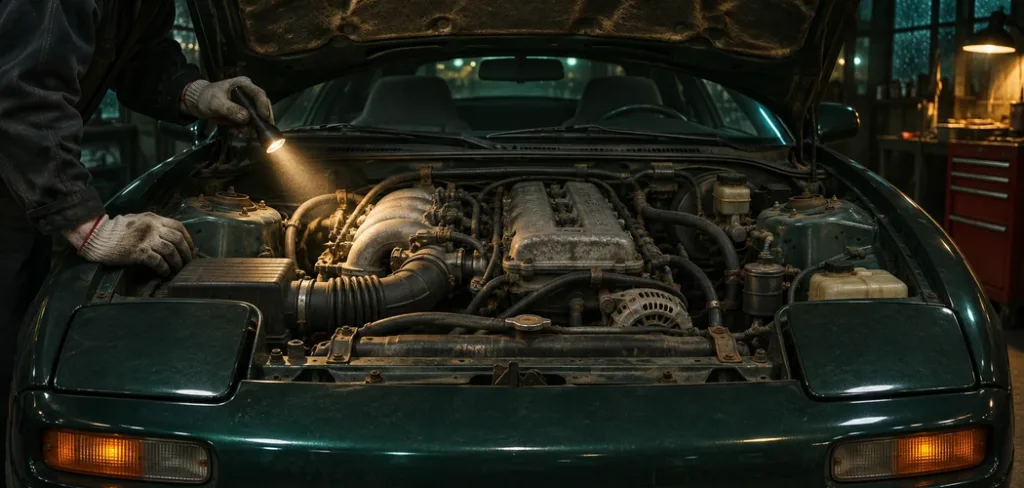
On a car this old, history and condition deserve as much attention as the engine code. Ask a workshop familiar with older Toyota performance cars to carry out an independent inspection. Send the shop the listing and any receipts ahead of time so it can prepare for the car’s modifications, if any.
- Read the title and repair history. Compare the title, vehicle identification, odometer records, and invoices. Ask about incomplete ownership records or significant gaps in mileage. If the car has been repainted, ask whether it was cosmetic work or part of a repair.
- Look around the body and underside. Ask the shop to check structural areas, lifting points, suspension mounting points, and signs of corrosion or collision repair. Panel gaps, paint overspray, and missing clips can point to areas that warrant a closer look.
- Check how the car starts from cold. Arrange to see the engine before it’s warmed up. Take note of warning lights, smoke, noises, and idle quality, then let the technician interpret what they find. Ask them to inspect the cooling system and look for leaks once the vehicle reaches normal operating temperature.
- Ask about scheduled maintenance. Look for dates and mileage on timing-belt and cooling-system work. Find out which parts were replaced and which are still original. If a seller recalls doing work but has no receipt, ask the shop to estimate what needs to be done based on the evidence available.
- Verify the gearbox and driveline. Have the technician check shift quality, clutch operation on a manual, and noises or vibration under normal driving conditions. If the car was converted, ask for details of the gearbox, parts used, and who completed the work.
- Evaluate non-factory equipment. Record changes to wheels, brakes, suspension, and wiring. Check whether the seller retained the original parts. If the car uses aftermarket engine management, ask whether its calibration is documented and whether a local specialist supports it.
- Test the cabin and exterior equipment. Work through the lights, gauges, windows, air conditioning, and other features you plan to use. Water stains, missing trim, and inoperative accessories can add cost even when the car drives well.
When arranging the viewing, ask the seller what the car needs now and what they would do next if they kept it. Compare that answer with the shop’s report. A small discrepancy can be a matter of judgment. A long list of unmentioned repairs changes what the car is worth to you and how much time you may have to spend putting it right.
Ask how the car was stored and how often it was driven recently. If it has been sitting, ask the shop to check the date codes and condition of the tires, the health of the battery, and any signs of fluid leaks or water intrusion. A low odometer reading can be attractive to collectors, but a car that has spent years parked may still need immediate work before regular use.
Comparing Prices Without Relying on an Asking Range
Start with completed sales for cars in the same market and original configuration. A U.S. factory Turbo six-speed with detailed records tells you little about the likely value of an automatic import or a naturally aspirated car with a turbo conversion. Useful comparisons also match mileage, title history, originality, and major repairs as closely as possible.
Write down what each sale included and how long ago it happened. A recent sale with clear documentation provides a better reference than an old listing that disappeared without a confirmed result. Keep registration, transport, initial maintenance, and insurance in your budget so you can judge the full cost of buying the car. If you plan to drive it regularly, ask how quickly shops in your area can obtain the repair parts you’re most likely to need.
How the MK4 Compares With the MK5
The A80 belongs to the original Supra production era. The later GR Supra, known as the MK5 or A90, offers newer equipment and a different range of engines and transmissions. If you’re looking at both, start with what you want from the car. The MK4 is an older sports car whose service records and modifications can matter as much as its factory specification. On the MK5, trim, year, and gearbox are still worth checking, but the comparison starts with a much newer car. See NetworkUstad’s Toyota GR Supra MK5 specs guide for the later models.
For the MK4, narrow the search to the factory engine and gearbox you want, then use the inspection and records to decide between individual cars. If you’re open to a conversion, evaluate the quality and documentation of the work on its own merits. A car with a clear history and a configuration that suits your plans is easier to evaluate than one sold on a power figure alone.
Factory specifications vary by market, model year, and configuration. Verify the vehicle’s identity, paperwork, and modifications, and arrange an independent inspection before buying. The images are illustrations.