A home’s plumbing system works behind the scenes every day, but aging pipes, inefficient fixtures, and outdated equipment can eventually create expensive or disruptive problems. Strategic upgrades give homeowners an opportunity to address weaknesses before they become emergencies while improving water use and everyday convenience. The right improvements depend on the age and condition of the existing plumbing, so a professional evaluation is often a sensible starting point. Homeowners planning long-term improvements should consider these three plumbing upgrades.
Planning plumbing improvements as part of a broader home maintenance strategy can help homeowners prioritize projects and reduce avoidable disruption. For example, pipe or fixture work may be easier to coordinate when walls, floors, or cabinets are already being opened during a renovation. Considering future household needs, local plumbing requirements, and the compatibility of new components can also support better project decisions. A thoughtful approach allows each upgrade to contribute to the performance and reliability of the entire system.
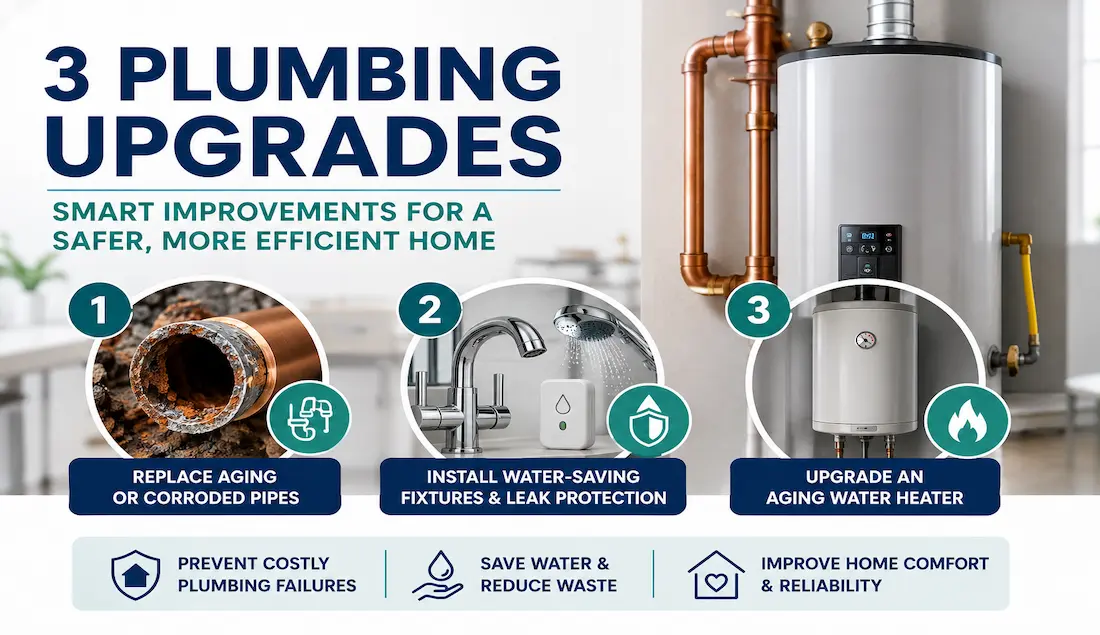
1. Replace Aging or Corroded Pipes
Old piping can gradually deteriorate as corrosion develops inside or around the material. According to Gitnux, roughly 80% of plumbing failures are associated with pipe corrosion. Homeowners may notice warning signs such as discolored water, recurring leaks, low water pressure, or visible deterioration on exposed pipes. Replacing vulnerable sections, or repiping a home when deterioration is widespread, can address aging infrastructure before a failing pipe causes extensive water damage.
Pipe replacement also provides an opportunity to evaluate whether the existing plumbing still suits the household’s needs. A plumber can examine pipe condition, determine which portions require attention, and recommend suitable replacement materials based on the home and applicable requirements. Because pipes are often concealed behind walls, floors, or ceilings, professional assessment is particularly valuable when the extent of deterioration is difficult to determine from visible symptoms alone.
2. Install Water-Saving Fixtures and Leak Protection
Even a small leak can waste a significant amount of water when it persists for weeks or months. According to EPA, household leaks can cause the average American family to lose nearly 10,000 gallons of water annually, with many of these problems requiring professional plumbing repairs. Updating worn fixtures and addressing recurring leaks can therefore make water conservation a practical part of a larger plumbing improvement plan.
Homeowners may also consider modern faucets, showerheads, toilets, and leak-detection devices when updating their systems. Water-efficient fixtures can reduce unnecessary consumption without requiring occupants to change their routines dramatically. Leak detectors and automatic shutoff devices may provide additional protection by identifying unusual water activity or responding when certain problems occur. A plumber can help determine which upgrades are compatible with the home’s existing supply lines, pressure, and plumbing layout.
3. Upgrade an Aging Water Heater
Water heaters are another major component worth evaluating as a plumbing system ages. The size of the plumbing industry also reflects how extensive residential and commercial plumbing needs can be. According to Jobber, the U.S. plumbing market is currently worth approximately $158.6 billion. For homeowners, maintaining essential equipment such as the water heater remains an important part of protecting reliable access to hot water and planning for future plumbing expenses.
An older water heater may become less dependable, develop leaks, or struggle to meet a household’s hot water demands. Replacing the unit before a complete failure gives homeowners more time to consider capacity, available space, energy source, and the household’s typical usage. Professional installation also allows related connections, valves, and plumbing components to be assessed as part of the project rather than focusing solely on the appliance itself.
Plumbing upgrades are most valuable when they address genuine needs within the home instead of being made simply because newer products are available. Replacing deteriorated pipes can address vulnerable infrastructure, water-saving fixtures and leak protection can reduce waste, and a properly selected water heater can support dependable daily use. By assessing the system as a whole and prioritizing improvements based on condition, homeowners can make informed investments that support reliable plumbing for years to come.