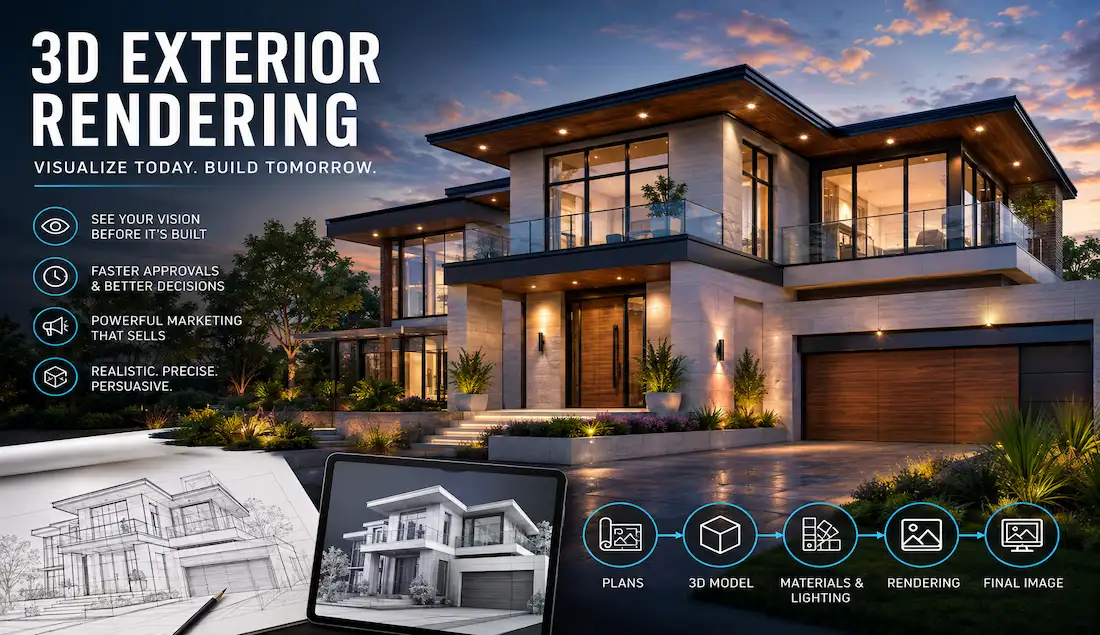
In today’s competitive real estate and architecture markets, the ability to visualize a building before it’s built has become more than a luxury — it’s a necessity. 3D exterior rendering has transformed how architects, developers, and real estate marketers communicate design ideas, secure client approval, and sell properties long before construction begins. By turning technical blueprints into photorealistic images, this technology bridges the gap between imagination and reality.
What Is 3D Exterior Rendering?
3D exterior rendering is the process of creating a lifelike, three-dimensional visual representation of a building’s outside appearance using specialized computer software. Unlike traditional architectural drawings or sketches, which can be difficult for non-professionals to interpret, a rendering shows exactly how a structure will look once completed — including materials, lighting, landscaping, and surrounding context. It accounts for details like the texture of brick or stone facades, the reflection of glass windows, the play of natural light and shadow throughout the day, and even seasonal elements like foliage or snow.
These renderings are typically created using 3D modeling software such as 3ds Max, SketchUp, Blender, or Revit, combined with rendering engines like V-Ray, Corona, or Lumion that simulate realistic lighting and materials. The result is an image — or sometimes an animation or interactive walkthrough — that looks almost indistinguishable from a photograph of a finished building.
Why 3D Exterior Rendering Matters
Enhanced Design Communication
Architectural plans are often difficult for clients to interpret. Floor plans and elevations, while precise, don’t convey the emotional or spatial experience of a space. A 3D exterior rendering removes this barrier, allowing clients, investors, and stakeholders to see and understand a project instantly, without needing technical training to read construction documents.
Faster Decision-Making and Approvals
When clients can visualize a project accurately, they’re able to give feedback and make decisions much more quickly. Instead of relying on imagination or abstract descriptions, they can respond directly to what they see — whether that means approving a design, requesting changes to a facade material, or reconsidering a landscaping choice. This shortens revision cycles and helps projects move from concept to construction more efficiently.
Powerful Marketing and Presales
For real estate developers, exterior renderings are invaluable marketing tools. Properties can be marketed and even sold before a single brick is laid, using renderings in brochures, websites, and social media campaigns. High-quality visuals help potential buyers or tenants form an emotional connection with a property, which can significantly influence purchasing decisions and speed up presales for large developments.
Design Testing and Refinement
Renderings also serve a practical design function. Architects can experiment with different materials, colors, lighting conditions, and landscaping options within the 3D model before committing to final decisions. This allows for testing how a building will look at different times of day, from various angles, or during different seasons — helping to catch potential design issues early, when changes are far less costly than they would be after construction begins.
Key Elements of a Compelling Exterior Rendering
A truly effective rendering goes beyond simply modeling a building’s shape. Several elements combine to create a convincing and appealing image:
- Lighting and shadows: Accurate simulation of sunlight, time of day, and weather conditions adds realism and mood to a scene.
- Materials and textures: Realistic representation of surfaces like wood, stone, metal, and glass helps the building feel tangible rather than artificial.
- Landscaping and context: Trees, pathways, water features, and surrounding structures situate the building within a believable environment.
- Human elements: Adding people, vehicles, or street furniture provides scale and life, helping viewers relate to the space.
- Camera angles and composition: Thoughtful framing highlights a building’s best architectural features and creates a sense of depth and perspective.
The Rendering Process
Creating a professional exterior rendering typically follows several stages. It begins with gathering architectural plans, elevations, and reference materials, followed by building an accurate 3D model of the structure. Once the model is complete, artists apply materials and textures, position the building within its intended environment, and set up lighting to match the desired time of day and atmosphere. The scene is then rendered — a computationally intensive process where the software calculates how light interacts with every surface — before final post-production touches like color correction and added atmospheric effects bring the image to its polished, presentation-ready state.
Industries That Benefit
3D exterior rendering is used across a wide range of industries beyond traditional architecture. Real estate developers use it for presales and marketing campaigns. Urban planners rely on it to present large-scale development proposals to city councils and communities. Hospitality brands use renderings to showcase resorts and hotels before construction. Even homeowners planning renovations or custom builds use exterior renderings to visualize their projects and communicate their vision to contractors.
Looking Ahead
As technology continues to advance, 3D exterior rendering is becoming increasingly sophisticated. Real-time rendering engines now allow clients to explore interactive walkthroughs of a property, adjusting time of day or camera angle on the fly. Virtual reality integration is making it possible to “walk through” a building’s exterior grounds before a single foundation is poured. These innovations are making the design and sales process faster, more collaborative, and more immersive than ever before.
3D exterior rendering has become an essential tool for anyone involved in bringing a building from concept to reality — whether that’s an architect refining a design, a developer marketing a new project, or a homeowner planning a dream home. If you’re looking to bring your own project to life, professional 3D Exterior Rendering services can help you visualize every detail of your building’s exterior with photorealistic accuracy. And for projects that need the interior spaces brought to life as well, 3D Interior Rendering Services offer the same level of detail and realism for the spaces inside, giving clients and stakeholders a complete picture of a project from every angle.