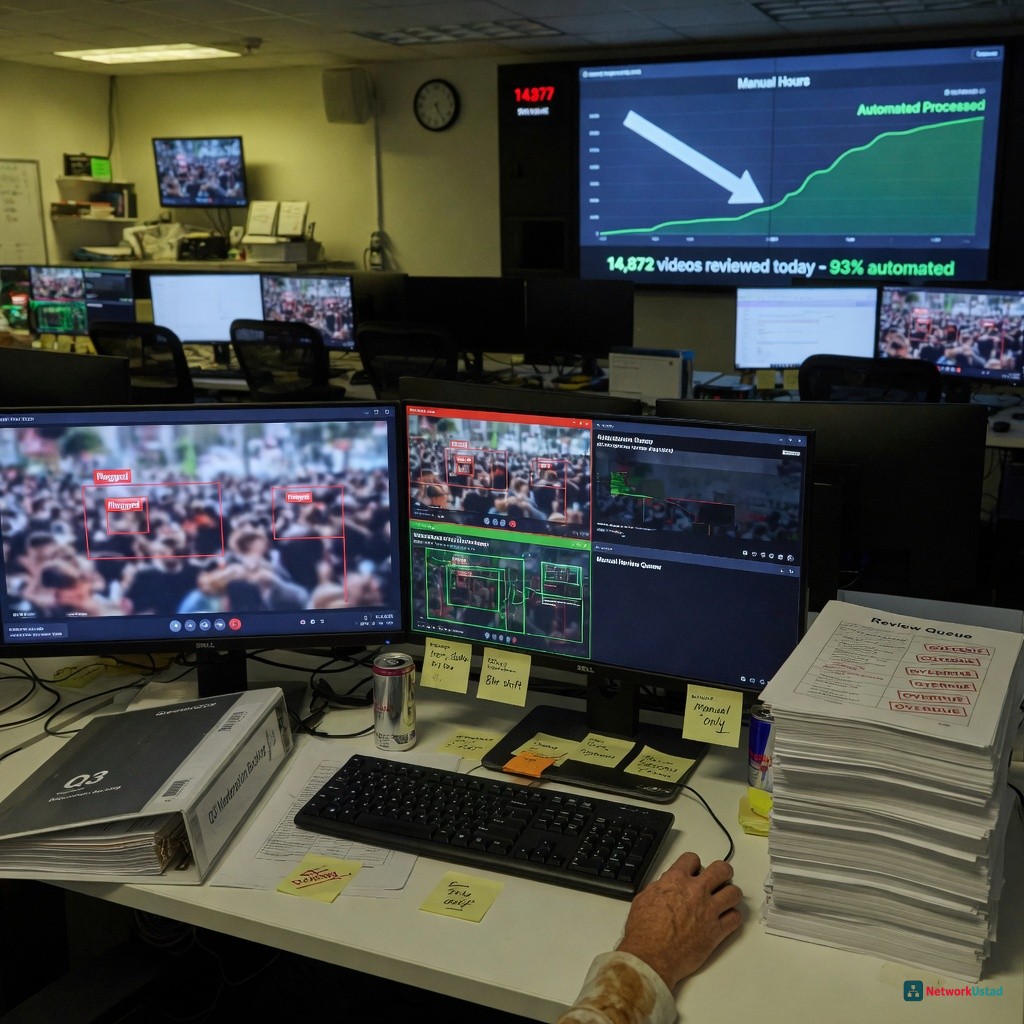
For platforms that host user-generated content, the volume of video uploads can quickly outpace the capacity of a human workforce. Whether you are managing a niche community forum, a corporate training portal, or a social marketplace, the financial burden of monitoring every second of uploaded footage is immense. Manual review is not just slow; it is one of the most expensive line items in a digital operations budget.
When companies rely solely on human moderators to scrub videos for policy violations, they face a linear cost increase: as the user base grows, the payroll must grow proportionally. This creates a scaling bottleneck that can stifle growth and drain capital.
The Hidden Costs of Manual Video Review
Many business owners look at the hourly rate of a moderator and assume that is the total cost. However, the true operational expense of manual review is far more complex.
Payroll and Management Overhead
Beyond the base salary, manual review requires a layer of management to ensure consistency. Human reviewers often disagree on what constitutes a violation, leading to “moderation drift.” To combat this, companies must invest in constant training, quality assurance audits, and managerial oversight to ensure that a video flagged in one region is treated the same way in another.
The Risk of Human Error and Latency
Human fatigue is a critical factor in operational cost. After several hours of reviewing repetitive or disturbing content, accuracy drops. This leads to two costly outcomes: “false negatives,” where harmful content remains live and exposes the company to legal or brand risk, and “false positives,” where legitimate content is removed, frustrating users and increasing the volume of support tickets.
Infrastructure and Training Cycles
Onboarding a new moderator takes time. Creating a comprehensive handbook of community guidelines and training a new hire to apply those rules consistently takes weeks of productivity. In a high-turnover environment, this cycle of training becomes a perpetual drain on resources.
Transitioning to an Automated Framework
The most effective way to decouple growth from operational spending is to move away from a “review everything” model toward a “review by exception” model. By implementing video moderation software, organizations can shift the bulk of the heavy lifting away from human eyes.
Filtering the Noise
The primary goal of automation is to eliminate the “noise.” A vast majority of uploaded videos are benign and compliant. Automation can instantly verify these files, allowing them to go live without human intervention. This means your human team no longer spends 90% of their time confirming that a video is safe; instead, they spend 100% of their time handling the complex, high-risk cases that actually require human judgment.
Reducing the Review Queue
When the software handles the initial pass, the review queue shrinks dramatically. This reduction in volume allows a company to either reduce its headcount or reallocate existing staff to more value-driven tasks, such as community engagement or product development. The result is a significant decrease in the cost-per-video reviewed.
Measurable Outcomes of Automated Review
Switching to an automated system provides several concrete financial and operational advantages that impact the bottom line directly.
Faster Turnaround Times
Latency in content approval can lead to user churn. If a user uploads a video and it sits in a pending state for 24 hours due to a backlog, the perceived value of the platform drops. Automation reduces this latency to seconds, improving user retention and increasing the lifetime value of the customer.
Lower Legal and Compliance Exposure
The cost of a single high-profile policy violation—such as the hosting of illegal content—can far outweigh the annual cost of a moderation tool. Automation provides a consistent, tireless first line of defense that does not suffer from fatigue or oversight, significantly lowering the risk of regulatory fines or lawsuits.
Predictable Scaling Costs
Unlike payroll, which fluctuates with hiring and benefits, software costs are generally more predictable. This allows financial officers to forecast budgets with higher accuracy. As your platform scales from 1,000 to 1,000,000 videos, your operational costs remain relatively flat rather than spiking in a linear fashion.
Strategic Implementation for Business Owners
To maximize cost savings, businesses should integrate automated review as part of a tiered strategy. Use the software to handle the bulk of the filtering and use a small, expert team of human moderators to handle the “grey area” content. This hybrid approach ensures that the platform remains safe and compliant while keeping operational overhead at a minimum. By removing the necessity for humans to watch every single upload, companies can finally stop spending their budget on repetitive tasks and start investing in scalable growth.