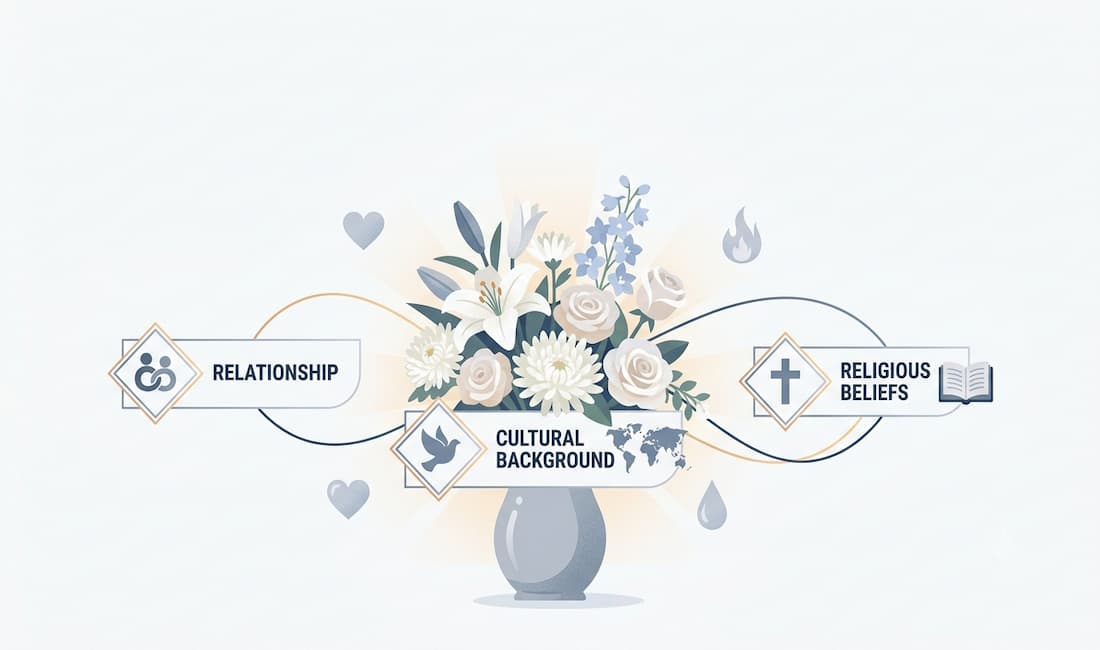
Flower choices express respect, care, and quiet emotional support during difficult moments. Consider each factor and choose arrangements that reflect sincere intention and respectful meaning. Selecting appropriate flowers requires attention to personal, cultural, and situational details. Well-chosen floral arrangements carry emotional value and communicate respect through carefully selected colors and arrangement styles. The following factors outline the key elements that guide appropriate condolence flower selection.
Relationship With the Deceased
Appropriate sympathy flowers reflect the depth of connection shared with the deceased individual. Close family members usually receive larger arrangements that convey deep emotional respect. Flowers such as lilies or roses suit close bonds due to their strong symbolic value.
Friends or colleagues receive simpler designs that still express genuine care and concern. Floral size, type, and arrangement style depend on the strength of the personal relationship. A distant acquaintance requires modest choices that maintain respect without unnecessary display.
Cultural Background of the Family
Cultural background shapes acceptable flower types and presentation styles in mourning settings. Certain cultures associate specific flowers with grief, respect, or remembrance traditions. White chrysanthemums hold strong significance in many Asian traditions connected to mourning.
White flowers represent purity and peace in many traditions across different regions. Some cultures avoid bright colors since such tones may seem unsuitable for mourning contexts. Traditional preferences guide floral design and ensure the arrangement matches family expectations.
Religious Beliefs and Practices
Religious customs influence floral selection, arrangement structure, and acceptable presentation forms. Some religions support simple arrangements that reflect humility and spiritual focus. Lilies often appear in Christian services due to their association with peace and renewal.
Certain faiths prefer specific flowers that hold symbolic meaning within religious teachings. Other traditions may limit or discourage flower use during funeral services entirely. Respect for religious values ensures that floral choices remain suitable and considerate.
Flower Color and Symbolic Meaning
Color selection plays a central role in expressing emotion through floral arrangements. White flowers such as lilies or carnations represent peace, purity, and quiet remembrance. Soft pastel shades express sympathy while maintaining a calm and respectful appearance.
Darker tones reflect solemnity and deep respect for the departed individual. Each color choice communicates a distinct message that matches the intended emotional expression. Clear color selection ensures that the arrangement expresses appropriate sentiment without confusion.
Funeral or Memorial Service Location
Service location determines the suitable size and type of floral arrangement presentation. Funeral homes accommodate large standing sprays or wreaths for formal display during services. Church services require arrangements that align with the setting’s formal and respectful structure.
Private homes suit smaller bouquets that offer comfort without overwhelming available space. Roses or carnations work well in compact arrangements placed within home settings. Outdoor services require durable flowers that maintain freshness under varying environmental conditions.
Attention to these factors ensures that floral choices reflect genuine respect and clear emotional expression. Carefully selected sympathy flowers serve as meaningful expressions that convey sincere care and thoughtful remembrance. Each arrangement communicates a message that aligns with personal, cultural, and situational expectations. Select flowers that match the tone of the occasion and reflect the appropriate sentiment. A well-chosen arrangement creates a lasting impression that honors memory with grace and quiet dignity.