
Picture this: you’re halfway through a mountain trail, your dog darts after a squirrel, and within seconds, they’ve vanished into dense woodland. For owners of high-energy dogs, this isn’t just a hypothetical — it’s a genuine fear that shadows every outdoor adventure. Active dogs are curious, fast, and instinct-driven, which makes them wonderful companions and unpredictable ones at the same time.
The risks are real. Whether it’s a forest hike, a beach run, or a camping weekend, active dogs face dangers ranging from wildlife encounters to simply getting disoriented far from home. Traditional ID tags and microchips help with recovery after the fact, but they do nothing in the critical moments when distance is growing and time matters most.
GPS tracking collars have emerged as a practical, technology-driven answer to this problem. These pet safety devices give owners real-time visibility into their dog’s whereabouts, turning anxiety into confidence. But modern collars go further than simple location tracking — many now integrate health monitoring sensors and AI veterinarian features that help you stay ahead of your dog’s physical well-being, not just their position on a map.
This article breaks down how GPS tracking collars work, what outdoor pet tracking looks like in practice, and how to choose and use the right device for your active dog’s lifestyle.
The Essentials of GPS Tracking Collars for Dogs
GPS tracking collars are wearable devices that combine satellite navigation, cellular connectivity, and mobile app integration to give dog owners a live window into their pet’s location. At their core, these collars receive signals from multiple satellites, calculate precise coordinates, and relay that data through cellular or Wi-Fi networks to a smartphone app. For active dog owners, this means knowing exactly where their dog is — whether that’s fifty meters ahead on a trail or two kilometers off course in dense brush.
How GPS Technology Works in Pet Collars
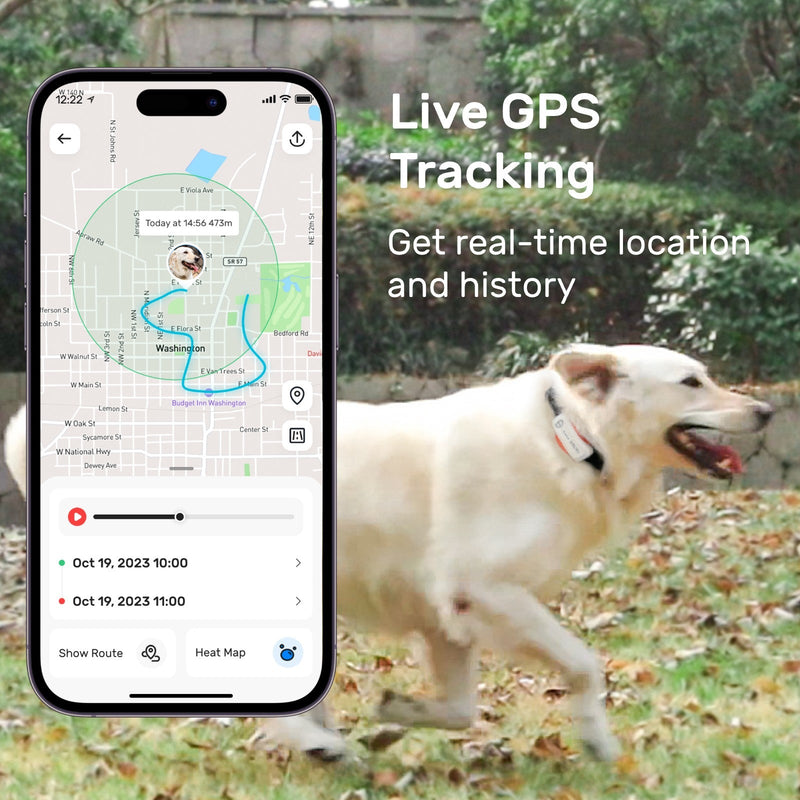
The collar’s GPS receiver locks onto signals from multiple satellites simultaneously, triangulating the dog’s position with accuracy typically ranging from two to ten meters. That coordinate data is then transmitted via cellular networks to a cloud server, which pushes real-time updates to the owner’s smartphone app. Most modern collars refresh location every few seconds during active tracking, so when your dog moves, you see it almost instantly. The quality of this connection depends on cellular coverage in the area, which is worth checking before heading into remote terrain.
Core Features of a Reliable Pet Safety Device
Not all GPS collars are built equally, and for active dogs, durability is non-negotiable. Look for devices rated at least IP67 for waterproofing — enough to handle river crossings and heavy rain. Battery life varies widely, from eight hours to several days depending on tracking frequency, so matching this to your typical adventure length matters. Devices like the DBDD GPS Tracker are designed with these real-world demands in mind, offering a reliable app interface that doesn’t require fumbling through menus during a stressful moment. Most devices operate on subscription models that unlock full tracking capabilities, so factor in ongoing service costs alongside the upfront hardware price when evaluating your options.

Outdoor Pet Tracking: Keeping Your Dog Safe on Adventures
Active dogs don’t pause for permission before bolting toward something interesting, and that instinct is exactly what makes outdoor pet tracking so valuable. Whether you’re navigating a forested trail, setting up camp in unfamiliar territory, or letting your dog stretch out during a long run, the ability to monitor their location in real time fundamentally changes how you experience those moments. Instead of scanning the treeline with rising panic, you’re watching a moving dot on your phone, confident you can close the distance if needed.
Real-Time Location Updates for Peace of Mind
Modern GPS collars deliver location updates every few seconds through a companion app, giving you a near-live picture of where your dog is at any given moment. In practice, this means pulling out your phone when your dog disappears around a bend and seeing exactly which direction they went — whether they doubled back to a stream crossing or kept pushing further into the woods. Most apps display the dog’s path as a breadcrumb trail, so you can retrace their route rather than searching blindly. Some collars also allow you to share your dog’s live location with a hiking partner, which is particularly useful when splitting up to cover ground quickly. The faster you can orient yourself relative to your dog, the faster retrieval becomes — and in outdoor environments where conditions change rapidly, that speed matters.
Geofencing: Creating Safe Zones for Your Pet
Geofencing lets you draw a virtual boundary around a specific area — a campsite perimeter, a park boundary, or the edge of a trail system — and receive an immediate alert if your dog crosses it. Setting this up takes about two minutes in most apps: open the map, draw or drop a radius around your chosen zone, and save it. The moment your dog’s collar exits that boundary, your phone notifies you before the distance becomes a problem. This proactive alert system is particularly effective during camping trips, where a dog can wander unnoticed while you’re cooking or setting up shelter. Rather than reacting after a dog is already far gone, geofencing gives you a head start — turning a potential emergency into a quick, low-stress retrieval.
Beyond Location: Health Monitoring with AI Veterinarian Features
Location tracking solves one half of the active dog safety equation. The other half is understanding what’s happening inside your dog’s body — especially after demanding physical activity. Modern GPS collars have evolved well beyond simple positioning tools, integrating biometric sensors that monitor health metrics continuously throughout the day. For owners who push their dogs hard on trails or in field sports, this data fills a critical gap between annual vet visits and the moments when something starts going wrong.
Tracking Activity and Vital Signs
Health-enabled collars use accelerometers and heart rate sensors to capture a detailed picture of your dog’s physical state. The metrics typically include daily step counts, calories burned, active versus resting time, sleep quality, and heart rate patterns during exertion and recovery. Over time, this builds a personalized baseline for your individual dog — not a generic breed average, but your dog’s normal. That baseline is where the real value lives. If your typically high-energy dog logs significantly fewer steps than usual or shows shorter deep sleep periods after a long run, the app flags it as a deviation worth noting. For active dogs, tracking recovery metrics after strenuous exercise helps owners make smarter decisions about rest days, pacing on long trips, and when a dog might be pushing through discomfort rather than genuine enthusiasm.
The Role of AI in Early Health Detection
AI veterinarian features take raw sensor data and apply pattern-recognition algorithms to detect anomalies that would be invisible to casual observation. Rather than simply displaying numbers, the system learns what normal looks like for your dog and alerts you when something shifts — a sustained elevated heart rate after rest, unusual nighttime restlessness, or a multi-day drop in activity that could indicate early-stage illness or joint discomfort. Some platforms allow you to share this data directly with your veterinarian, giving them objective behavioral history rather than relying solely on a brief in-clinic snapshot. For active dogs who mask pain instinctively, this kind of continuous, AI-analyzed monitoring can catch problems weeks before they become serious — turning your collar into a genuine proactive care tool, not just a reactive one.
Practical Guide: Choosing and Using GPS Tracking Collars
Knowing what GPS collars can do is one thing — picking the right one and using it effectively is another. With dozens of options on the market, the decision comes down to matching the device’s strengths to your dog’s specific lifestyle and your own habits as an owner. A collar built for urban dog walks won’t serve you on a multi-day backcountry trip, and a feature-heavy device is useless if the app is too complicated to navigate under pressure.
How to Choose the Right GPS Collar for Your Active Dog
Start with coverage. If your adventures regularly take you into rural or mountainous areas, prioritize collars that operate on multiple cellular networks rather than a single carrier — broader network compatibility means fewer dead zones. Battery life should align with your longest typical outing, with a comfortable buffer built in. A collar rated for 24 hours of continuous tracking is adequate for day hikes but insufficient for weekend camping without a charging opportunity. For dogs that swim or run through streams, confirm the waterproofing rating is IP67 or higher before buying. If health monitoring matters to you — and for active dogs, it should — verify that the collar includes heart rate and activity sensors, not just GPS. These features aren’t universal, and some devices require an upgraded subscription tier to unlock them. Finally, match the collar’s physical size and weight to your dog: a device designed for large breeds will sit awkwardly on a 20-pound dog and may affect their movement.
Setting Up and Maximizing Your Pet’s Safety Device
Once you have the collar, setup takes roughly fifteen minutes. Charge the device fully before first use, then download the companion app and create an account. Attach the collar snugly — you should fit two fingers between the collar and your dog’s neck — and power it on. Follow the app’s pairing instructions, which typically involve scanning a QR code or entering a device ID. Before heading outdoors, run a location test in your backyard to confirm the GPS is acquiring a signal accurately. Set up at least one geofence immediately, even a simple home boundary, so you understand how the alert system behaves before you need it in the field. Check for firmware updates monthly, as manufacturers regularly improve tracking accuracy and battery efficiency through software. Keep a small portable charger in your pack on longer trips, and establish a habit of checking battery level each morning before setting out — catching a low charge at camp is far better than discovering it mid-trail.
GPS Tracking Collars as Essential Safety Tools for Active Dogs
GPS tracking collars have quietly become one of the most meaningful investments an active dog owner can make. They address two of the most pressing concerns in one wearable device: knowing where your dog is at every moment during outdoor adventures, and understanding what’s happening with their health between vet visits. Real-time location updates, geofencing alerts, and breadcrumb trail mapping turn potentially stressful outings into manageable, confident experiences. Meanwhile, AI veterinarian features and continuous health monitoring give you a level of insight into your dog’s physical well-being that simply wasn’t accessible to everyday pet owners a few years ago.
For dogs that run hard, explore widely, and push their physical limits alongside you, these tools aren’t luxury additions — they’re practical safety infrastructure. The technology exists, it works, and it’s become accessible enough that most active dog owners can fit it into their routine without significant friction. Options such as the DBDD GPS Tracker reflect how far this category has matured, combining location tracking and health monitoring into a single, trail-ready device.
If you’ve been on the fence, consider what you’re actually buying: not a gadget, but time. Time to respond before a wander becomes a disappearance. Time to catch a health problem before it becomes a crisis. That’s the real value GPS tracking collars offer — and for a dog who gives you everything on every trail, that peace of mind is worth every bit of it.