If you share your home with two or more cats, you already know the drill: multiple litter boxes to scoop, persistent odors that seem impossible to eliminate, and the nagging worry that one of your cats might be showing early signs of illness without you even noticing. Managing litter duty for a single cat is manageable enough, but scale that up and it quickly becomes one of the most time-consuming parts of pet ownership.
Traditional litter boxes simply weren’t designed with today’s busy cat owners in mind. They demand daily attention, offer no insight into your pet’s health, and do nothing to curb the odor between cleanings. The Meowant Cat Litter Box changes that equation entirely. Combining automated self-cleaning technology with built-in health monitoring, it’s engineered to tackle the real frustrations of multi-cat households head-on.
In this article, we’ll walk through everything the Meowant litter box offers — from how its self-cleaning mechanism works to the health data it collects and what that means for your cats’ long-term well-being. By the end, you’ll see exactly how this single device can transform your daily cat care routine from a chore into something almost effortless.
The Growing Need for Smart Litter Solutions in Multi-Cat Households
Anyone who has kept two or more cats knows that the math doesn’t simply double — it compounds. Two cats can generate enough waste to fill a standard litter box within a day, and three or more cats turn litter duty into a near-constant responsibility. Beyond the sheer volume of waste, multi-cat households face a heightened risk of litter box avoidance, where cats refuse to use a box that isn’t clean enough, leading to accidents around the home. Keeping up with that demand manually isn’t just tedious; it’s genuinely difficult to sustain.

Traditional litter boxes offer no flexibility here. They sit static, accumulate waste, and rely entirely on the owner’s schedule to stay sanitary. There’s no feedback, no data, and no automation — just a scoop and a bag. For cat owners already managing busy lives, this gap between what traditional products offer and what modern households actually need has become increasingly frustrating.
That frustration is driving real demand for smarter cat care products. Pet owners today expect the same kind of technology-assisted convenience in pet care that they enjoy in other areas of daily life. Automated solutions that handle routine tasks without constant intervention, combined with pet health solutions that surface early warning signs before they become serious problems, represent exactly where the industry needs to go. A cat that visits the litter box more or less frequently than usual, or whose waste changes in consistency, can be signaling an underlying health issue — but without monitoring tools, those signals go unnoticed. Smart litter technology closes that gap, turning a mundane household chore into a meaningful source of insight for proactive, informed cat care.
What is the Meowant Cat Litter Box? A Comprehensive Overview
The Meowant Cat Litter Box is a self-cleaning litter box designed to remove the manual effort from one of pet ownership’s least enjoyable tasks while simultaneously turning routine litter box visits into a source of meaningful health data. At its core, it’s an automated waste management system — but calling it just that undersells what it actually does for cat owners managing multiple pets.
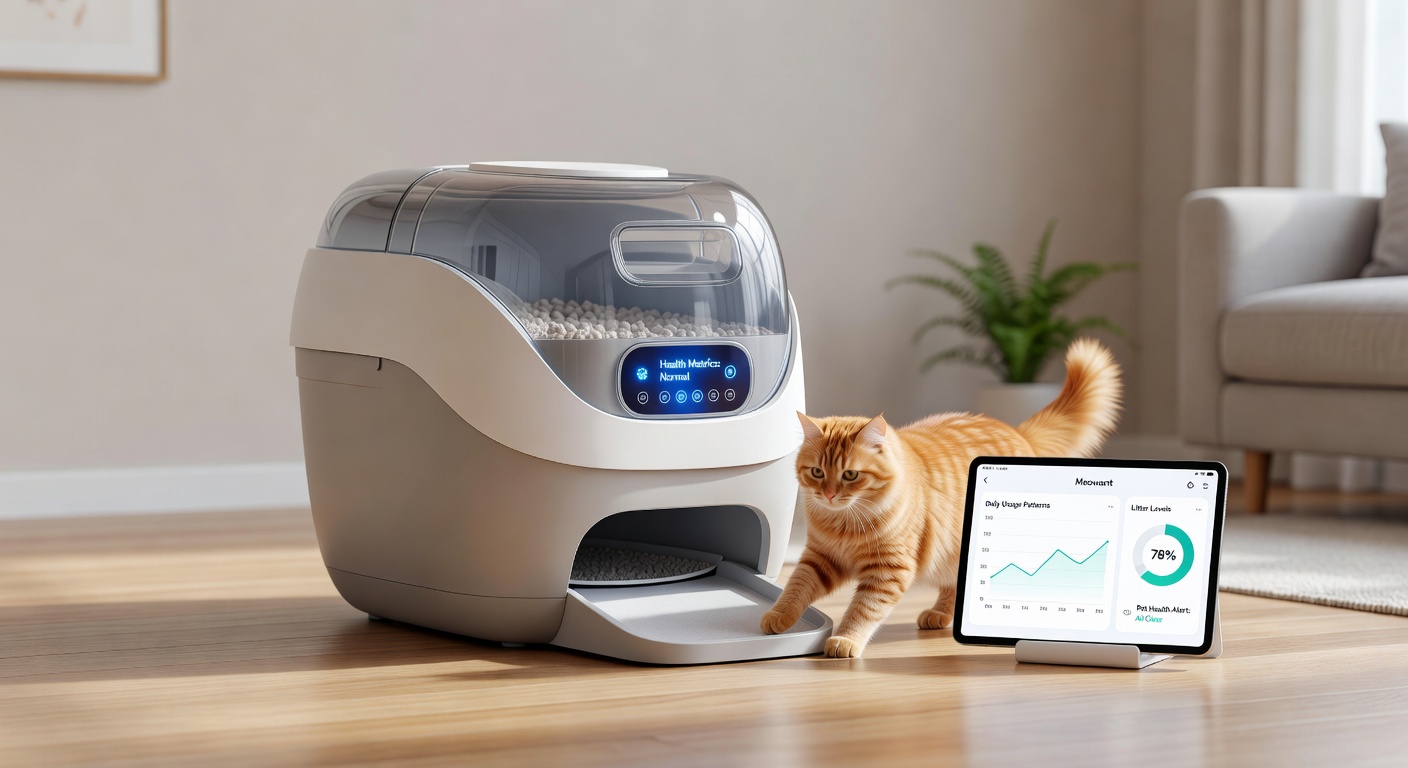
The unit is built around a set of integrated sensors that detect when a cat enters and exits the box, triggering the cleaning cycle automatically after each use. The cleaning mechanism rakes clumped waste into a sealed disposal compartment, keeping the litter surface fresh without any manual scooping. An odor control system works in tandem with the enclosure design to contain smells between emptying cycles, which is a meaningful upgrade over open-top boxes that broadcast odors throughout a room.
Beyond waste management, the Meowant litter box incorporates health monitoring tools that track each cat’s visit duration, frequency, and weight. This data is logged and accessible through a companion app, giving owners a real-time window into their pets’ bathroom habits — patterns that often serve as early indicators of health issues. The app connects the litter box to a broader smart home ecosystem, allowing it to work alongside other connected pet care products for a more complete picture of each animal’s daily routine.
For households with two or more cats, the device supports individual cat identification, meaning health data isn’t pooled together but attributed to each specific pet. This makes the Meowant litter box not just a convenience tool but a genuinely functional piece of cat care infrastructure — one that handles the dirty work while quietly watching over your cats’ well-being.
Simplifying Litter Management: Step-by-Step Guide with the Meowant Box
Getting started with the Meowant self-cleaning litter box is straightforward. Begin by placing the unit in a low-traffic area your cats already frequent, then fill it with clumping litter to the indicated fill line. Download the companion app, connect the box to your home Wi-Fi, and follow the in-app pairing steps — the whole setup typically takes under fifteen minutes. Once connected, you can configure cleaning delay timers to ensure the cycle only runs after your cat has fully exited, and set up individual cat profiles so the device can begin distinguishing between pets.
How the Self-Cleaning Mechanism Works Efficiently
After each visit, the built-in sensors confirm the cat has left before initiating the cleaning cycle. A rotating rake combs through the litter, separating clumps from clean granules and depositing waste into the sealed disposal drawer below. The enclosure design traps odors at the source, while an optional carbon filter layer further neutralizes smells between emptying sessions. For homes with three or more cats, shortening the cleaning delay to its minimum setting keeps the litter surface consistently fresh and reduces the chance of any cat rejecting the box due to residual waste.
Daily and Weekly Maintenance Routines
Daily upkeep is minimal — check the waste drawer and empty it when the app sends a full-drawer notification, then top off the litter as needed. Weekly, remove the drawer entirely, rinse it with warm water, and allow it to dry before reinserting. Every two to four weeks, wipe down the interior globe with a damp, unscented cloth to prevent residue buildup. Compared to scooping multiple traditional boxes twice a day, this routine cuts active maintenance time dramatically while maintaining a consistently hygienic environment for every cat in the household.
Advanced Health Monitoring Features for Reliable Pet Care
One of the most underappreciated aspects of litter box behavior is how much it reveals about a cat’s health. Changes in visit frequency, time spent in the box, or the volume of waste produced can all point to conditions ranging from urinary tract infections to kidney disease — problems that, caught early, are far more manageable than when they progress undetected. The Meowant litter box treats every visit as a data point, building a behavioral baseline for each cat and flagging deviations that might otherwise go unnoticed for weeks.
The device tracks three core metrics with each use: visit duration, visit frequency, and the cat’s weight as measured by the box’s built-in scale. Weight fluctuations in cats are a well-documented early indicator of illness, yet most owners only notice significant changes after they’ve already become concerning. By logging weight at every visit, the Meowant system creates a continuous record that makes subtle trends visible long before they become alarming. Similarly, a cat that suddenly visits the box more frequently — or strains for extended periods without producing much waste — may be signaling a urinary blockage or inflammation, conditions that require prompt veterinary attention.
Tracking Usage Patterns and Alerts for Early Detection
The companion app translates raw usage data into readable trend graphs, displaying each cat’s visit history, duration averages, and weight over time. When the system detects a pattern outside the established norm — an unusually long session, a dramatic drop in visit frequency, or a weight change beyond a set threshold — it sends a push notification directly to the owner’s phone. This gives cat owners something genuinely actionable: instead of vague concern, they arrive at the vet with specific data logs that help clinicians make faster, more accurate diagnoses. Sharing a week’s worth of litter box behavior history with a veterinarian provides context that a brief office observation simply cannot replicate, making the monitoring feature a practical tool for proactive, informed care rather than a novelty.
Integrating Health Data with Other Smart Pet Devices
The Meowant litter box is designed to function as part of a broader connected pet care ecosystem rather than as a standalone device. When paired with a smart automatic feeder, for instance, the combined data from food intake and litter box output creates a much fuller picture of each cat’s daily health status. A cat eating normally but visiting the litter box far less than usual tells a different story than one whose food consumption and waste output have both dropped simultaneously. Syncing these devices through the app takes only a few minutes: navigate to the integrations menu, select compatible devices, and assign them to the relevant cat profiles. Once linked, the app consolidates the data streams into a single dashboard, making it straightforward to spot correlations and share comprehensive health summaries with your veterinarian when needed.
Comparing Meowant with Other Cat Care Products for a Complete Solution
Most automatic litter boxes on the market focus exclusively on convenience — they clean themselves and stop there. What sets the Meowant litter box apart is that it treats waste management as a starting point rather than an endpoint. Competing products may offer similar self-cleaning mechanics, but few combine that automation with per-cat health tracking, weight monitoring, and app-based trend analysis in a single unit. Traditional litter boxes, meanwhile, require full manual effort and offer nothing in the way of health insight whatsoever.

When positioned alongside automatic feeders and smart water fountains — Meowant also offers both within its connected pet care lineup — the litter box completes a connected care triangle. A feeder tracks what goes in, a smart fountain monitors hydration, and the litter box tracks what comes out — together, these devices give owners a genuinely comprehensive view of each cat’s daily health status. For multi-cat households especially, this layered approach transforms reactive care into something proactive, catching subtle changes before they escalate into costly veterinary emergencies.
Smart Litter Technology as the Future of Multi-Cat Care
The Meowant Cat Litter Box addresses two of the most persistent frustrations in multi-cat ownership: the relentless demand of manual litter maintenance and the near-impossible task of monitoring each pet’s health through casual observation alone. By automating the cleaning cycle and converting every litter box visit into trackable health data, it shifts cat care from reactive to genuinely proactive.
For households managing two, three, or more cats, that shift matters enormously. Time saved on daily scooping adds up quickly, but the real value lies in what the health monitoring delivers — early warnings that give owners the chance to act before a minor issue becomes a serious one. Weight trends, visit frequency changes, and behavioral anomalies that would otherwise go unnoticed for weeks are now surfaced automatically, giving both owners and veterinarians a clearer picture of each cat’s well-being.
Incorporating the Meowant litter box into a broader connected care setup — alongside smart feeders and water fountains — builds the kind of comprehensive health visibility that modern pet ownership increasingly demands. As smart pet technology continues to evolve, devices like this represent the direction the entire industry is heading: tools that do more than simplify chores, but actively contribute to longer, healthier lives for the animals we care about.