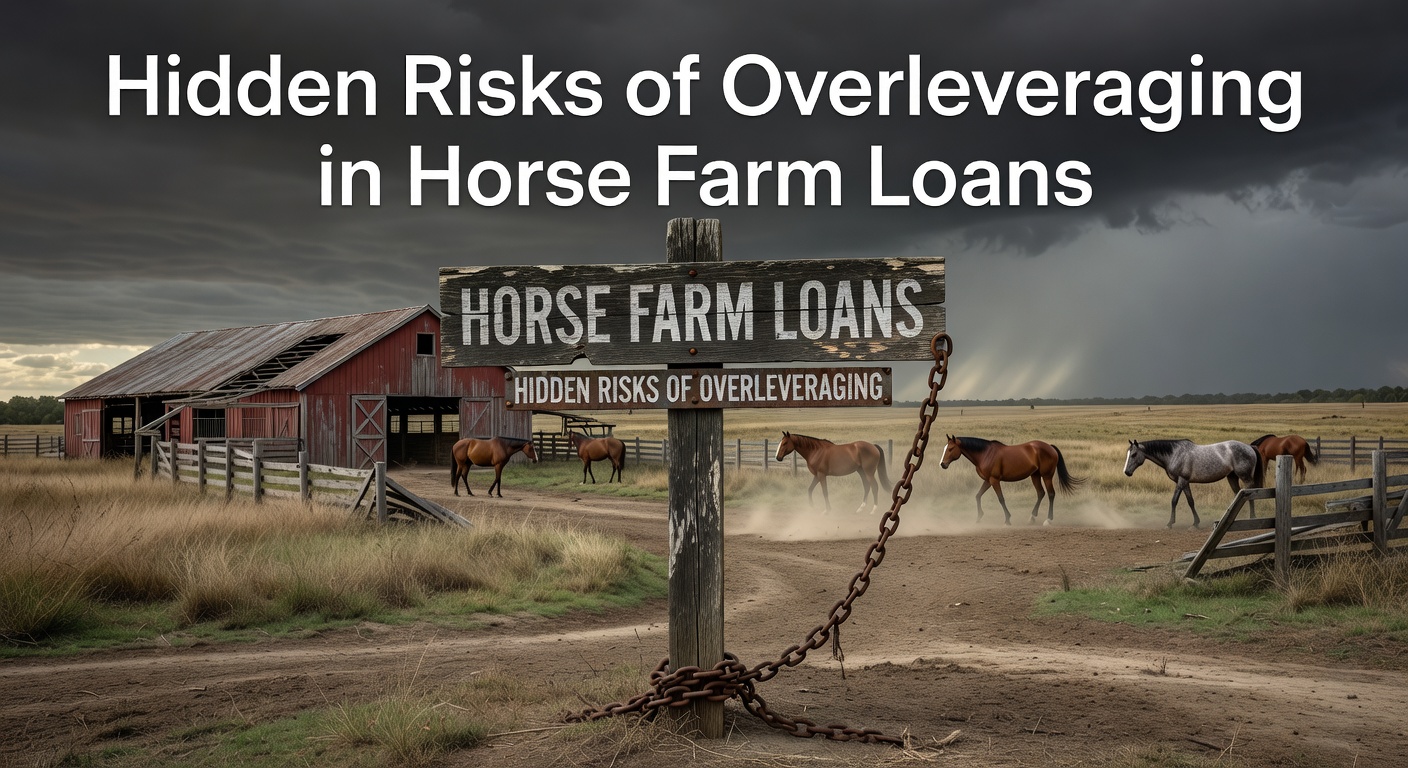
Horse farm mortgage loans can help operations grow into full-scale equine facilities. Many borrowers using equine farm loans aim to expand quickly by increasing leverage. However, taking on too much debt can introduce risks that are not always clear at the outset.
Loan agreements may include variable rates or large end payments that are easy to overlook when closing timelines move fast. When elevated debt levels meet rate increases or declining land values, margins tighten, and operational pressure increases as ongoing care and facility costs remain fixed.
In recent lending cycles, a growing share of agricultural loan stress has been tied to high leverage on rural real estate, including equine properties exposed to valuation swings. If these risks are not addressed early, long-term financial stability can be affected as market conditions shift. Rising interest rates continue to add pressure to repayment structures tied to larger loan balances.
Impact of Interest Rate Increases
Rate increases place direct pressure on borrowers carrying larger balances under horse farm mortgage loans. These impacts become more pronounced as leverage increases.
Higher Interest Costs: Larger loan balances increase total interest exposure. A greater portion of revenue is directed toward interest payments, reducing available cash flow for operations.
Lower Debt Coverage Ratio: Rising rates reduce repayment capacity. More income must be allocated to servicing debt, tightening financial flexibility.
Increased Carryover Debt: Higher interest costs can extend unpaid balances. This creates pressure across multiple operating cycles when income does not fully cover obligations.
Reduced Farm Equity: Debt-heavy structures limit equity growth. Rising rates slow principal reduction, making it harder to build long-term value.
Greater Sensitivity to Income Declines: Highly leveraged operations are more exposed to downturns. Even moderate drops in revenue can impact repayment stability.
Consequences of Market Value Fluctuations
Market value shifts can expose structural weaknesses in leveraged equine farm loans.
Equity Loss: Declining land values reduce ownership position. This can limit refinancing options and reduce financial flexibility.
Increased Default Risk: Lower asset values weaken loan security. This increases pressure on repayment and can affect future financing opportunities.
Limited Flexibility: Reduced equity restricts strategic options. Borrowers may have fewer paths to restructure or adjust loan terms when market conditions change.
Risks of Balloon Payment Structures
Balloon structures can create concentrated financial risk when paired with higher leverage levels.
Sudden Large Obligation: A balloon payment requires a lump-sum payoff at maturity. This can create significant pressure if not planned in advance.
Refinancing Pressure: Borrowers often depend on refinancing to meet the final balance. Market conditions at that time may not support favorable terms.
Increased Default Risk: Failure to meet the balloon payment can trigger default. This risk increases when equity levels are already limited.
Impact During Market Downturns: Market instability reduces available refinancing options. This creates additional pressure during already challenging conditions.
Stress on Cash Flow: Large single payments disrupt seasonal income cycles. This misalignment can strain operational stability.
Overextending debt within equine farm loans often appears manageable during periods of strong demand and stable values. However, elevated debt levels increase exposure to market shifts and rate changes.
Debt servicing requirements can compress operating margins, leaving limited room for adjustments when income fluctuates. Missed payments may lead to stricter lender terms, additional fees, or forced asset decisions.
Larger loan balances also limit access to additional capital. Lenders may reduce exposure to highly leveraged operations, restricting funding for improvements or expansion.
At Farm Mortgage Capital, loan structures are designed to align with long-term operational performance and realistic repayment capacity. A disciplined approach to leverage supports stability and preserves flexibility as market conditions evolve.
Careful planning and balanced financing decisions remain central to protecting long-term value in horse farm mortgage loans.