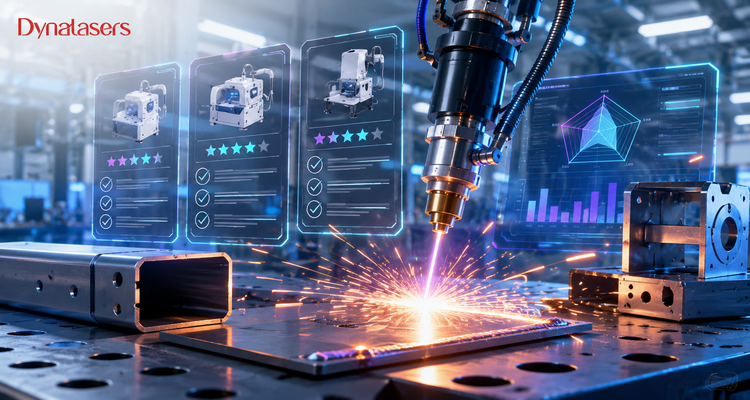
It is easy to collect quotes from several laser welding machine suppliers. The harder part is knowing which supplier can actually support your shop after the machine arrives.
For metal fabrication projects, a low price is not enough. Buyers also need to check welding ability, material range, cooling design, gun comfort, training, spare parts, and warranty. A good supplier should help match the machine to real workpieces, not just send a price list and product photos.
Why Metal Fabrication Buyers Need More Than a Price Quote
A price quote tells you what the machine costs. It does not tell you how well the machine will fit your work.
A fabrication shop may weld stainless steel cabinets, carbon steel frames, aluminum covers, brackets, tubes, or custom sheet metal parts. Each job has different requirements. A supplier that only talks about power may not understand the full process.
Before choosing a fiber laser welding machine supplier, buyers should look at the whole package:
Machine configuration
Welding power and real thickness range
Cooling method
Welding gun weight
Cable length and mobility
Parameter training
Delivery time
Spare parts
Warranty
Safety guidance
A good supplier should ask about your materials before recommending a model. If every buyer gets the same machine suggestion, that is usually not a good sign.
The best laser welding equipment manufacturers help buyers match equipment to real applications. They do not just sell a machine and leave the user to solve everything alone.
Practical Checklist for Comparing Laser Welding Machine Suppliers
Use this checklist before making a decision. It helps separate real support from simple sales talk.
1. What materials do you weld most often?
Start with your main materials. Common fabrication materials include:
Stainless steel
Carbon steel
Aluminum
Galvanized steel
Brass
Copper
A supplier should explain what the machine can handle and where extra care is needed. For example, aluminum and copper usually need more careful control than stainless steel.
2. What thickness range do you need?
Do not choose a machine only because the maximum welding depth looks impressive.
A shop welding thin sheet metal has different needs from a shop repairing thicker steel structures. Too much power can make thin parts harder to control. Too little power can lead to weak penetration.
Ask for realistic welding guidance, not only ideal sample results.
3. Do you need welding only, or more functions?
Some shops only need welding. Others need a more flexible system.
Depending on the work, it may be useful to have:
Welding
Light cutting
Surface cleaning
Spot welding
Rust removal
If your shop handles repair, fabrication, and maintenance, a multi-function setup may save space and reduce equipment switching.
4. Is the machine easy to move?
A handheld laser welding machine should match real workshop movement.
Check:
Machine weight
Power supply
Cable length
Cooling design
Gun handling
Space required around the work area
For large workpieces or field repair, portability can be just as important as power.
5. Is the welding gun comfortable enough?
This is a small detail that becomes important quickly.
A gun may feel fine during a short test. After a full day, weight and balance matter. A lighter gun helps operators keep better control, especially on visible welds, corners, and long seams.
6. Does the supplier provide parameter guidance?
Laser welding quality depends on more than the machine.
The final result is affected by:
Focus position
Welding speed
Shielding gas
Wire feeding
Joint fit-up
Surface condition
Operator movement
Reliable laser welding system manufacturers should help users adjust these settings. Without that support, buyers may spend too much time guessing.
7. What warranty and support are included?
Warranty should be clear before purchase.
Ask the supplier:
How long is the warranty?
What parts are covered?
Are spare parts stocked?
Is remote support available?
Is training included?
How fast can they respond after delivery?
For industrial laser welding equipment, after-sales support is part of the real cost.
Quick Supplier Comparison Table
| What to Compare | Why It Matters | What to Ask |
|---|---|---|
| Power range | Matches material thickness | Which power fits my main jobs? |
| Cooling design | Affects stability and maintenance | Is it air, phase-change, or water cooled? |
| Gun weight | Affects operator comfort | Can operators use it all day? |
| Material support | Defines application range | Can it weld my actual materials? |
| Multi-function use | Saves space and switching time | Does it support welding, cutting, or cleaning? |
| Training | Reduces setup mistakes | Do you provide parameter guidance? |
| Warranty | Protects long-term use | What support is included after delivery? |
This table is not complicated, but it helps buyers avoid common mistakes.
Dynalasers as a Supplier for Flexible Metal Fabrication Work
Dynalasers is a practical option for buyers looking for flexible metal fabrication welding equipment. Its handheld laser systems are designed for workshops, repair teams, OEM users, field maintenance, and small-to-medium industrial production.
Depending on the selected series, Dynalasers systems can support:
Welding
Cutting
Cleaning
Spot welding
Rust removal
This is useful for shops that do not do the same task every day. One week may involve stainless steel sheet welding. The next may involve carbon steel repair, aluminum parts, or cleaning before joining.
Dynalasers systems can work with stainless steel, carbon steel, aluminum, brass, copper, and other common industrial metals, depending on the model, material thickness, and settings.
For buyers, the value is not only the machine. Dynalasers also provides:
Model selection support
Technical parameter guidance
Spare parts support
Remote assistance
2-year warranty
Factory price options for individual buyers
This kind of support matters because laser welding is a process. Good results come from the right machine, the right settings, and proper operator practice.
Dynalasers Product Options for Different Fabrication Needs
Dynalasers offers three handheld welding series. Each one fits a different type of work.
M Series for General Fabrication Shops
The M Series is designed for flexible workshop use. Models include M30, M50, and M70, with power from 800W to 1800W.
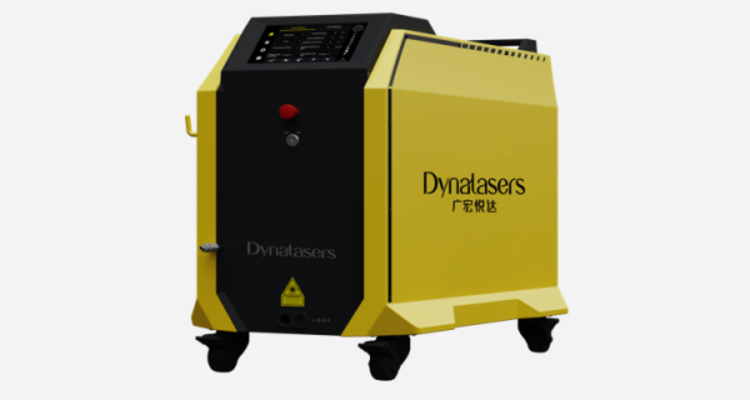
It supports continuous, pulse, spot, and turbo modes. Depending on the configuration, it can also support welding, cutting, and cleaning.
Best for
General fabrication shops
Medium-thickness sheet metal
Stainless steel and carbon steel work
Repair and maintenance tasks
Shops needing flexible multi-process use
The M Series is a good match for workshops that want one machine for several common jobs instead of a large fixed system.
D Series for Stronger Industrial Welding Projects
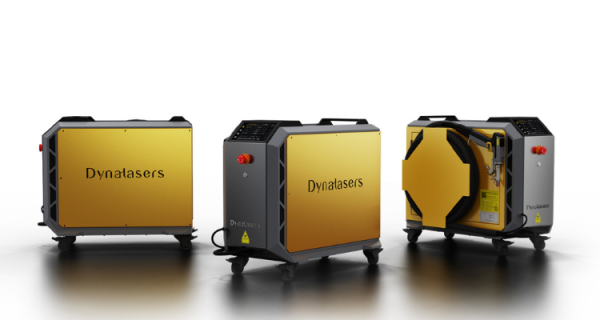
The D Series is built for stronger industrial welding needs. Models include D50P and D70P, with 1200W and 1800W power options.
It supports 5-in-1 capability: welding, cutting, cleaning, spot welding, and rust removal.
Best for
Industrial repair
Structural components
Batch production
Thicker stainless steel and carbon steel
Buyers needing stronger process coverage
The D Series is useful when a shop needs more welding power and more functions, but still wants better mobility than a large fixed workstation.
S Series for Portable and Small-Batch Welding
The S Series focuses on portability and simple handling. It is suitable for mobile repair, field maintenance, small workshops, custom parts, and small-batch production.
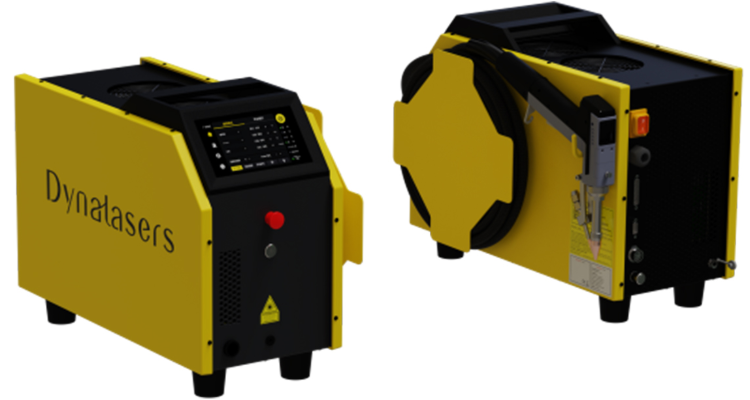
The S30 weighs less than 21 kg. The S40 weighs less than 22 kg. The welding gun weighs less than 0.48 kg.
Best for
Field maintenance
Mobile repair
Small workshops
Light production tasks
Compact welding setups
The S Series is not the choice for heavy industrial welding. Its strength is easy movement, simple handling, and practical use in limited spaces.
Dynalasers Series Comparison
| Series | Positioning | Power Range | Best Match |
|---|---|---|---|
| M Series | Flexible workshop welding | 800–1800W | Fabrication shops, repair teams, mixed tasks |
| D Series | Stronger industrial welding | 1200–1800W | Structural parts, batch production, industrial repair |
| S Series | Lightweight portable welding | 700–900W | Field repair, mobile service, small-batch work |
Conclusion
Comparing laser welding machine suppliers should begin with your real production needs. Price matters, but it is only one part of the decision. Materials, thickness, cooling, gun comfort, mobility, training, and support all affect whether the machine performs well after delivery.
Dynalasers gives metal fabrication buyers clear options. The M Series fits flexible shop work, the D Series supports stronger industrial projects, and the S Series is made for portable and small-batch welding. For workshops that want practical laser welding equipment without unnecessary complexity, that structure makes the choice easier.