How Can Astronauts Tell How Fast They’re Going?
NASA engineers have detailed methods astronauts use to measure spacecraft velocity during missions, as outlined in a recent agency update on April 17, 2026. These techniques rely on ground-based tracking and onboard systems to provide real-time speed data in the vacuum of space, where traditional references like landmarks vanish.
Primary Measurement Methods
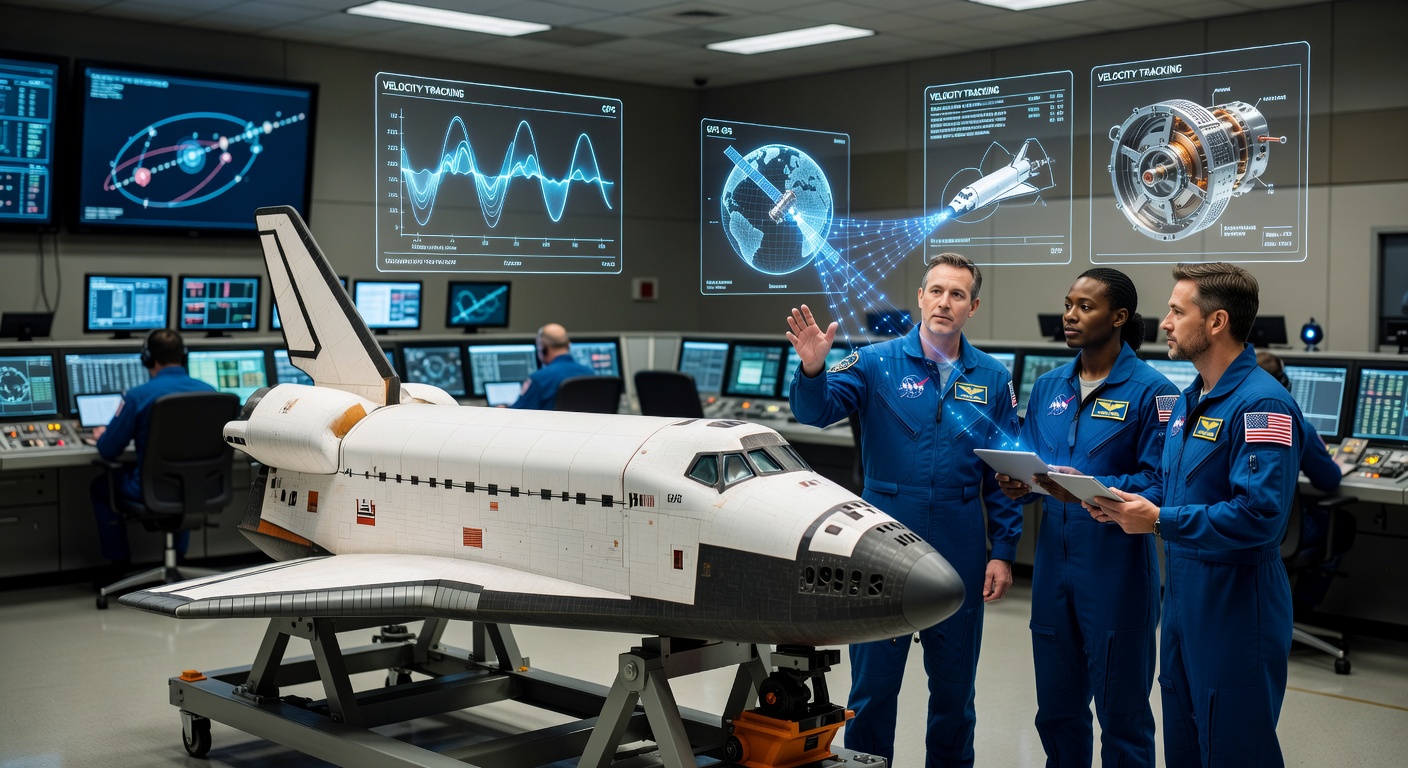
Astronauts determine their speed through Doppler shift analysis of radio signals. Ground stations on Earth transmit signals to the spacecraft, which relays them back. The frequency change in the returned signal indicates velocity relative to the station. This precision tracking allows calculations accurate to within millimeters per second.
Another key tool is the Global Positioning System (GPS), though limited to low Earth orbit. Satellites provide position fixes every few seconds, enabling velocity computation by comparing sequential locations. For missions beyond GPS range, such as lunar or deep space flights, NASA uses the Deep Space Network (DSN), a system of large antennas in California, Spain, and Australia.
Onboard Navigation Systems
Spacecraft carry inertial measurement units (IMUs) with gyroscopes and accelerometers. These devices track changes in velocity by integrating acceleration data over time. Astronauts monitor displays showing speed relative to an inertial frame, often in kilometers per second. For example, the International Space Station orbits at about 7.66 km/s, a figure confirmed by these systems.
Star trackers provide orientation data, aiding velocity estimates by referencing fixed stars. During maneuvers, astronauts use optical instruments to gauge closing speeds with other objects, such as docking targets.
Ground Support Role
While astronauts access onboard readouts, mission control performs the most accurate calculations. Radar ranging measures distance changes to compute speed. These ground computations account for relativistic effects at high velocities, essential for missions approaching light speed fractions.
NASA’s navigation teams reconcile multiple data sources for reliability. A spokesperson noted, “Astronauts trust these systems implicitly, as they form the backbone of all orbital and deep space operations.”
Challenges in Space
Space lacks fixed references—no speedometer ticks without them. Astronauts cannot feel acceleration in free fall, so instruments are vital. Microgravity complicates manual checks, relying entirely on automated systems.
Historical missions highlight this. Apollo astronauts used ground radar for lunar trajectory speeds exceeding 10 km/s. Modern craft like SpaceX’s Crew Dragon integrate commercial GPS with IMUs for redundancy.
Future Missions
Artemis program flights will use laser ranging for finer precision. The Orion spacecraft incorporates optical navigation cameras to autonomously compute speeds toward the Moon. These advancements ensure safer, more efficient travel as NASA plans Mars missions.
Engineers continue refining algorithms to handle variable gravitational influences. Astronauts training for these missions practice interpreting velocity data under simulated conditions.
The ability to measure speed accurately underpins all space exploration, from station-keeping to planetary encounters. Without it, astronauts would navigate blindly in the cosmos.