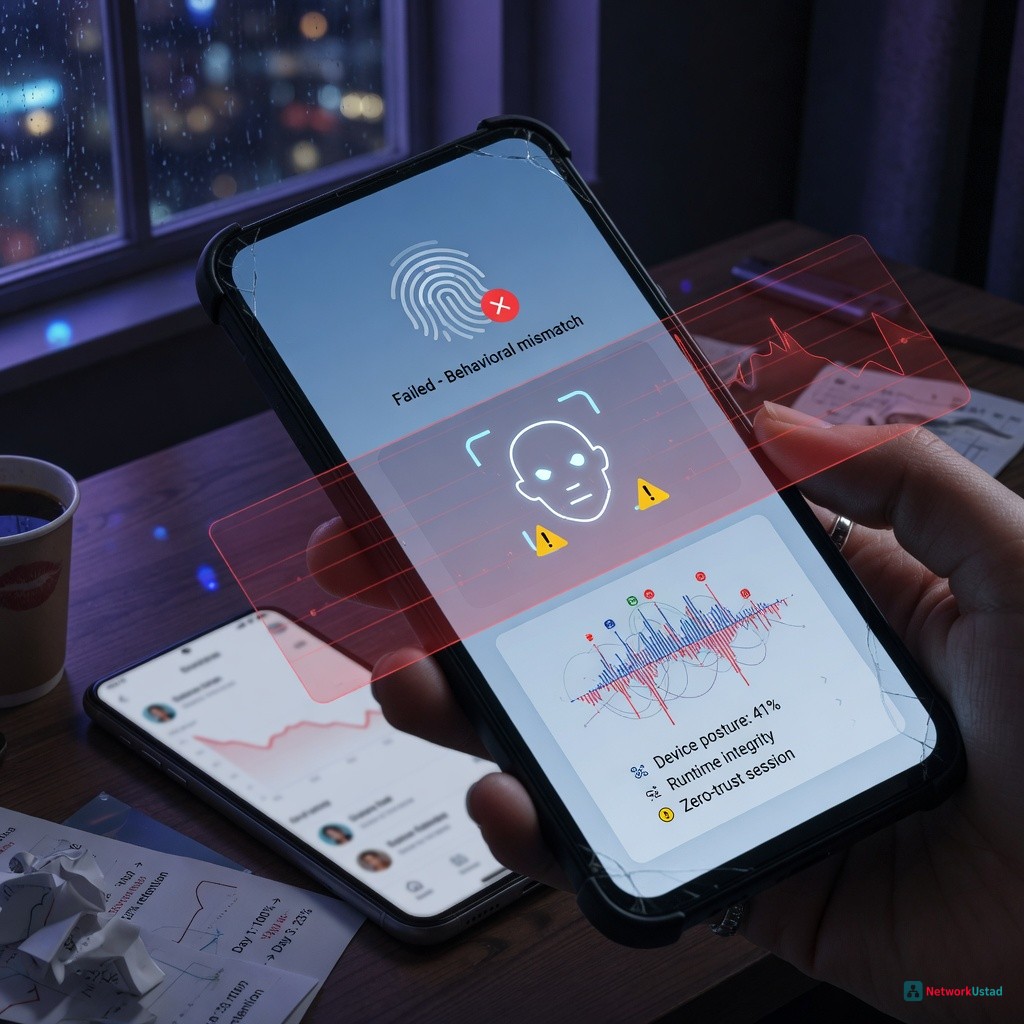
The average mobile app loses 77% of its daily active users within three days after installation, according to a 2026 Data.ai retention benchmark report. This attrition rate has forced enterprises to rethink deployment strategies, particularly for apps handling sensitive transactions or corporate data.
Mobile App Security Posture in 2026: Beyond Basic Authentication
Zero-trust architecture now dominates enterprise mobile app development, with 89% of Fortune 500 companies adopting certificate-based authentication instead of passwords. Palo Alto Networks’ 2026 Mobile Threat Report shows a 214% increase in supply chain attacks targeting third-party SDKs in banking apps.
Mandatory Security Protocols
– TLS 1.3 with PQC (Post-Quantum Cryptography) key exchange – Hardware-backed keystores for biometric data storage – Dynamic code loading restrictions on iOS/Android – Certificate transparency logging for all API calls Cisco’s Duo Access now requires continuous facial recognition during high-value transactions in financial apps, a technique that reduced account takeover attempts by 62% in JP Morgan Chase’s 2026 pilot program.
Network-Level Protections for Mobile Traffic
SD-WAN configurations now prioritize mobile app traffic through dedicated VRF instances, with QoS policies that throttle non-essential background processes. Verizon’s 2026 Mobile Network Index recorded a 38% drop in packet loss for voice-over-LTE apps after implementing these changes:
| Protocol | QoS Class | Minimum Bandwidth |
|---|---|---|
| SIP/RTP | EF (Expedited Forwarding) | 256Kbps |
| MQTT | AF41 (Assured Forwarding) | 128Kbps |
| HTTP/3 | BE (Best Effort) | Dynamic |
Financial institutions like Bank of America now tunnel all mobile traffic through IPsec-protected GRE tunnels to on-premise security stacks before reaching cloud APIs.
The Rise of Containerized App Components
Android 16 and iOS 20 introduced mandatory process isolation for payment modules, requiring developers to implement: java // Android Enterprise Recommendation EE.6-2026 PaymentExecutorService.runInSandbox( new SecureContext.Builder() .setAttestationKey(“HSM_ECDSA_P384”) .setRuntimeChecks(RuntimePolicy.STRICT) ); A 2026 Gartner study found that apps using containerized components had 73% fewer memory corruption vulnerabilities. However, this approach increases APK sizes by 15-20%, creating connectivity challenges in bandwidth-constrained areas.
Cross-Platform Development’s Hidden Costs
Flutter and React Native adoption peaked in 2025 before declining among enterprise developers. Performance testing by Microsoft showed: – 42% higher CPU usage in React Native payment flows vs native – 3.2x longer cold start times for Flutter apps on mid-range devices – 19ms additional input lag in gaming apps The exception: camera-intensive applications where cross-platform camera APIs now deliver near-native performance through hardware acceleration.
Regulatory Shifts Impacting App Stores
The EU Digital Markets Act 2026 mandates: – Alternative payment processors in iOS/Android apps – Side-loading enablement for devices sold in Europe – Real-time app review status transparency Apple’s compliance changes reduced App Store review times from 48 hours to 8.7 hours on average, but introduced new vulnerability scanning requirements that reject 23% more submissions for security flaws.
Battery Optimization Techniques That Actually Work
Google’s Android Battery Historian 3.0 reveals most energy waste occurs in: 1. Unrestricted background location polling (41%) 2. Frequent wake lock acquisitions (33%) 3. Excessive BLE advertising (19%) The solution? Android 16’s new constrained mode limits background processes to: – 1 GPS ping per 15 minutes – 10ms maximum wake lock holds – BLE scan throttling below 20% duty cycle Samsung’s 2026 flagship devices demonstrated 28% longer battery life with these restrictions enabled, according to GSMArena’s stress tests.
The Silent Killer of Mobile UX: Radio Resource Contention
When multiple apps request cellular radios simultaneously, LTE/5G modems exhibit: – 300-400ms additional latency per contention event – 15% higher packet error rates – 2.1x faster battery drain Telecom engineers now recommend: python # Preferred network request pattern def fetch_with_backoff(): try: if check_radio_state() == IDLE: make_request() else: schedule_retry(exponential_backoff) except RadioBusyError: log_contention_event() T-Mobile’s 2026 network analytics show this approach reduces failed API calls by 57% during peak hours. Enterprise mobile strategy now demands equal attention to network conditions, device limitations, and security frameworks. Those still treating apps as isolated software components will face mounting support costs and user churn as hardware and regulations evolve.