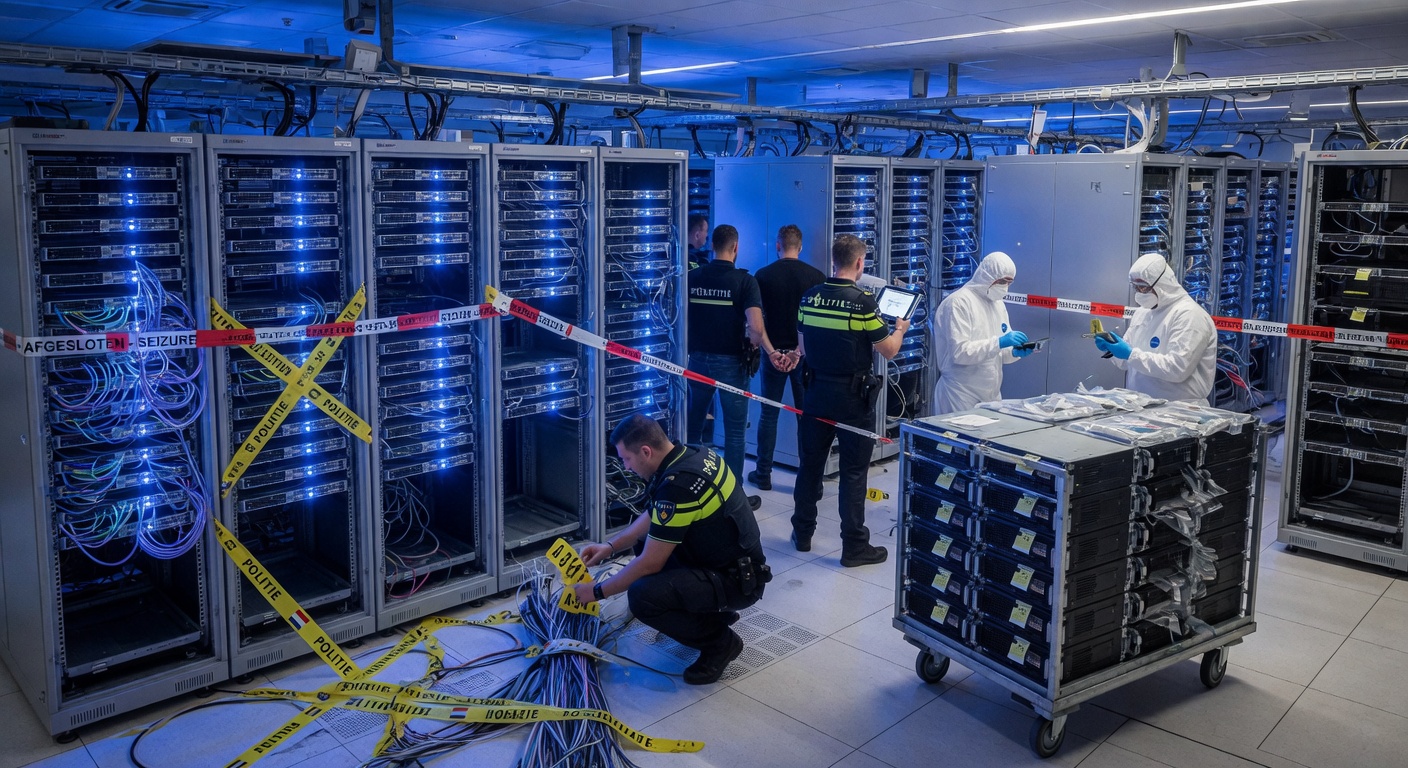
Dutch authorities seized approximately 800 servers and arrested two individuals on Wednesday, May 22, 2026, in connection with providing infrastructure for cyberattacks. The arrests occurred in the Netherlands and are part of an international operation targeting services that facilitate criminal activities online.
Operation Scope and Arrests
The Dutch National Police, in collaboration with international law enforcement agencies, executed the operation. The seized servers were reportedly used to host various illicit online services, including phishing sites, malware distribution, and command-and-control servers for botnets. The two individuals arrested are suspected of operating these services, enabling cybercriminals to launch attacks globally.
This action follows similar coordinated efforts by law enforcement to dismantle digital infrastructures used by cybercriminals. The Dutch Public Prosecution Service stated that the investigation is ongoing and more details might be released as the case progresses.
Impact on Cybercrime Infrastructure
The seizure of such a large number of servers represents a significant disruption to the cybercrime ecosystem. By removing critical infrastructure, law enforcement aims to hinder the ability of malicious actors to conduct their operations. This type of action can lead to a temporary decrease in certain types of cyberattacks, as criminals are forced to seek new hosting solutions or rebuild their networks.
Experts suggest that operations targeting bulletproof hosting services and other illicit infrastructure providers are essential in the fight against cybercrime. These services often provide anonymity and resilience for criminal operations, making them difficult to track and shut down. The coordinated international approach underscores the global nature of cybercrime and the necessity for cross-border cooperation.
International Cooperation
The operation involved collaboration with law enforcement agencies from multiple countries, though specific partners have not been publicly identified by Dutch authorities. This international effort highlights the increasing focus on dismantling the underlying infrastructure that supports cybercriminal activities, rather than solely pursuing individual perpetrators.
Previous international crackdowns have also seen significant successes in disrupting cybercrime networks. For instance, in earlier operations, police have targeted servers and arrested individuals involved in similar cybercrime support roles. These efforts are part of a broader strategy to make the internet a safer environment by removing the tools and platforms criminals rely on.
Ongoing Investigations
Authorities have not yet released the identities of the arrested individuals or specific charges they face. The investigation is expected to continue, potentially leading to further arrests or the identification of other individuals involved in these cybercriminal networks. The data obtained from the seized servers will likely provide valuable intelligence for future investigations into various forms of cybercrime.
The Dutch government has previously demonstrated a commitment to combating cybercrime, including efforts such as seizing servers and making arrests in major crackdowns. This latest action reinforces that stance, sending a clear message to those who facilitate illegal online activities.