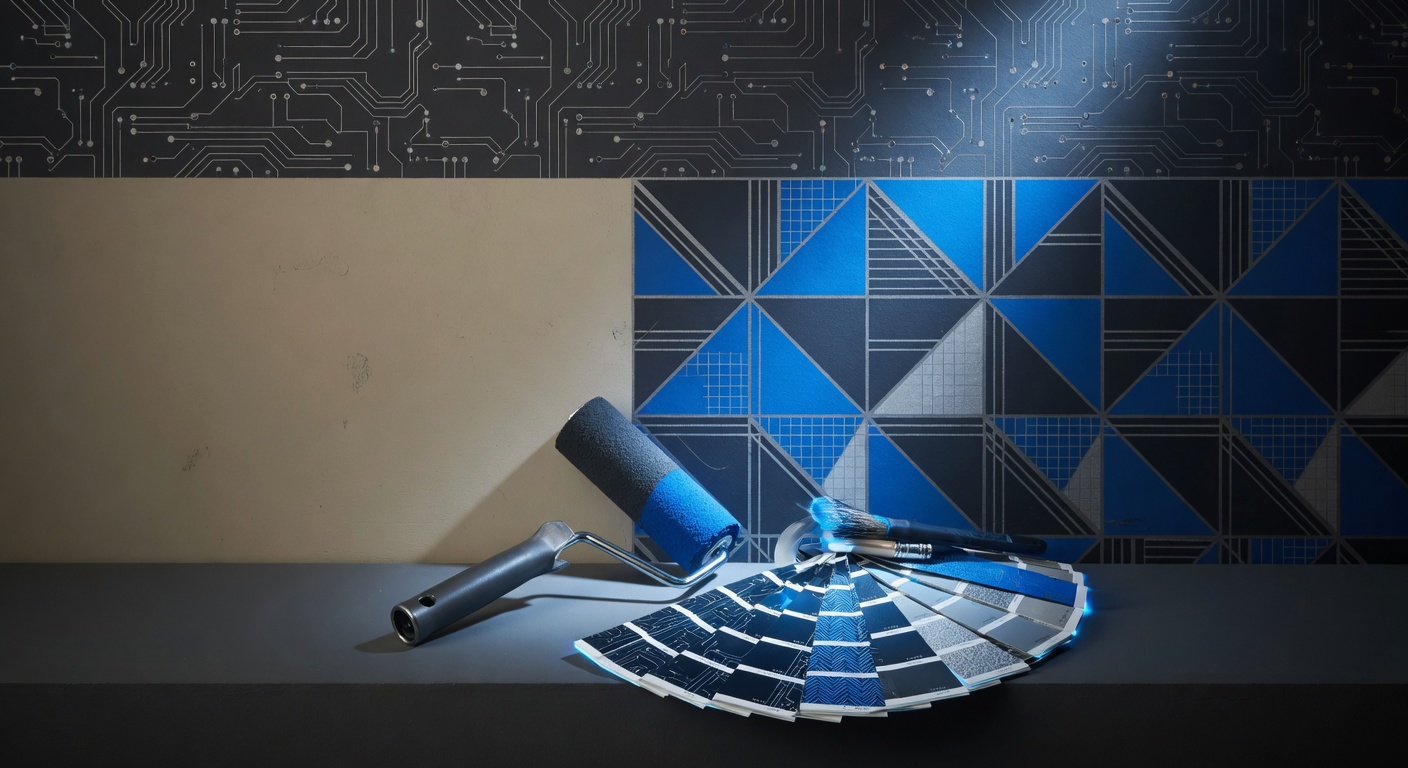
The “clinical white” era of interior design is officially receding. For years, homeowners were told that neutral, plain walls were the safest bet for resale value and minimalism. However, many are now finding that living in a colorless “box” feels uninspired and cold. The common struggle? A room that feels unfinished despite expensive furniture, or a space that lacks a distinct soul.
The solution isn’t necessarily a bucket of bright paint, but rather the introduction of texture, depth, and narrative through patterns. Leading the charge in this creative shift isDFA Decor, a brand that transforms flat surfaces into architectural statements. By utilizing high-quality wall stencils, homeowners are discovering they can achieve the look of luxury wallpaper or custom murals without the permanent commitment or the exorbitant price tag.
The Psychology of Pattern: Why We Are Moving Away from Plain Walls
The resurgence of patterned interiors is driven by a collective desire for “slow design” and personalization. In an increasingly digital world, our physical environments need to provide tactile and visual stimulation. Plain walls often reflect a lack of intent, whereas a patterned surface tells a story of craftsmanship.
Personalization vs. Mass-Market Conformity
The distinction between a generic room and a curated home lies in the “soul” of the walls. While industrial wallpaper prioritizes speed and uniform repetition, wall stenciling ideas center on the narrative of the homeowner.
Customized Aesthetics: Unlike the static nature of wallpaper, customized stencils for walls allow you to control the density, color, and placement of the design. This ensures that no two rooms are exactly alike, granting the homeowner a sense of total exclusivity.
Tactile Richness: Modern methods, such as using plaster with a 3D effect, provide a physical volume that flat paint simply cannot replicate. These “perfect imperfections” created by hand-application give the wall a living, breathing quality.
Visual Language: Patterns often serve as a visual language. Whether it is a geometric motif that adds structure or a floral design that introduces softness, stencil wall art designs represent the personality and taste of the inhabitant.
Sustainable Longevity: Stenciling is fundamentally sustainable. Because you are working directly on the existing substrate, you bypass the waste associated with stripping and disposing of old wallpaper.
Key Elements of Modern Wall Decor
When we analyze current interior design trends, several specific elements of pattern application stand out as recurring themes. We are no longer just “decorating” a surface; we are deconstructing it to create an atmosphere.
Geometric and Botanical Accents: Once reserved for traditional homes, complex needlework-inspired patterns are now used to add texture and a “human touch” to sleek, modern apartments.
The 3D Plaster Technique: This is a hallmark of premium wall decor. By applying decorative plaster through a stencil, you create a raised, sculptural surface that interacts with the lighting in the room throughout the day.
Accent Zones: Rather than overwhelming a whole house, designers are using patterns to define specific zones—a reading nook, a headboard area, or a dining backdrop—creating a “room within a room” effect.
Redefining Luxury through Modern Craftsmanship
Modern luxury is no longer defined solely by the price of the materials, but by the complexity of the labor and the uniqueness of the result. Consumers are increasingly seeking out wall stenciling ideas that require a thoughtful, artisanal approach. This shift favors sophisticated techniques such as:
Layered Stenciling: Using multiple tones or metallic waxes to create a sense of aged “patina.”
Structural Plastering: Creating volume with professional-grade stencils that mimic stone, fabric, or carved wood.
Artisanal Finishing: Hand-painting details within a stenciled frame to create a bespoke mural effect.
Whether you are looking to add a subtle shimmer to a hallway or a bold architectural feature to your living room, the transition from plain to patterned is the ultimate way to reclaim your space. To explore the full range of professional tools and inspiration for your next project, visitDFA Decor and discover how your walls can become a canvas for modern art.