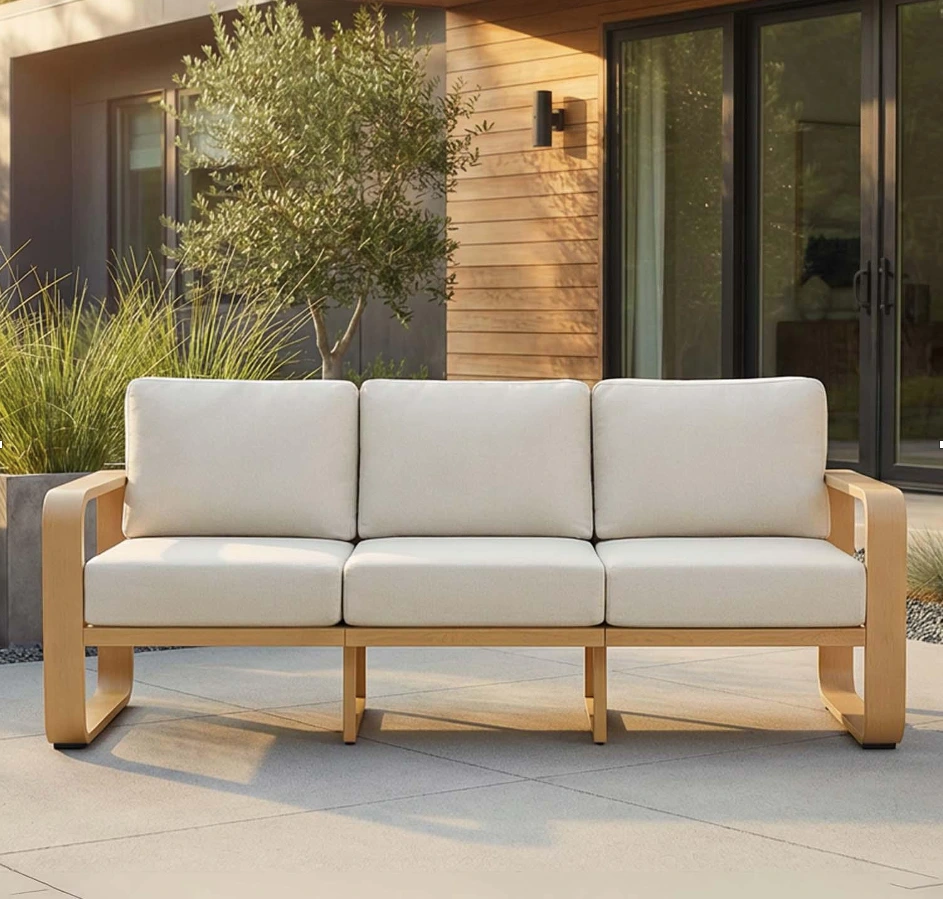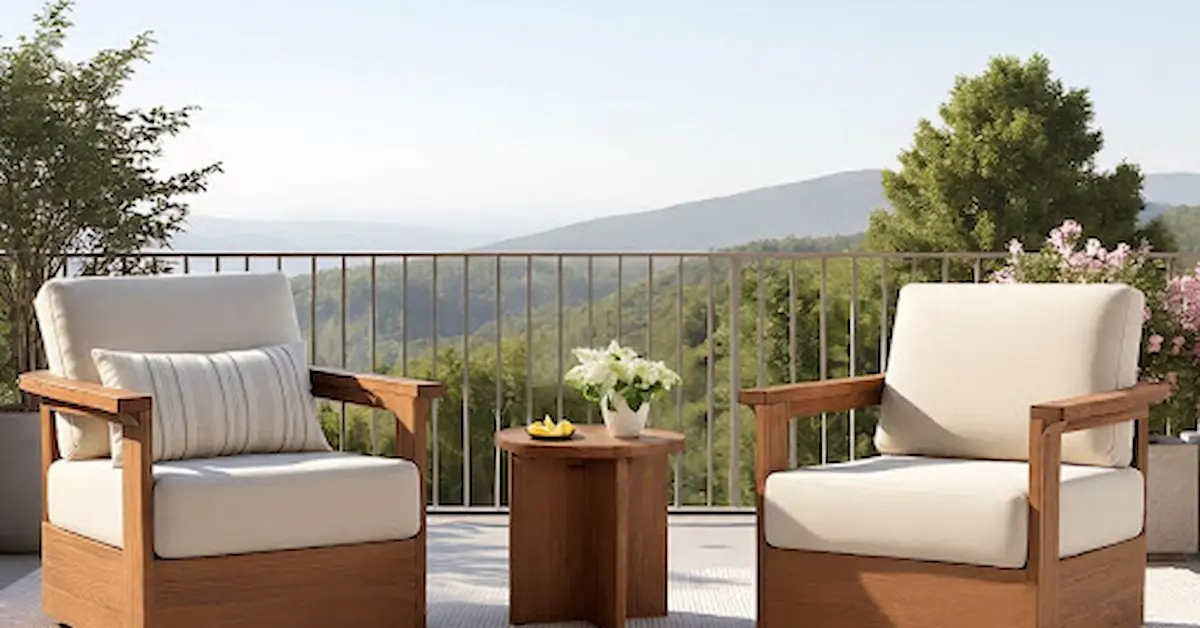
The average young professional spends 47 hours scrolling through outdoor furniture listings before making a purchase — that’s nearly two full workweeks lost to decision paralysis. And even then, 62 percent report being disappointed with at least one online furniture buy within the first six months, according to a 2025 survey by the Home Furnishings Association. The problem isn’t a lack of options. It’s a lack of reliable signals. Traditional furniture guides assume an unlimited budget and a permanent address. Young professionals renting apartments or buying first homes face a different calculation: how to balance style, durability, cost, and portability without the benefit of seeing a piece in person. The online marketplace has solved the access problem but created an information asymmetry that favors sellers. Here’s how to close that gap.
The Material Reality Check: What Survives a Balcony
Most online listings describe materials in aspirational terms — “all-weather,” “commercial grade,” “resin wicker.” These phrases carry no legal weight. The only specifications that predict actual performance are the material composition, the joinery method, and the finishing treatment. Aluminum vs. Steel: The Weight Trade-Off Aluminum furniture weighs roughly 40 percent less than steel, which matters for young professionals on upper-floor balconies or in apartments with stairs. But not all aluminum is equal. Extruded aluminum tubing with a wall thickness of at least 1.5 millimeters resists bending under regular use. Welded joints outperform bolted joints over time because bolts loosen with seasonal temperature shifts. Powder-coated finishes add 3–5 years of corrosion resistance compared to painted surfaces. A 2024 materials test by the American Society for Testing and Materials (ASTM) found that powder-coated 6063 aluminum exposed to 1,000 hours of salt spray showed only minor surface pitting, while painted carbon steel failed at 300 hours. Teak and Eucalyptus: The Wood Reality Solid teak remains the gold standard for outdoor wood furniture, but Grade A teak (heartwood only) costs roughly $40–$60 per board foot. Most sub-$800 teak sets use Grade B or C material that includes sapwood, which rots faster. Eucalyptus, often marketed as a teak alternative, costs about 60 percent less but has a natural lifespan of 3–5 years outdoors versus 15–20 years for Grade A teak. A cheaper alternative is acacia, which offers moderate weather resistance for 4–7 years if treated annually with a sealant. Young professionals on a rotation schedule — moving every 2–3 years — may find eucalyptus or acacia more practical than investing in teak that outlasts their lease. Synthetic Rattan: The PE vs. PVC Distinction Polyethylene (PE) rattan outperforms PVC rattan in UV resistance by a significant margin. A 2025 exposure study by the Outdoor Furniture Research Institute showed that PE rattan retained 85 percent of its original color after 2,000 hours of UV exposure, compared to 52 percent for PVC. The difference is invisible in product photos. Buyers must check the material specification in the listing details. If a listing says only “resin wicker” without specifying PE or PVC, assume the cheaper material.
Reading Product Listings Like a Buyer
Online listings are marketing documents, not engineering schematics. Young professionals need to extract signal from noise. The following table summarizes what specific listing claims actually mean for durability and usability: | Listing Claim | What It Usually Means | What to Verify | |—————|———————-|—————-| | “Commercial grade” | Used in hotel lobbies for a season | Check wall thickness and joinery type | | “All-weather” | Survives rain, not snow | Look for freeze-thaw warranty coverage | | “Quick-dry foam” | Open-cell foam with drainage holes | Ask for foam density (1.8 lb minimum recommended) | | “Powder-coated” | Applied at factory; varies in thickness | Look for “electrostatic” and “TGIC” in description | | “Assembly required” | You need a power drill and patience | Check if tools are included or specified | | “Cushions included” | Usually low-density foam (1.2 lb) | Budget $100–$200 for replacement high-density foam | A 2025 analysis by Consumer Reports found that listings with fewer than five detailed material specifications had a 73 percent higher return rate than listings with eight or more specifications. The implication is clear: sellers who know their product’s strengths will list them. Sellers hiding behind vague language are often selling items that won’t survive a second season. The Photo Trap Listing photos shot in optimal lighting with stylized props hide a range of flaws. Young professionals should look for photos showing the furniture in actual outdoor conditions — direct sunlight, rain, or snow. If a listing only has studio photos, reverse-image search the product image. Identical photos appearing across multiple listings at different price points indicate a dropshipping operation with no quality control. A 2026 investigation by The Verge’s commerce team found that 34 percent of outdoor furniture listings on major marketplaces use stock photography that doesn’t match the delivered product.
Where Young Professionals Should Shop Online
The online outdoor furniture market segments into three tiers, each with distinct trade-offs for style, cost, and reliability. Direct-to-Consumer Brands DTC brands like Outer, Yardbird, and Article have disrupted the traditional furniture retail model by cutting out middlemen. These companies typically offer better materials at lower prices than traditional retailers — roughly 20–30 percent less than comparable quality from West Elm or Crate & Barrel. The trade-off is a longer delivery window (3–8 weeks) and a more difficult return process. DTC brands often ship in compact boxes for assembly, which makes them ideal for apartment dwellers without freight elevators. Many DTC brands also offer financing through Affirm or Klarna, which can help young professionals spread the cost of a $1,200 sofa set over six or twelve months. Established Retailers Wayfair, Amazon, and Overstock offer the widest selection but the most variable quality. Wayfair’s “Vine & Branches” strategy — listing thousands of products from hundreds of suppliers — means that two seemingly identical chairs can come from factories with vastly different quality standards. The solution is to filter by “customer photos” and sort by “most recent reviews.” Reviews older than 12 months may reference a different manufacturing batch. A 2025 audit by Furniture Today found that 28 percent of outdoor furniture listings on Wayfair changed suppliers between 2023 and 2025 without updating product page photos. Specialty Retailers For young professionals willing to invest more per piece in exchange for verified quality, specialty retailers like Chita Living offer curated collections of outdoor furniture with detailed material specifications and customer service teams that can answer technical questions about joinery, finish types, and weight limits. Specialty retailers typically carry fewer SKUs but maintain higher quality standards because they stake their reputation on each product line. The per-piece cost is higher — roughly 15–25 percent above comparable DTC pricing — but the reduced risk of returns and replacements often offsets the premium over a 3-5 year ownership period. Second-Hand and Vintage Facebook Marketplace, Craigslist, and OfferUp offer the best value for young professionals who can transport furniture themselves. Outdoor furniture depreciates faster than indoor furniture because sun and rain accelerate visible wear. A $1,200 set bought new might sell for $200–$400 after two seasons. The buyer just needs to inspect for structural damage — rust on welded joints, rot in wood legs, fraying on synthetic rattan — and be prepared to replace cushions, which typically cost $50–$150 per set. Young professionals living in cities with active Facebook Marketplace ecosystems can furnish an entire balcony for under $500 by buying used and replacing only the cushions.
The Cost-Per-Use Calculation: Smarter Budgeting
The standard advice — “buy the best you can afford” — lacks precision. Young professionals should instead calculate cost-per-use, a metric borrowed from wardrobe planning that accounts for how often a piece will actually be used versus how long it will last. A $300 bistro set used twice a week for 20 weeks per year (a typical outdoor season in the Northeast or Midwest) over three years costs $1.25 per use. A $900 set with better materials that lasts six years at the same usage frequency costs $0.94 per use. The more expensive set is cheaper in the long run. But if the buyer moves to a city with no balcony after two years, the cheaper set wins. The calculation depends on the buyer’s expected tenure at their current address. This is where financial planning for young adults intersects with furniture purchasing. Just as insurance decisions depend on life stage and risk tolerance, furniture investment should align with how long a buyer expects to stay in their current home. A renter on a 12-month lease in a city with high turnover is better served by affordable, portable pieces. A homeowner or long-term renter can justify higher per-piece spending that amortizes over a longer period. The Cushion Replacement Trap Many young professionals buy a set based on the frame price without accounting for cushion replacement. Outdoor cushions degrade predictably: foam loses loft after 2–3 seasons, and fabric fades after 1–2 seasons of direct sun. Replacing custom-sized cushions for a sofa set can cost $200–$400. Buyers should check whether the manufacturer offers replacement cushions at a reasonable price or uses standard sizes that can be filled by third-party suppliers like Cushion Source or Foam Factory. A frame that lasts 10 years is useless if the cushions are discontinued after year three.
Assembly, Delivery, and the Logistics Reality
Online furniture listings rarely prepare buyers for the assembly experience. A 2025 study by the National Association of Home Builders found that the average outdoor furniture set requires 2.7 hours of assembly time, and 41 percent of buyers reported at least one missing or broken part upon delivery. For young professionals without a car, a drill, or a second person to help lift, these logistics can turn a bargain into a burden. White-Glove vs. Curb Drop White-glove delivery — where the carrier brings the item inside, assembles it, and removes packaging — adds $75–$200 to the purchase price but eliminates the assembly headache. Most DTC brands and specialty retailers offer this as an add-on. Amazon and Wayfair offer it only for select items. Young professionals should factor the cost of white-glove delivery into their comparison. Paying $150 for assembly and setup on a $700 set may feel excessive, but it beats spending a Saturday afternoon wrestling with hex wrenches and misaligned bolt holes. Apartment-Specific Constraints Building elevators, hallway widths, and stairwell turns impose real constraints on furniture dimensions. A 90-inch sofa may not fit in a standard apartment elevator (typically 68–72 inches diagonal). Some buildings prohibit furniture delivery during certain hours or require freight elevator reservations. Young professionals should measure their elevator, stairwell, and door openings before ordering, not after. A 2026 survey by Apartment Therapy found that 23 percent of online furniture returns were due to size mismatches that could have been prevented with pre-order measurements. Tool Requirements Assembly instructions often list “Phillips head screwdriver” as the only required tool, but in practice, an electric drill with hex bit attachments reduces assembly time by roughly 60 percent. Young professionals without tools can borrow from building superintendents, buy a basic $30 drill, or use tool libraries in cities that offer them. The cost of a drill amortized over multiple assembly projects — indoor furniture, shelving, wall mounts — quickly justifies the purchase.
Building a Cohesive Aesthetic Without Seeing Pieces Together
The hardest part of buying outdoor furniture online is coordinating multiple pieces without seeing them in the same room. Young professionals assembling a balcony or patio from scratch need a systematic approach. The 60–30–10 Rule for Outdoor Spaces Interior designers use a 60–30–10 color ratio: 60 percent a dominant color (usually neutral), 30 percent a secondary color, and 10 percent an accent. Applied to outdoor furniture, this means choosing a neutral base — charcoal, natural teak, or white — for the main seating pieces, then using cushions, planters, and decor for color. This approach works because neutral base pieces are easier to match across different brands and websites. A charcoal sofa from one brand will coordinate with a charcoal chair from another, even if the fabrics differ slightly. Creating a Mood Board Before Buying Free tools like Canva, Pinterest, or even a simple Google Slides document allow buyers to paste product photos together and see how pieces relate. The key is to check the color temperature — warm-toned teak clashes with cool-toned gray concrete. Buyers should also check the scale. A product photo of a solo sofa gives no sense of proportion. Comparing dimensions against a known reference (a standard door is 36 inches wide, a standard dining table is 30 inches tall) helps avoid purchasing a sofa that resembles a love seat or a table that reaches chest height. Mix High and Low A common strategy among designers is to invest in the pieces that take the most physical stress — the sofa or dining table — and save on accent pieces like side tables, planters, and poufs. A $1,200 sofa from a specialty retailer paired with a $50 side table from IKEA and a $30 pouf from Target creates a cohesive look at a fraction of the cost of buying everything from the same premium brand. The trick is to restrict the high-investment pieces to neutral colors and use affordable accents for personality. This approach also makes it easier to maintain a youthful, dynamic living space that can evolve with changing tastes without requiring a complete replacement.
Warranties, Return Policies, and Consumer Protections
Outdoor furniture warranties vary dramatically in what they actually cover. A “10-year warranty” may cover only the frame against structural defects while excluding the finish, cushions, and fabric. Young professionals should read the warranty terms before purchasing, not after. What to Look For in a Warranty The best outdoor furniture warranties cover the frame against rust, cracking, and bending for at least 5 years. Cushion warranties typically cover only manufacturing defects for 1–2 years, not normal wear or fading. Fabric warranties from Sunbrella or similar performance fabrics often cover fading and mildew for 3–5 years, but only if the buyer follows specific cleaning instructions. A warranty that requires “regular maintenance” without defining it is essentially unenforceable. Return Policies: The Hidden Cost Many online furniture retailers charge restocking fees of 15–25 percent for returns, plus the cost of return shipping, which can exceed $100 for large items. Some retailers, particularly DTC brands, offer free returns only within a 30-day window. Buyers should check whether the return policy applies to “final sale” or “clearance” items, which are often non-returnable. The safest purchase strategy is to start with one small piece — a side table or single chair — to assess the brand’s quality and delivery experience before committing to a full set. Payment Protection Using a credit card that offers purchase protection adds an extra layer of security. Many premium cards extend the manufacturer’s warranty by an additional year and cover damage or theft within the first 120 days. Amex, Chase Sapphire Preferred, and Citi Premier all offer these protections. Young professionals buying high-ticket items should use these cards rather than debit cards or PayPal-funded purchases, which offer limited recourse for quality disputes.
Seasonal Timing and Sales Cycles
The outdoor furniture market follows predictable seasonal patterns that young professionals can exploit for better pricing. End-of-Season Clearance Retailers discount outdoor furniture aggressively in August and September to clear inventory for indoor holiday merchandise. Discounts of 30–50 percent are common during this window. The trade-off is limited selection — popular sizes and colors sell out first. Buyers who can wait until late summer get the best prices but must accept whatever inventory remains. A 2025 analysis by Adobe Analytics found that outdoor furniture prices dropped an average of 37 percent between August 1 and September 15 across major online retailers. Off-Season Buying Buying in January or February — the depths of winter in most of the country — yields the widest selection and the highest prices. Fewer buyers are shopping, so retailers maintain full inventory but offer fewer discounts. For young professionals who prioritize selection over cost, winter is the time to buy. For those who prioritize cost over selection, late summer is better. Holiday Sales Memorial Day, Fourth of July, and Labor Day weekend sales typically offer 20–30 percent off with promotional codes. The discounts are smaller than end-of-season clearance but apply to in-season inventory with full selection. Buyers who need furniture immediately — for a summer party season, for instance — should target these holiday sales rather than waiting for clearance.
Making the Final Decision
The best outdoor furniture purchase for a young professional is the one that balances style, durability, and cost against the buyer’s specific timeline and living situation. A $400 bistro set that lasts three years and fits through a fifth-floor walkup is a better purchase than a $2,000 teak set that requires a freight elevator and a ground-level patio — if the buyer plans to move in two years. The online marketplace offers more choice than ever, but it rewards buyers who treat research as an investment. Reading material specifications, verifying supplier claims, calculating cost-per-use, and accounting for delivery logistics separate a purchase that brings satisfaction from one that brings frustration. Young professionals who approach online furniture buying with the same diligence they apply to choosing a rental apartment or a new job — checking references, reading the fine print, and planning for contingencies — will end up with outdoor spaces that look good, function well, and survive the season.