If you’re living in an apartment, chances are you’ve mastered the art of making every square foot count. Sofa beds have become the unsung heroes of compact living—offering a place to lounge during the day and a sleeping surface for guests at night. But here’s something most people never consider: that king bed frame in your bedroom might actually be shortening your sofa bed’s life. Whether the two pieces are positioned in close proximity, sharing a studio layout, or you’ve attempted to use a king frame as a base for your sofa bed mattress, the interaction between these furniture pieces can create hidden stress points that accelerate deterioration. Uneven weight distribution, frame incompatibility, and constant mechanical strain are quietly working against your investment. In this article, we’ll break down exactly how your king bed frame affects your sofa bed’s durability, walk through essential maintenance routines, guide you toward the right mattress choice, and share proactive care strategies designed specifically for apartment dwellers who need their furniture to last.
Understanding the Connection: Your King Bed Frame and Sofa Bed Durability
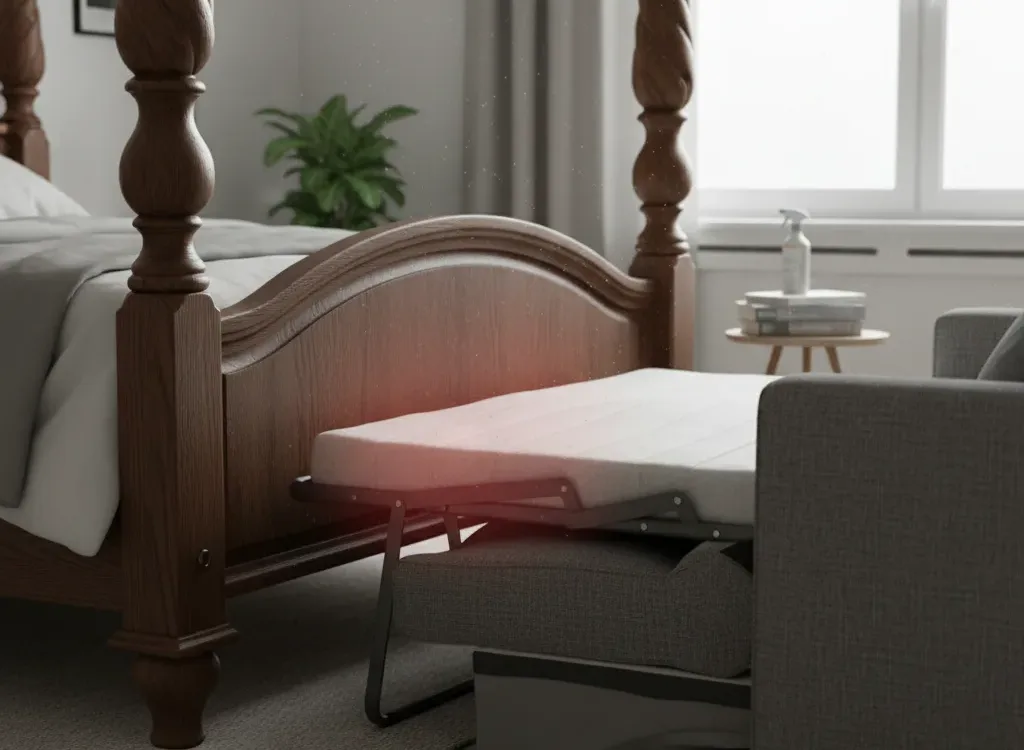
When a king bed frame sits adjacent to a sofa bed in a tight apartment layout, the two pieces often make direct contact during daily use. Every time you unfold the sofa bed, its legs or frame edges press against the king bed’s side rails, creating concentrated pressure points that warp metal joints and stress wooden supports over time. In studio apartments where furniture is pushed together to maximize floor space, this repeated contact causes micro-damage that compounds week after week. The king bed frame’s substantial weight—often exceeding 100 pounds—can also shift slightly on hard floors, gradually leaning into the sofa bed’s structure and creating uneven load distribution across its folding mechanism. Some apartment dwellers even attempt to rest their sofa bed mattress on a king frame for added height or support, which introduces a fundamental size mismatch. The sofa bed mattress, designed for a specific frame width, overhangs or bunches unnaturally, straining its internal layers and the mechanism’s hinges. For anyone working with limited square footage, understanding these physical interactions is the first step toward preventing premature furniture failure and protecting what is likely a significant investment in your living space.
Essential Sofa Bed Maintenance to Prevent Wear and Tear
A sofa bed that gets daily use in a tight apartment needs more attention than one that only comes out for occasional guests. The proximity of heavy furniture like a king bed frame amplifies every small issue—a slightly bent hinge becomes a major structural problem when external pressure compounds the stress. Building a consistent maintenance routine doesn’t require much time, but it dramatically extends your sofa bed’s functional life. Think of it as preventive medicine: catching small problems early costs nothing, while ignoring them leads to expensive replacements. The following protocols address the mechanical, structural, and surface-level care your sofa bed demands, especially when it shares space with larger, heavier furniture pieces that can inadvertently cause damage through contact or vibration transfer across shared flooring.
Regular Cleaning and Inspection Protocols
Every two weeks, vacuum the sofa bed’s crevices and under the folding mechanism where dust and debris accumulate—these particles work their way into joints and accelerate metal-on-metal wear. While cleaning, inspect the fabric along fold lines for fraying or thinning, which signals that the material is under excessive tension. Check all visible hinges and bolts by hand, feeling for looseness or wobble. Look specifically at the corners closest to your king bed frame, as these contact points deteriorate fastest. Pull the mattress off monthly and examine the support bars beneath for bowing or rust spots, addressing either immediately before they compromise the entire mechanism.
Proper Folding and Unfolding Techniques
Always clear at least eight inches of space between your sofa bed and the king bed frame before unfolding—this prevents the extending legs from striking the frame’s side rails. Grip the mechanism’s handle at center and lift with steady, even pressure rather than jerking from one side, which torques the hinges unevenly. When folding back, guide the mattress into position rather than letting gravity slam it closed. If your layout forces the sofa bed to open toward the king frame, rotate the sofa bed’s orientation so it unfolds parallel to the larger frame rather than into it, eliminating direct collision entirely.
Addressing Common Wear Points and Immediate Fixes
Apply silicone-based lubricant to all pivot points and sliding tracks every three months to reduce friction that grinds down metal components. Where your sofa bed’s frame contacts the king bed frame, attach adhesive felt pads at least a quarter-inch thick to absorb impact and prevent scratching. If you notice a sagging support bar, slide a cut-to-size plywood board beneath the mattress as a temporary reinforcement. Tighten any loose bolts with a socket wrench immediately upon discovery, and replace stripped screws with the next size up to restore secure connections before the surrounding structure warps.
Choosing the Right Mattress for Your Sofa Bed
Your sofa bed’s mattress does more than determine sleep quality—it directly influences how much stress the folding mechanism endures with every use. A mattress that’s too thick resists the fold, forcing hinges to work harder and bending support bars beyond their designed tolerance. One that’s too thin fails to distribute body weight across the frame evenly, creating localized pressure that warps metal over time. When a king bed frame sits nearby and limits how fully you can extend or position the sofa bed, the wrong mattress compounds these spatial constraints by adding bulk where you can least afford it. Selecting a mattress specifically engineered for sofa bed use—rather than repurposing a standard mattress—ensures the folding mechanism operates within its intended parameters and the frame bears weight as designed.
Critical Factors: Support, Thickness, and Material
Aim for a mattress between four and six inches thick, which folds cleanly without straining hinges or creating excessive bulk when stored. Firm support matters more than plush comfort here because a mattress that sags concentrates weight on the frame’s center bars, accelerating bowing. Look for high-density materials that maintain their shape through hundreds of fold cycles without compressing permanently. The mattress should sit flush within the sofa bed’s frame perimeter—any overhang catches on adjacent furniture like your king bed frame and pulls the mattress out of alignment during folding.
Top Mattress Types Recommended for Sofa Beds
Memory foam works well because it compresses uniformly during folding and rebounds without developing permanent creases, though lower-density versions break down faster under repeated use. Latex offers superior resilience and natural resistance to moisture and dust mites, making it ideal for apartment environments where the sofa bed stays folded for extended periods between uses. Innerspring models provide strong support but their coils can eventually poke through thinner coverings and create noise during folding—choose pocketed coils over continuous wire if you go this route, as they flex independently and reduce strain on the mechanism.
A Step-by-Step Guide to Testing and Final Selection
Measure your sofa bed’s interior frame dimensions first, then confirm the mattress fits within those boundaries with at least half an inch of clearance on each side. Fold the mattress by hand in the store or at home during a trial period to verify it bends at the correct point without bunching. Sit on the mattress while it’s on the frame and check that support bars beneath don’t press visibly through the surface. Finally, close the sofa bed completely with the mattress installed and confirm it latches without forcing, ensuring no added stress transfers to the mechanism each time you convert between sofa and bed.

Proactive Sofa Bed Care Tips for Apartment Dwellers
The most effective protection strategy starts with placement. Position your sofa bed at least twelve inches from your king bed frame—even in a studio, angling furniture diagonally or using a narrow bookshelf as a buffer creates the separation needed to eliminate contact damage entirely. Attach furniture pads to every surface where accidental contact might occur, including the sofa bed’s outer arms and the king frame’s footboard corners. Consider placing both pieces on individual area rugs to dampen vibration transfer through shared flooring, which subtly loosens hardware over time. Beyond physical arrangement, give your sofa bed regular rest periods. If you use it nightly, dedicate at least two days per week to leaving it in sofa position, allowing the folding mechanism’s springs and joints to decompress. Rotate the mattress head-to-foot monthly to distribute wear across its entire surface rather than concentrating breakdown at the primary fold point. When hosting guests for extended stays, place a thin plywood panel beneath the mattress to share the load across all support bars simultaneously. When shopping for apartment-friendly furniture that’s designed with space constraints in mind, retailers like Costway-AU offer a range of sofa beds and bed frames engineered for compact living. These combined habits transform reactive repairs into preventive care, keeping your sofa bed functional years beyond its expected lifespan while coexisting peacefully with larger furniture in your apartment.
Protect Your Sofa Bed Investment With Intentional Furniture Care
Your king bed frame and sofa bed don’t have to be enemies—but ignoring their interaction is a costly mistake. The physical stress caused by frame contact, weight mismatch, and spatial constraints silently degrades your sofa bed’s mechanism, structure, and mattress far faster than normal use alone would. By maintaining adequate separation between these pieces, following a consistent inspection and maintenance routine, and investing in a properly sized mattress designed for repeated folding, you protect both your comfort and your budget. For apartment dwellers relying on a sofa bed as a daily-use piece of furniture, these aren’t optional upgrades—they’re essential practices that determine whether your sofa bed lasts three years or ten. Start this week by measuring the gap between your king frame and sofa bed, checking your hinges for looseness, and evaluating whether your current mattress is helping or hurting the mechanism beneath it. Small adjustments made today prevent the kind of structural failures that force expensive replacements tomorrow. Your furniture works hard for you in a small space—return the favor with intentional care.