Beyerdynamic DT 30 IE Review: Balanced In-Ear Monitors
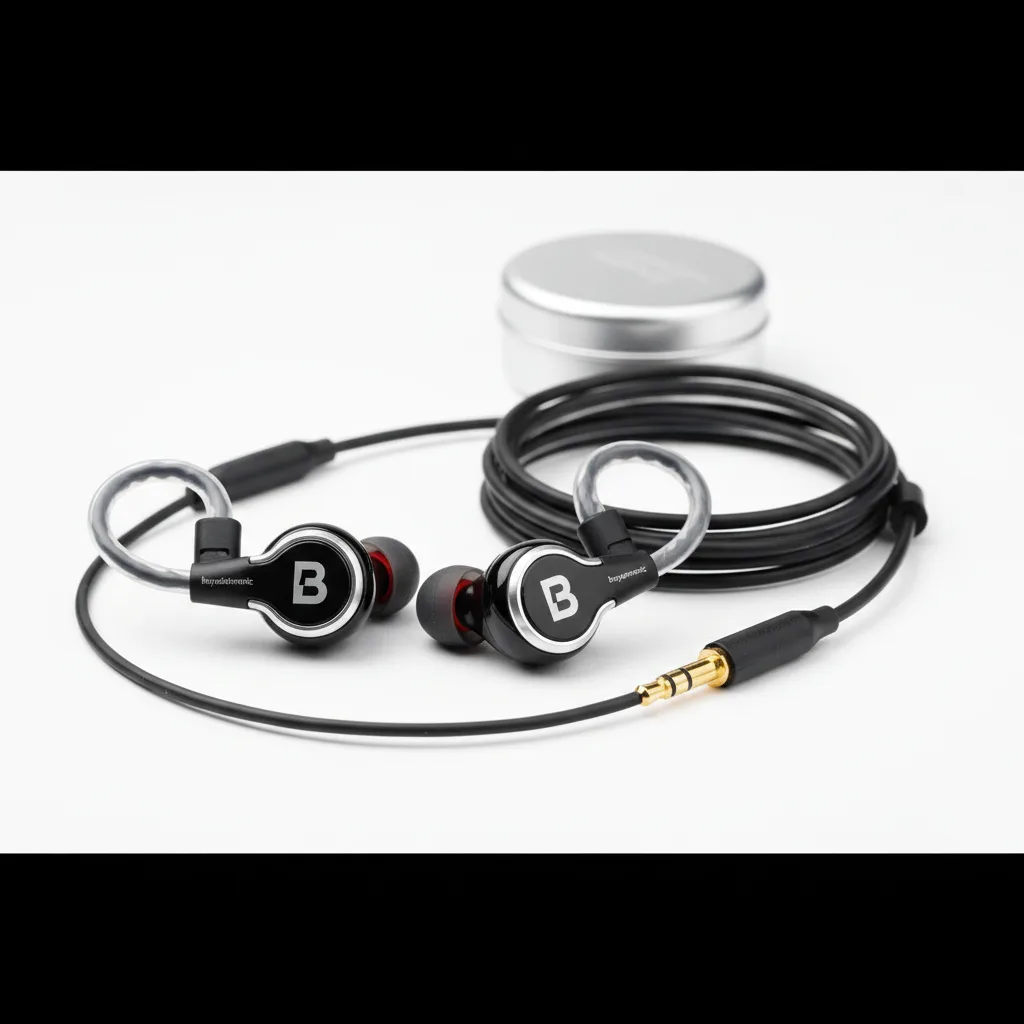
The Beyerdynamic DT 30 IE is a purpose-built stage in-ear monitor that launched in June 2026 at $159.99. Its 11mm dynamic driver delivers tight, textured bass with up to 39 dB of passive isolation — genuinely impressive at this price. Comfort is exceptional: each earpiece weighs just 2.7g and can be worn for four or more hours without fatigue. The IP54 rating adds real-world durability for sweaty live performances. The single honest weakness is a mid-range and treble that lack the texture and sparkle of the best competitors at this price, making the DT 30 IE a better fit for bass-focused performers and monitoring engineers than for listeners who prioritise vocal clarity.
Performance Analysis
The DT 30 IE’s 11mm dynamic driver is tuned for live stage use rather than casual consumer listening. Bass extension reaches genuinely deep — sub-bass frequencies feel tangible rather than implied — and the mid-bass punch carries real weight without bloating into the lower midrange. Reviewers at Tom’s Guide noted that basslines sounded “powerful but controlled” even on bass-heavy electronic tracks, with each note stopping and starting cleanly. The driver’s very low THD figures (0.08% at 500Hz, 0.09% at 1kHz) translate to an audibly clean presentation at high volumes, which matters when a drummer is driving these at elevated stage levels.
Instrument separation is where the DT 30 IE earns its professional classification. Complex mixes — full band arrangements with multiple guitar layers, keys, and percussion — resolve into distinct stereo positions rather than collapsing into a single wall of sound. Audio46’s review described the soundstage as “fairly wide, expanding out horizontally” with each instrument occupying its own recognisable position. Tom’s Guide tested the track ‘Money’ by Pink Floyd and confirmed that the mechanical cash register detail, Roger Waters’ bass, and the saxophone all occupied separate, coherent spaces simultaneously.
Mid-range and treble performance are where multiple independent reviewers converge on the same honest assessment: both ranges are present and functional, but lack the texture and detail resolution of the best $150 competitors. Tom’s Guide found that vocals in the upper-mid region “sounded flat and lacked body,” and that cymbals and hi-hats were present but lacked “razor-sharp quality and sheen.” MusicRadar’s real-world gig test similarly noted that the sound “could do with a bit more high-end clarity.” This is a consistent and verifiable limitation, not an outlier opinion. For monitoring bass, drums, and instrument separation, the DT 30 IE performs above its price. For vocal-forward or classical listening, it falls short of reference-grade IEMs at the same price point such as the Sennheiser IE 200.
Design and Build Quality
The DT 30 IE adopts the same compact shell geometry as beyerdynamic’s DT 7X IE series, scaled to a lower price point. Each earpiece is a transparent-shell unit weighing approximately 2.7 grams — lighter than the Sivga Lyrebird (5.2g per side), the Sennheiser IE 200 (4g per side), and the Sony Inzone E9 (4.5g per side), according to Tom’s Guide’s comparison data. That weight advantage is immediately noticeable during extended wear: four-hour sessions produced no ear fatigue in multiple reviewer reports, which is a meaningful result for touring performers who wear IEMs through full sets.
The Kevlar-reinforced cable is detachable via a standard MMCX connector, meaning a damaged cable is a replacement accessory purchase rather than a product write-off. Beyerdynamic includes MMCX-compatible spare parts and cerumen filters in the box, reflecting the brand’s intention that this product be maintained rather than discarded. The 1.4m cable length is optimised for connection to a belt-pack wireless receiver — the most common stage use case. It will feel short for home listening from a device on a desk, where 1.8–2m is more practical.
The transparent shell aesthetic is subtle on stage, blending with most skin tones in live lighting. The adjustable memory-wire over-ear hook keeps the shells seated even during active movement, though users with larger ears noted that tip selection matters more than the hook for a secure fit. The IP54 rating — dust-resistant and splash-proof — handles sweat and occasional rain exposure without issue. Tom’s Guide explicitly confirmed the rating makes these suitable for the gym, in addition to stage use. The plasticky feel of the shells is a fair criticism raised by both Tom’s Guide and MusicRadar; the DT 30 IE does not feel as premium in hand as the metal-housing Sivga Lyrebird, though on-ear it is demonstrably more comfortable.
Software and User Experience
The DT 30 IE is a purely wired, passive in-ear monitor — there is no companion app, no firmware, and no Bluetooth. Beyerdynamic does not offer software for this product and none is needed. Setup is physical: select an eartip, mould the ear hook, plug into the source device, and listen. This is appropriate for the product’s professional stage context, where setup complexity is a liability rather than a feature.
Connection to a smartphone, tablet, or laptop via the 3.5mm plug is straightforward and universal. For connection to mixing consoles or belt-pack wireless receivers with 6.35mm (1/4-inch) jacks, a separate adapter is required — beyerdynamic does not include one in the box. Users planning to use the DT 30 IE with professional stage equipment should factor in a 3.5mm-to-6.35mm adapter at minimal additional cost.
The 18-ohm impedance means any device with a standard headphone output — including smartphones without a dedicated DAC — will drive the DT 30 IE to safe listening levels with headroom remaining. A portable DAC/amp will improve dynamics and perceived bass control further, but it is not required. The low impedance also means sensitivity to output impedance mismatch is minimal: these IEMs behave consistently across different source devices, which is a practical advantage for performers who swap between smartphones, tablets, and belt-pack systems depending on the venue.
Battery Life
The Beyerdynamic DT 30 IE is a wired passive in-ear monitor. There is no battery. Device runtime is unlimited — these will continue functioning as long as the source device provides audio and the cable remains intact.
For stage use, this is an advantage: there is no pre-show battery check, no mid-set power failure, and no charging cable to manage in a touring kit bag. For everyday use, the 3.5mm wired connection does require a source device with a headphone output, which is a consideration for users whose phones have removed the 3.5mm jack.
Value for Money and Competition
At $159.99 (official) or $149.99 at major retailers including Musician’s Friend, Newegg, and B&H Photo, the DT 30 IE occupies a competitive bracket. Its closest named competitor for stage monitoring is the Shure SE215 Pro, which retails at approximately $99–$119 depending on variant. The Shure is warmer, produces more balanced mids, and costs meaningfully less. The DT 30 IE wins on bass definition, isolation (39 dB vs Shure’s stated 37 dB), IP54 weather resistance, and cable replaceability via the standard MMCX system rather than Shure’s proprietary MMCX implementation.
The Sennheiser IE 200 sits at $149 and delivers a more balanced frequency response across bass, mids, and treble — multiple sources including Tom’s Guide positioned it as the more complete-sounding IEM at a near-identical price. The IE 200 does not carry an IP rating, making it less suited to sweaty stage environments. The Sivga Lyrebird at $149 offers superior build quality with wooden faceplates and CNC-machined aluminum, plus a more textured and detailed treble response, but is heavier (5.2g vs 2.7g per earpiece) and less comfortable for extended wear.
Against beyerdynamic’s own DT 7X IE series — the DT 70 IE, DT 71 IE, DT 72 IE, and DT 73 IE — the DT 30 IE is a clear step down in soundstage width, instrument separation precision, and driver quality, as expected given the 4–5x price difference ($579.95 per DT 7X model). The DT 30 IE shares the MMCX cable system with the DT 7X series, allowing cable upgrades and accessories to transfer across the product line. For performers who start on the DT 30 IE and later upgrade, the transition is technically seamless.
Verdict
The Beyerdynamic DT 30 IE is a well-executed entry point into professional in-ear monitoring. It gets the fundamentals right for the specific use case it was designed for: a live performer who needs reliable bass monitoring, effective isolation, real weather resistance, and all-day comfort without spending $300 or more. The 39 dB isolation and IP54 rating are rare at this price, and the low THD figures back up the subjectively clean low-end presentation that multiple reviewers confirmed in real-world gig testing.
The limitation is equally consistent across sources: the mid-range and treble are functional but not refined. Listeners who spend their time in vocal-driven, acoustic, or orchestral music will hear what is missing within minutes. This is not a deal-breaker for a stage monitor — bass definition and isolation often matter more than upper-frequency air during a live mix — but it does mean the DT 30 IE is not a first-choice daily driver for home listening or critical analytical use.
Buy these if you are a working musician moving away from floor wedges, a monitoring engineer who needs a reliable backup IEM, or a drummer or bassist for whom low-end accuracy and isolation are primary concerns. Skip these if you want a more balanced all-rounder for home listening and are willing to trade the IP54 rating and isolation for better treble — the Sennheiser IE 200 at $149 serves that use case better. Check the current price for the Beyerdynamic DT 30 IE on Amazon.
Rating: 4.0 / 5 — A purpose-built stage IEM that outperforms its price on isolation and bass, let down by flat mids and treble.
Sources: Beyerdynamic Official Product Page | website, Tom's Guide DT 30 IE Review | website, Audio46 DT 30 IE Review | website, MusicRadar DT 30 IE Review | website, B&H Photo Product Listing | website, Magnetic Magazine Launch Coverage | website — August 2026
Sources: Beyerdynamic Official Product Page, Tom's Guide u2014 Beyerdynamic DT 30 IE Review, Audio46 u2014 Beyerdynamic DT 30 IE Review, MusicRadar u2014 Beyerdynamic DT 30 IE Review, B&H Photo u2014 DT 30 IE Product Listing, Magnetic Magazine u2014 DT 30 IE Launch Coverage, beyerdynamic Blog u2014 DT 30 IE vs DT 7X Comparison — August 2026
Frequently Asked Questions
Is the Beyerdynamic DT 30 IE worth buying in 2026?
What driver does the Beyerdynamic DT 30 IE use?
How does the Beyerdynamic DT 30 IE compare to the Shure SE215?
Where can I buy the Beyerdynamic DT 30 IE at the best price?
Is the Beyerdynamic DT 30 IE compatible with wireless bodypack systems?
Does the Beyerdynamic DT 30 IE have an IP rating?
How does the DT 30 IE compare to beyerdynamic's own DT 70 IE?
+Pros
- Powerful, controlled bass that reaches deep without bleeding into the mid-range
- Up to 39 dB passive isolation — stage-ready and genuinely effective in loud environments
- IP54 rating handles sweat, splash, and gym use without concern
- Exceptionally lightweight at 2.7g per earpiece — 4-hour wear with no fatigue
- Detachable Kevlar MMCX cable is replaceable and compatible with third-party alternatives
- Six eartip pairs (silicone and foam, S/M/L) plus cerumen filters for long-term maintenance
- Outstanding instrument separation for the price
−Cons
- Mid-range lacks body and presence, particularly on vocals and upper-frequency instruments
- Treble falls short of the detail and shimmer offered by competitors like the Sivga Lyrebird and Sennheiser IE 200
- Plastic shell feels less premium than metal-housing alternatives at the same price point
- 1.4m cable is optimised for stage use only — too short for comfortable home or desk listening
- No 6.35mm adapter included for mixing console and professional equipment connection