Hbada X7 Smart Review: Ergonomic Comfort for Long Hours
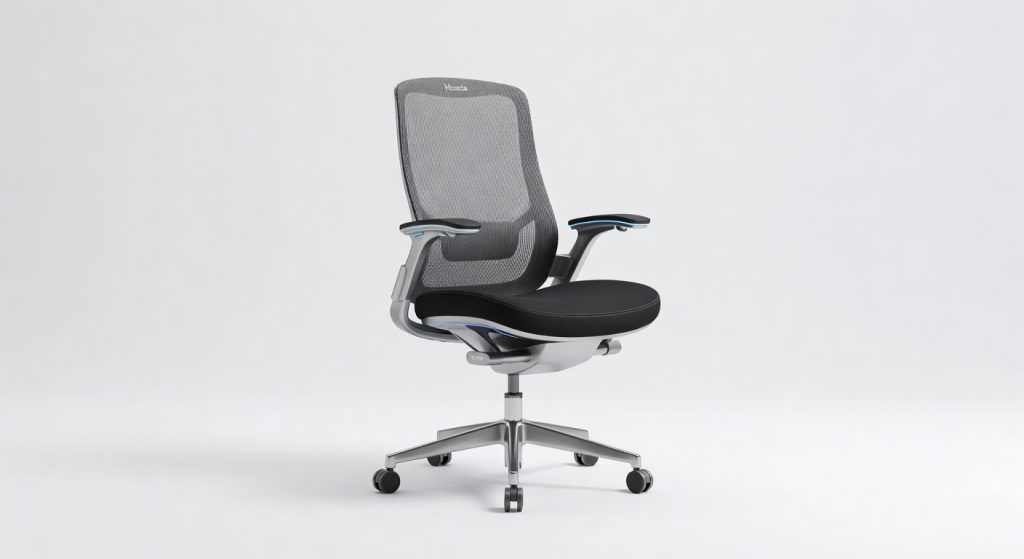
The Hbada X7 Smart Chair is the first ergonomic office chair to deploy real-time AI lumbar tracking, making it a compelling pick for developers, sysadmins, and security analysts who sit 8–12 hours daily at their home office workstations. Its premium smart features deliver genuine postural relief, but the ~$1,299 price tag and IoT data collection concerns make it a careful buy for security-conscious IT professionals — check out networkustad.com/best-ergonomic-chairs-for-remote-work for comparisons. The chair excels at active ergonomics but falls slightly short on build quality consistency and enterprise-grade privacy transparency.
Remote Work Ergonomics for IT Professionals
For developers, sysadmins, and security analysts working 8–12 hour shifts from home, spinal health is a direct productivity variable — not a comfort preference. Research from the National Institute of Occupational Safety and Health (NIOSH) has long documented that musculoskeletal disorders from poor seated posture are among the most common occupational injuries for desk workers. The Hbada X7 addresses this with what it claims is the world’s first AI lumbar tracking system: pressure sensors in the lumbar module detect micro-movements 1,000 times per second, feeding data to an automotive-grade compute chip that activates millimeter-level linear motors to continuously adjust lumbar curve support in real time. In practice, reviewer opinions are genuinely mixed: Tom’s Guide and TechWalls found the lumbar system helpful and noticeable, while IGN noted it was not “particularly intelligent” and PCGamesN found the automatic adjustments “irritating” — the consensus is that the system requires significant personal calibration before it delivers consistent value. For IT professionals who already manage complex systems and hate manually re-adjusting hardware mid-session, the X7’s autonomous posture correction is genuinely useful. Pair it with a sit-stand desk and you have a strong remote ergonomics stack — see networkustad.com/remote-work-setup-for-developers for a full WFH setup guide.
Health Impact of Poor Posture on Developer Productivity
The connection between posture and cognitive performance is well-established. Chronic lower back pain — the primary occupational complaint among software developers — reduces sustained focus, increases error rates, and shortens effective deep-work sessions. A 2020 study published in the Applied Ergonomics journal found that lumbar support quality directly correlated with fatigue onset time in knowledge workers. The Hbada X7’s combination of active AI lumbar adjustment, 3-level heat therapy (using IR + graphene elements from 40°C to 50°C), and the 8D bionic massage system creates what is effectively a recovery protocol embedded into the chair itself. The massage system’s dual-core haptic rollers move in multiple directions to mimic kneading — not mere vibration — and can be triggered on a schedule or on demand via the wired remote. Reviewers at TechWalls noted consistent relief after 90-minute work sessions. For security analysts doing marathon incident response shifts or developers in crunch sprints, the ability to activate therapeutic lumbar recovery without leaving the desk is a meaningful productivity lever.
IoT and Smart Features: Privacy Considerations for Security Professionals
Here is where the Hbada X7 demands scrutiny from its primary target audience. The chair’s AI system collects continuous posture data — pressure patterns, movement frequency, sitting duration — processed by an onboard automotive-grade chip. Critically, based on all available specifications and reviews (Tom’s Hardware, Tom’s Guide, PCGamesN), the X7 operates entirely via a wired remote control with no Bluetooth, no Wi-Fi connectivity, and no companion smartphone application. This is a significant privacy advantage compared to competing smart furniture that routes biometric sitting data through cloud servers or mobile apps. All posture processing appears to happen locally on the chair’s embedded chip. However, Hbada’s public-facing privacy documentation does not explicitly address data retention, onboard data storage, or what happens to posture telemetry. For enterprise deployments in security-sensitive environments, IT procurement teams should formally request a data flow disclosure from Hbada before bulk purchasing. The absence of Bluetooth also means no attack surface for wireless exploitation — a genuine point in its favour compared to IoT furniture with app integrations. Security professionals can find broader guidance on IoT risk management in home office environments at networkustad.com.
Enterprise Procurement Considerations for WFH Setups
Enterprise and SMB procurement teams evaluating the Hbada X7 for work-from-home allowances face a nuanced cost-benefit calculation. At ~$1,299 per unit on its perpetual sale pricing (listed at $1,509), the X7 sits in the same tier as Herman Miller Aeron and Steelcase Leap — both of which carry stronger brand recognition in corporate procurement catalogues. Where the X7 differentiates is in its active health intervention features: the AI lumbar system, heat therapy, and massage functions can reduce sick days and physiotherapy costs associated with musculoskeletal disorders — a compelling ROI argument for HR and operations teams. The chair ships in two packages (chair body and battery pack separately), which may complicate bulk logistics. The 5-year frame warranty (3 years on parts) and 30-day money-back policy are enterprise-adequate. One practical limitation: the wired remote means employees need a clear cable path from the chair to a charging outlet in addition to their workstation power needs. Organisations procuring at scale should also note that the TÜV certification provides third-party ergonomic validation — useful for occupational health compliance documentation in regulated industries such as financial services, healthcare IT, and government contracting.
Verdict
The Hbada X7 Smart Chair is a genuinely innovative product that delivers on its headline promise: real-time AI lumbar tracking that actively intervenes in your posture rather than passively providing a surface to sit on. For IT professionals working long remote shifts, the combination of autonomous lumbar correction, therapeutic heat and massage, and effective seat ventilation makes it one of the most functionally capable ergonomic chairs available in 2026. Its privacy profile is actually better than most smart chairs due to the absence of Bluetooth and cloud connectivity. However, at ~$1,299, the build quality inconsistencies — particularly the flimsy footrest, temperamental armrests, and unreliable magnetic battery charger — create friction that undercuts the premium positioning. It is best suited to solo professionals who prioritise active ergonomic intervention over brand prestige, and who have the patience to calibrate the AI sensitivity to their specific frame.
Rating: 4.1 / 5 — Best AI-powered ergonomic chair for long-hours IT work, with minor build quality caveats at the premium price point.
Frequently Asked Questions
Does the Hbada X7 require a smartphone app or Bluetooth connection to operate?
How long does the Hbada X7 battery last with smart features active?
Is the Hbada X7 suitable for tall users or users over 6 feet?
What certifications does the Hbada X7 carry?
How does the Hbada X7 AI lumbar system compare to manual ergonomic chairs like the Herman Miller Aeron?
Can the Hbada X7 help with chronic lower back pain for developers working 10+ hour sessions?
What are the enterprise bulk purchasing options for the Hbada X7?
How does the Hbada X7 seat cooling work, and is it effective in hot climates?
+Pros
- World's first real-time AI lumbar tracking actually works — detects posture 1,000 times per second and self-adjusts without any input
- 8D bionic massage provides genuine deep-tissue kneading, not just vibration — noticeable relief during long sessions
- Seat ventilation with 3,000 RPM dual fans is highly effective in warm rooms and during summer months
- Completely cordless operation with 5,200 mAh battery eliminates cable clutter in remote work setups
- TÜV certified ergonomics with 5-year frame warranty (3 years on parts) provides enterprise procurement confidence
- Adjustability range is exceptional — suits a wide range of body types and sitting styles
−Cons
- Premium price (~$1,299 on sale) is difficult to justify given build quality inconsistencies noted across multiple reviewers
- No companion smartphone app or Bluetooth connectivity means zero remote configuration — but also limits IoT privacy exposure
- Battery charging via magnetic adapter is unreliable; USB-C on the battery pack required as a workaround per Tom's Hardware
- Footrest and headrest feel plasticky relative to the chair's overall premium positioning
- AI lumbar sensitivity takes considerable trial and error to configure for individual body types
- Armrests, while highly adjustable, protrude and can interfere with desk proximity in tight home office setups