RugOne Xlink 7 Review: Reliable Rugged PTT Performance
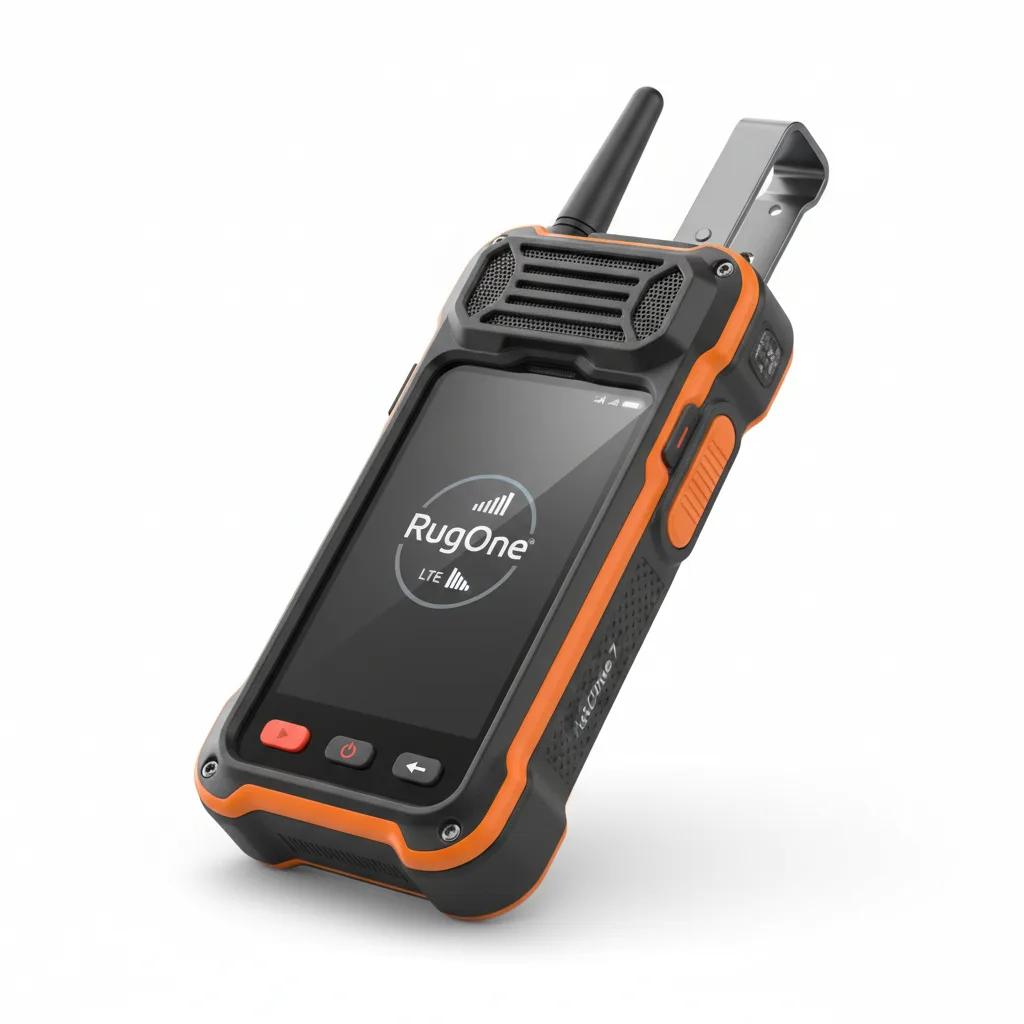
The RugOne Xlink 7 is a compact 84g rugged PTT device that uses 4G LTE to connect up to three people across any distance where cellular coverage exists. At $159.99 it undercuts most dedicated industrial radios, and its IP68/IP69K build plus MIL-STD-810H certification makes it genuinely tough for its size. However, this is not a mesh radio or a standalone walkie-talkie — remove 4G signal and the device becomes non-functional for communication. Cyclists, hikers in populated areas, and lone workers who need a panic button with GPS tracking will find real value here. Teams expecting off-grid mesh networking or more than three simultaneous callers should look elsewhere.
Performance Analysis
The RugOne Xlink 7 is built around the ASR1609S — a single ARM Cortex-R5 core running at 614MHz made by ASR Microelectronics. This is an LTE IoT baseband processor that integrates modem, Bluetooth 5.2, GNSS, and power management into one assembly. It is not a smartphone chipset and was never designed to be. What it does well is maintain a stable 4G connection and manage power efficiently enough to squeeze 87 hours of standby or 10 hours of continuous talk from the compact 1,050mAh battery.
Audio performance is a genuine strength. The noise cancellation system pairs a dedicated audio chip with an AI algorithm rated at a peak of 55dB reduction, tuned for movement up to 40km/h on skis or 30km/h on a bicycle. In calm environments, the AI voice assistant tends to respond at an uncomfortably high volume that TechRadar’s reviewer described as “shouting like a drill sergeant.” That volume is useful in wind or near machinery but becomes jarring indoors.
The critical limitation is that the Xlink 7 has no fallback communication mode when 4G disappears. There is no mesh radio, no VHF/UHF frequency capability, and no satellite connection. In areas of strong LTE coverage this is a non-issue, but genuine remote use cases — mountains, deep countryside, open water — will leave users with a device that cannot complete a call. This is the core trade-off that shapes every buying decision around this product.
Design and Build Quality
At 84g and just 63.6mm tall, the Xlink 7 is shaped like a small octagonal puck that RugOne compares to a chunky earbud case. The body combines plastic with rubber seals and metal buttons, earning a genuine IP68 rating for 1.5-metre submersion, an IP69K rating against pressure washing, and MIL-STD-810H certification across its full operating range of -30°C to 55°C. For a device this light, that durability spec is impressive.
There is no screen. All feedback is delivered through seven front-mounted LEDs and a set of audio tones indicating battery level, signal strength, Bluetooth status, call activity, volume and mute. The learning curve is real — users need time to associate specific beep patterns with device states — but the absence of a screen is what keeps the waterproofing clean and the overall footprint small.
Buttons are straightforward: power, AI assistant, group management, and call initiation/answer. The dedicated PTT button placement is ergonomic. One-handed operation works reliably, and the accessory bundle is one of the most practical in this category — Velcro straps, a sports armband, a magnetic belt clip, a lanyard, and a Bluetooth wireless PTT ring remote all ship in the box. The only layout criticism worth noting is that the SIM card slot and USB port sit under separate rubber plugs rather than a shared cover, a minor but unnecessary inconvenience.
Software and User Experience
The RugOne app handles device activation, emergency contact setup, group pairing, and settings changes. The companion app is available for iOS and Android. Once the device is configured, the app is not required for normal use, though location sharing during an SOS event depends on the app being installed on a connected smartphone.
The on-device AI assistant responds to voice queries for weather, time, and basic device settings. It is a novelty feature rather than a productivity tool, and its default output volume is tuned for outdoor use — noticeably intrusive in quiet indoor spaces. RugOne has not published a software update schedule at the time of writing.
Battery Life
RugOne quotes up to 87 hours of standby, 24 hours of typical use, or 10 hours of continuous talk from the 1,050mAh Li-Po cell. These are manufacturer-stated figures. The reviewer at TechRadar noted that operating at the edge of cell coverage can accelerate battery drain beyond published estimates, as the modem works harder to maintain signal.
For context, the Motorola Solutions Talkabout T475 Extreme — a two-pack available at $94.99 — offers up to 12 hours per charge and uses FRS frequencies that need no cellular network. Users who prioritise battery endurance and off-grid reliability may find traditional walkie-talkies more practical despite the Xlink 7’s technology advantages in LTE-covered areas.
Value for Money and Competition
At $159.99 on Amazon, the RugOne Xlink 7 sits in a competitive mid-market position, though its value depends heavily on use case. A two-pack of Motorola Solutions Talkabout T475 Extreme radios costs $94.99 and works anywhere without a SIM. A Garmin inReach Mini 2 ($509.99) provides satellite communication that works in genuinely remote locations where neither 4G nor FRS is available. Zello, the free PTT app, replicates many of the Xlink 7’s LTE calling features at zero hardware cost on existing smartphones.
Where the Xlink 7 wins is in ruggedness, integrated SOS with GPS, the accessory bundle, and the dedicated non-phone form factor that keeps the PTT function independent of a smartphone’s battery and screen. Against the Sonim XP8 — which is priced significantly higher and doubles as a full Android phone — the Xlink 7 wins on simplicity and affordability but loses on software longevity and full functionality. For a lone worker who needs a compact safety device with a panic button and doesn’t want to depend on a smartphone, $159.99 is defensible. For a team needing off-grid group communication, cheaper alternatives deliver more practical value.
Verdict
The RugOne Xlink 7 is a well-executed device for a narrow but real market segment. Cyclists, hikers in LTE-covered terrain, event staff working across a venue, and lone workers who need a dedicated SOS button will find genuine utility in its small, tough package. The SOS feature with GPS tracking is the standout capability, and the accessory bundle is unusually generous at this price point.
The fundamental limitation is non-negotiable: this is a 4G device, and without 4G there is no communication. Anyone whose use case involves genuinely remote locations, emergency scenarios in dead zones, or group coordination with more than three people should look at traditional radios, mesh devices, or satellite communicators instead.
For the right user, check current price for RugOne Xlink 7 on Amazon. If your primary concern is off-grid communication, invest in a different category of device entirely.
Frequently Asked Questions
Is the RugOne Xlink 7 worth buying in 2026?
What is the battery life of the RugOne Xlink 7?
How does the RugOne Xlink 7 compare to traditional walkie-talkies?
Where can I buy the RugOne Xlink 7 at the best price?
Does the RugOne Xlink 7 work without a smartphone?
Does the RugOne Xlink 7 support mesh networking?
+Pros
- Genuine IP68, IP69K and MIL-STD-810H ruggedness at 84g is exceptional for the price
- Emergency SOS with live GPS sharing is a meaningful safety feature
- Excellent accessory bundle included in the box (PTT ring, armband, belt clip, lanyard, straps)
- 4G LTE works globally across 41 countries with included SIM
- AI noise cancellation rated at 55dB peak reduction
−Cons
- Entirely dependent on 4G cellular — no communication possible off-grid
- Group calls limited to three users with a 30-minute maximum per session
- SIM renewal pricing undisclosed; ongoing costs unclear after the first year
- Setup and advanced settings require a companion smartphone, reducing standalone utility
- AI assistant volume is uncomfortably loud in quiet indoor environments