Sony Bravia 7 II Review 2026: Best True RGB Mini-LED TV for Bright Rooms?
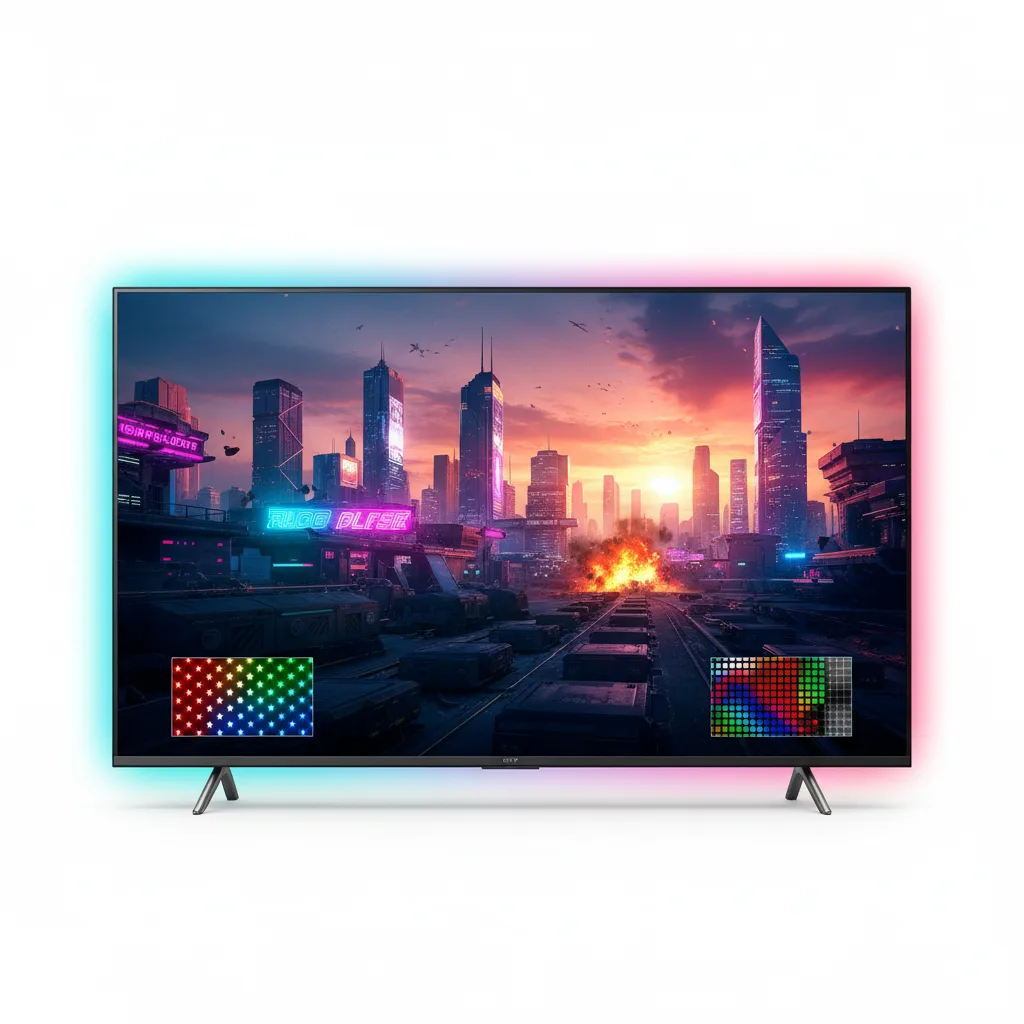
The Sony Bravia 7 II is Sony's most accessible True RGB Mini-LED television, and it earns that position decisively. Independent lab testing by Tom's Guide measured peak HDR brightness of 2,077 nits — nearly double the original Bravia 7's 1,355 nits — paired with remarkably clean local dimming that eliminates blooming even around bright objects on pitch-black backgrounds. Input lag of 10.4ms at 120Hz makes it a genuinely capable gaming display, a major step up from the 17.1ms of its predecessor. The primary frustrations are shared across Sony's 2026 lineup: only two of the four HDMI ports carry full HDMI 2.1 bandwidth, there is no HDR10+ or native 144Hz support, and SDR brightness defaults conservatively at 100 nits in the most accurate picture mode. At $2,599 for the 65-inch model, the Bravia 7 II delivers flagship-grade processing and a genuinely new backlight technology for viewers who want premium LCD performance without burn-in risk.
Performance Analysis
The Sony Bravia 7 II’s headline achievement is its True RGB backlight system — branded internally as RGB Backlight Master Drive Pro. Unlike conventional Mini-LED designs that place blue LEDs behind a quantum-dot film to generate white light, the Bravia 7 II uses independently controlled red, green, and blue LED chips within each local dimming zone. The direct result is measurably richer color volume without the color washout that can afflict standard white-LED panels at high brightness. Tom’s Guide lab testing confirmed peak HDR brightness of 2,077 nits in a 10% window, which is nearly double the original Bravia 7’s 1,355 nits and comfortably ahead of any competing OLED — though it remains below the Hisense UR9’s 3,327 nits and the TCL QM8L’s 3,719 nits at that same window size.
Local dimming performance is where the Bravia 7 II separates itself from pure brightness competitors. Reviewer testing across multiple cinematic titles consistently found that bright objects — streetlamps, muzzle flashes, LED signage — appeared with virtually no blooming halo against dark backgrounds. This reflects Sony’s deliberate tuning philosophy: the XR Processor analyzes each frame and adjusts backlight zones with nuance rather than maximizing raw nits. The trade-off surfaces in SDR content, where Sony’s out-of-box Professional mode targets approximately 100 nits to honour a Hollywood-accurate reference level. This figure sits well below rivals like the Hisense UR9 (2,486 nits SDR) and TCL QM8L (229 nits SDR). Switching to Cinema Mode raises peaks closer to 750 nits in SDR, and Sony provides clear guidance during setup to help users navigate these presets.
Color accuracy measurements from Tom’s Guide recorded a Delta-E of 4.79, which is higher than the LG C6 OLED (1.53) and the Samsung QN90F (1.83). However, Delta-E scores can diverge from subjective impressions when a TV applies sophisticated picture processing. Multiple reviewers noted that real-world skin tones and natural scenes looked balanced and convincing, with the RGB backlight producing colour volume that extended Rec. 2020 gamut coverage to 87.17% — well ahead of the original Bravia 7’s 78.61% and the LG C6 OLED’s 76.18%. The Bravia 7 II’s Rec. 709 coverage reached 99.94%, confirming near-complete coverage of the standard HD gamut for everyday streaming content.
Off-axis viewing, historically a weakness for LCD panels, is meaningfully improved by the X-Wide Angle Pro technology. Tom’s Guide testing found colour and brightness consistency remained strong when seats shifted well to the side — performance that reviewers noted more closely approximates OLED behaviour than the average LCD achieves. The one brightness caveat is that the Bravia 7 II uses a reflective screen coating on the 55-inch model rather than a true anti-glare surface, which can make dark scenes challenging in high-ambient-light environments such as sunlit rooms.
Design and Build Quality
Sony redesigned the stand for the Bravia 7 II with what it calls the Mirage Stand — a combination of slim steel arms and a transparent lens panel that conceals cables within the structure so the television appears to float above its surface. Assembly involves slotting the lens panel into the front of the base before sliding the TV into place, a process that Tom’s Guide reviewers described as notably seamless compared to standard TV setup procedures. The Immersive Frame bezel design carries a fine wave texture on all four sides, keeping visual width minimal and presenting an uninterrupted picture perimeter. Wall mounting via VESA is supported on all sizes, with the non-detachable power cable exiting from the rear-right and a built-in clip to tidy wiring.
The Bravia 7 II is available in 50-, 55-, 65-, 75-, 85-, and 98-inch screen sizes. The Mirage Stand ships with the 50-, 55-, 65-, 75-, and 85-inch models; the 98-inch uses a different stand configuration. One trade-off of the True RGB backlight construction is overall panel depth — the Bravia 7 II is noticeably thicker from the side than slim OLED sets, reflecting the additional space required by the RGB LED array and heat management. This is a shared characteristic across all 2026 RGB Mini-LED televisions from any manufacturer and does not affect wall-mounted installations.
Port layout places all four HDMI inputs on the left side of the panel, angled sideways for easier access when the set is flush against a wall. Two USB ports, optical audio out, an S-Center speaker input, Ethernet, RS-232C, IR-in, and a coaxial cable connection complete the rear connectivity. The remote control carries over from the previous generation with minor button rearrangements, including a new favourites shortcut for a preferred streaming service. A remote-finder function — activated by pressing the TV’s power button to trigger a buzzer on the misplaced remote — is a practical addition for everyday use. The built-in microphone with a physical privacy mute slider on the remote base addresses growing user concern about always-on voice pickup.
Software and User Experience
Google TV powers the Bravia 7 II’s interface, running on Sony’s XR Processor with 32GB of onboard storage. Google’s Gemini AI integration enhances content discovery through conversational search — asking the TV for a specific genre of film across streaming services produces more natural, contextualised recommendations than the keyword-based search that most smart TV platforms offer. Google Play Store access covers thousands of apps, and built-in Chromecast allows screen mirroring from Android and iOS devices without additional hardware. Apple AirPlay and Apple HomeKit compatibility extend the TV’s ecosystem reach to iPhone and iPad users who want to cast content or integrate the Bravia 7 II into an Apple Home automation setup.
Certified content modes include Netflix Calibrated Mode, IMAX Enhanced, and Amazon Calibrated Mode, each applying studio-approved picture parameters to preserve the director’s intent for that platform’s content. ATSC 3.0 (NextGen TV) tuner support ensures the television receives next-generation over-the-air broadcasts where they are available. Wi-Fi 6E connectivity provides faster, lower-latency wireless networking than the Wi-Fi 6 found in most competing sets, which benefits both 4K streaming and software update delivery. Sony’s update record on Google TV is reliable — the Bravia platform has received consistent software support across multiple hardware generations.
The remote features a dedicated Gemini button for hands-free AI queries and a physical microphone mute slider beneath the battery compartment, addressing privacy preferences. Navigation responsiveness across the Google TV interface is smooth, and Sony’s My Cinema preset system — introduced in 2026 — makes it easier for non-technical users to adjust brightness and picture style without navigating deep into the settings menu. Connectivity with PS5 via the dedicated PlayStation menu and Auto HDR Tone Mapping further deepens the value for Sony console owners.
Battery Life
As a plug-in television, the Sony Bravia 7 II operates from mains power and has no battery. Power consumption on the 65-inch model in Eco mode is rated at approximately 150W under typical conditions, with standby consumption compliant with EU and US efficiency requirements. The Eco mode reduces backlight output relative to Cinema or Vivid modes. Long-duration HDR viewing sessions — such as multi-hour movie marathons — maintained stable peak brightness without the progressive thermal throttling observed in some competing Mini-LED models that reduce sustained brightness significantly after 30 minutes of bright content.
Value for Money and Competition
At $2,599 for the 65-inch model, the Sony Bravia 7 II occupies premium territory that overlaps with mid-range OLED pricing. The LG C6 OLED currently retails at approximately $2,700, and the LG B6 sits around $2,000 — both offering perfect black levels and wider colour gamuts in dark environments that no LCD can replicate. For viewers with a completely light-controlled room and a primary use case of film watching, an OLED delivers a perceptibly superior picture. For mixed-lighting environments, the Bravia 7 II’s 2,077-nit HDR output preserves image quality where OLED panels wash out under ambient light. The True RGB backlight also eliminates burn-in risk entirely, which remains a genuine concern for static-image-heavy use cases such as sports, gaming HUDs, and ticker bars.
Against direct RGB Mini-LED competition, the TCL QM8L reaches 3,719 nits peak HDR and is priced at approximately $3,000 for a 75-inch model, delivering more raw brightness at a similar cost-per-inch. The Hisense UR9 provides 3,327 nits at closer to $2,000 for 65 inches — substantially cheaper for roughly equal or greater brightness. Both competitors sacrifice Sony’s processing finesse: the Bravia 7 II’s XR Processor produces more accurate out-of-box colour, better motion handling, and tighter blooming control than either rival’s tuning. Ecoustics and multiple other reviewers ranked the Bravia 7 II as the most colour-accurate 4K television tested in 2026 across all types, including OLED. For buyers who prioritise natural image quality and long-term software support over maximum peak brightness specifications, the Sony premium is justified. For those seeking the highest possible nit counts at the lowest price, the Hisense UR9 is the better choice.
The Sony Bravia 9 II — the flagship above this model — costs $3,600 for the 65-inch and delivers more dimming zones, higher sustained brightness, a more advanced anti-glare treatment, and a premium audio system. The $1,000 gap is significant, and the Bravia 7 II retains enough of the 9 II’s picture quality to satisfy most home theater viewers without the flagship investment.
Verdict
The Sony Bravia 7 II makes a compelling case that True RGB Mini-LED technology has matured to the point where it can genuinely challenge OLED in mixed-lighting home environments. Verified measurements show 2,077 nits of peak HDR brightness, 87.17% Rec. 2020 colour gamut coverage, and 10.4ms input lag at 120Hz — a combination that outperforms the original Bravia 7 in every measurable dimension. The local dimming system, tuned conservatively toward accuracy rather than maximum brightness, eliminates the blooming issues that plagued earlier LCD generations and makes the Bravia 7 II one of the cleanest LCD televisions available in 2026. Sony’s XR Processor and Google TV platform tie the hardware together with image processing and a smart interface that remain class-leading.
Two compromises deserve honest weight. Buyers with more than one next-generation console, or a console and an AV receiver, will find the two HDMI 2.1 port limit genuinely frustrating for a television at this price. And SDR brightness in Sony’s reference-accurate picture mode is intentionally conservative — viewers who come from a bright-room background expecting high ambient performance in SDR should set the TV to Cinema Mode rather than Professional to get usable everyday brightness. For a completely dark home theater where absolute black level is the priority, a comparably priced OLED remains the better choice.
Buy the Bravia 7 II if you watch in a living room with some ambient light, own a PS5 or high-end PC, and want the most accurate Sony picture quality available below flagship pricing. Skip it if you have a pitch-dark theater room, need more than two HDMI 2.1 ports, or can find the Hisense UR9 at a significant discount and are willing to calibrate for colour accuracy manually.
Check the current price for the Sony Bravia 7 II K-65XR70M2 on Amazon.
Rating: 4.3 / 5 — The best-processing True RGB Mini-LED TV of 2026 for accuracy-first viewers.
Sources: Sony Official Product Page | website, Tom’s Guide Bravia 7 II Review | website, RTINGS.com Bravia 7 II Review | website, TVReviews.net Sony BRAVIA 7 II | website, What Hi-Fi? Bravia 7 II Review | website, Memeburn Bravia 7 Mark II | website, eCoustics Bravia 7 II Review | website — August 2026
Sources: Tom's Guide u2014 Sony Bravia 7 II Review, RTINGS.com u2014 Sony BRAVIA 7 II Review, TVReviews.net u2014 Sony BRAVIA 7 II Specs and Review, What Hi-Fi? u2014 Sony Bravia 7 II Review, Memeburn u2014 Sony Bravia 7 Mark II Review, Specs, and Price, eCoustics u2014 Sony Bravia 7 II True RGB TV Review, Sony Asia Pacific u2014 BRAVIA 7 II Official Product Page, Choose.tv u2014 Sony Bravia 7 II Review and Test — August 2026
Frequently Asked Questions
Is the Sony Bravia 7 II worth buying in 2026?
What is the peak brightness of the Sony Bravia 7 II?
How does the Sony Bravia 7 II compare to the LG C6 OLED?
Where can I buy the Sony Bravia 7 II at the best price?
Does the Sony Bravia 7 II support 4K at 120Hz and VRR?
Does the Sony Bravia 7 II support HDR10+?
+Pros
- True RGB backlight delivers 2,077 nits peak HDR brightness and measurably wider colour volume than conventional white Mini-LED designs
- Local dimming precision produces deep blacks with virtually no visible blooming, even around isolated bright objects
- X-Wide Angle Pro technology provides genuinely improved off-axis consistency — a meaningful upgrade over standard LCD viewing angle limitations
- Input lag of 10.4ms at 120Hz is competitive with the best gaming TVs of 2026 and a major improvement over the original Bravia 7's 17.1ms
- Google TV with Gemini AI integration, ATSC 3.0, Wi-Fi 6E, and both Apple and Google ecosystem compatibility offer a complete smart TV experience
- Mirage Stand design elegantly conceals cabling for a clean installation without requiring wall mounting
−Cons
- Only two of four HDMI ports support full HDMI 2.1 bandwidth (48Gbps), which limits multi-console or AV-receiver setups
- Conservative SDR brightness at approximately 100 nits in Professional mode is noticeably dimmer than competing Mini-LED TVs in everyday viewing
- No HDR10+ support and no native 144Hz gaming mode, both of which appear in competing premium sets
- Premium pricing overlaps with entry-level OLED territory, making the value proposition conditional on use case and viewing environment