Xiaomi Watch 5 Review: Great Battery Life in a Stylish Package
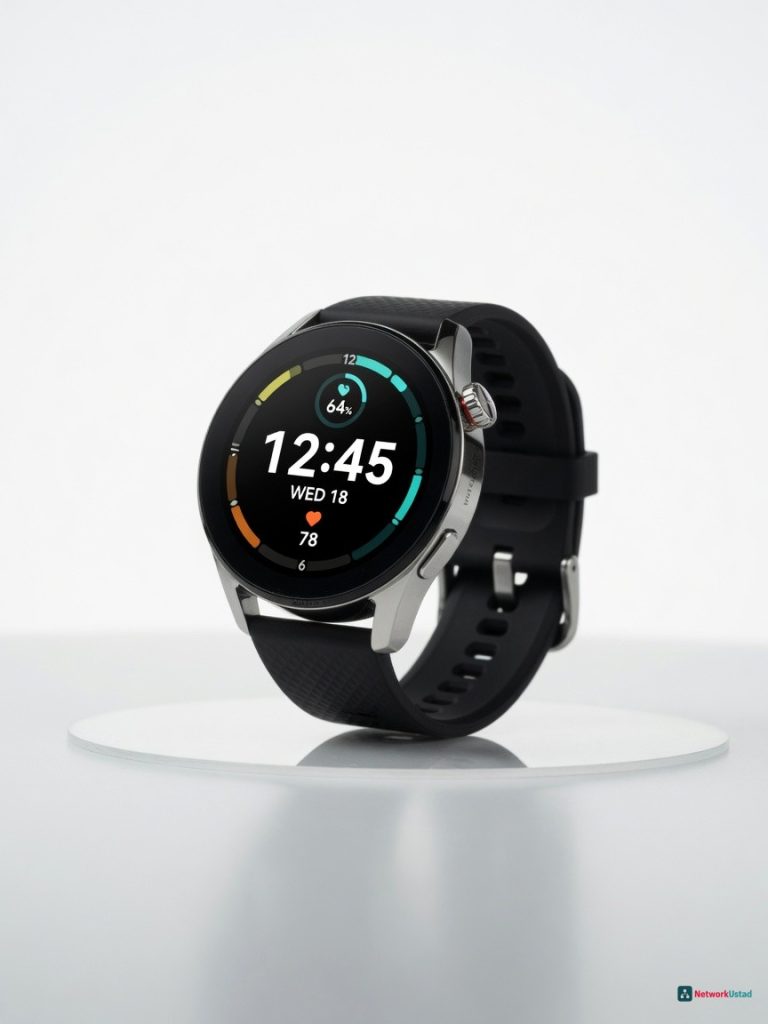
The Xiaomi Watch 5 solves the one problem that has frustrated Wear OS users for years — battery life. A 930mAh silicon-carbon cell delivers a confirmed six days in Smart Mode, nearly double what any competing Wear OS watch achieves. Pair that with the world's first consumer EMG gesture sensor, a stainless steel and sapphire glass build, and Wear OS 6 with [Google Gemini](https://gemini.google.com/), all at €299, and this is easily the most compelling Wear OS watch on the market in 2026. The trade-offs are real — no ECG, no US availability, and some features require a Xiaomi phone — but none of them undermine what the Watch 5 gets right. ---
The Battery Problem That Nobody Fixed (Until Now)
Wear OS has been the best Android smartwatch platform for three years and its biggest frustration for the same three years. Google’s Pixel Watch 4 lasts around two days. Samsung’s Galaxy Watch 7 averages two days. The Galaxy Watch Ultra stretches to two days with effort. Every flagship Android smartwatch effectively requires nightly charging — a behaviour that Apple Watch owners have accepted but Wear OS users have increasingly questioned as Garmin and other fitness-focused competitors demonstrate that seven to fourteen days of battery life is achievable on a wrist device.
Xiaomi apparently decided to take this problem seriously. The Watch 5, launched in China on December 25, 2025 and globally at MWC 2026 in Barcelona on February 28, arrives with a 930mAh silicon-carbon battery — the same cell chemistry Xiaomi used in the Xiaomi 17 Ultra smartphone, which allows more energy to be packed into the same physical volume compared to conventional lithium-ion. For context: Apple Watch Ultra 2 houses approximately 564mAh. OnePlus Watch 3 carries 648mAh. The Xiaomi Watch 5 carries 930mAh — a figure that was, until this watch, essentially unheard of in a premium round-case Wear OS device.
The battery claim alone would be notable. The fact that the Watch 5 also introduces the world’s first consumer EMG sensor, runs Wear OS 6 with Google Gemini, and does all of it inside a stainless steel and sapphire glass case at €299 makes it genuinely difficult to dismiss.
Design and Display: Premium Where It Counts
The Watch 5 is built around a 316L stainless steel case measuring 47mm across and 12.3mm thick, weighing 56g without the strap. That weight is immediately noticeable coming from lighter smartwatches — GSMArena noted that it felt heavier than the Huawei Watch GT 6 Pro — but the heft comes with a corresponding sense of quality. The double-sided sapphire glass (Mohs hardness 9, the same hardness as sapphire used in luxury Swiss watches) resists scratches on both the front and rear of the case. Bezels measure 2.6mm — thin enough to keep the display feeling expansive within the 47mm footprint.
The 1.54-inch AMOLED display runs at 480×480 resolution with 60Hz refresh rate and 1,500 nits peak brightness. Outdoor visibility is strong. Always-On Display (AOD) is supported, though activating it reduces battery life from six days to approximately four — still exceptional by Wear OS standards. The ambient light sensor has been flagged by multiple reviewers as a weakness — it adapts slowly when stepping from shade to bright sunlight, requiring occasional manual brightness adjustment more often than it should on a 2026 flagship.
The EMG Sensor: Real Innovation, with Caveats
The headline hardware feature is the EMG (electromyography) sensor — a clinical technology that reads the electrical signals fired by muscles and nerves in the forearm when fingers move. Xiaomi combines EMG readings with PPG (optical) and IMU (motion) sensor data to recognise specific gestures with higher accuracy and lower latency than motion-only gesture systems like Apple Watch’s double-tap.
The gesture vocabulary includes double pinch (reject calls, stop timer), double rub (dismiss alarms, snooze), finger snap, wrist shake, and wrist rotation — all configurable to custom actions including launching apps, starting workouts, or controlling Xiaomi smart home devices. Trusted Reviews found the controls “more than just a gimmick” and noted genuine reliability for the core gestures. GSMArena observed occasional failures to register in certain hand positions, particularly when the forearm is not roughly parallel to the chest — the positioning requirement is a genuine constraint.
The most advanced features — custom gesture mapping to smart home devices and Xiaomi Smart Hub integration — require the connected phone to run Xiaomi HyperOS 3. Reviewers using non-Xiaomi Android phones or older HyperOS versions confirmed they could not fully test this capability. Standard gesture dismissal of calls and alarms works without HyperOS 3.
Battery Life: The Real-World Numbers
The 930mAh silicon-carbon battery is not just a specification number — independent reviewers across multiple markets confirmed the six-day figure in Smart Mode under real daily use. Wareable confirmed six full days with continuous health tracking and AOD disabled. Digital Reviews Network achieved three to four days under heavier use including gaming and high notification volume. Root-Nation confirmed four days with AOD active.
The dual-chip engineering is what makes this possible without compromising the Wear OS experience. A Snapdragon W5 Gen 1 (4nm) handles demanding processing — active use, app loading, GPS workouts. A BES2800 co-processor (6nm) takes over during idle periods, handling background health monitoring, step counting, and AOD while the Snapdragon effectively sleeps. The system transitions between chips automatically and invisibly.
Charging from empty takes approximately 90 minutes via the included magnetic dock. The charging dock uses a USB-A connector — a notable omission in 2026 when USB-C has become universal even at budget price points.
Health and Fitness Tracking
The Watch 5 covers the standard flagship sensor checklist: 24/7 heart rate monitoring, SpO2 (blood oxygen), stress tracking, sleep quality analysis, and menstrual cycle prediction. The PPG sensor uses four LEDs and four photodiodes — a configuration that generally produces reliable continuous readings. Digital Reviews Network cross-referenced the Watch 5 against an Oura Ring 4 and found results broadly consistent across resting metrics.
The gap versus Google and Samsung is in advanced sensors. The Watch 5 does not include an ECG sensor for atrial fibrillation detection — a feature the Pixel Watch 4, Galaxy Watch 7, and Apple Watch Series 10 all include. There is no blood pressure monitoring, no body temperature sensor, and no UWB chip for precision location features. The Watch 5 is genuinely excellent at the health features it does support; it simply does not match the medical-grade aspirations of top-tier rivals.
GPS accuracy is a strength. Dual-band L1+L5 GNSS with support for all five major satellite systems (GPS, Galileo, GLONASS, BeiDou, QZSS) delivers precise outdoor tracking for running, cycling, and hiking. Offline map support is present but reviewers noted the transfer process lacks the polish of Garmin’s implementation.
Software: Wear OS 6 with Google Gemini
The Xiaomi Watch 5 runs Wear OS 6 — the latest version of Google’s platform — with Xiaomi’s own HyperOS skin on top. Trusted Reviews found the interface “pretty slick” with no significant lag in daily use. Google Gemini integration enables hands-free AI queries, reminders, and navigation assistance directly from the watch. Google Maps, Google Calendar, Google Play, and Google Wallet are all accessible natively.
The HyperOS skin over Wear OS is functional and responsive, though multiple reviewers described it as less refined than Samsung’s One UI Watch or the clean interface of the Pixel Watch 4. Xiaomi’s historical track record on timely Wear OS updates is not strong — buyers who value prompt software support should consider that carefully.
Verdict
The Xiaomi Watch 5 asks a different question than every other Wear OS smartwatch in 2026: what if battery life actually wasn’t a problem? The 930mAh silicon-carbon cell, confirmed at six days by independent reviewers, answers that question definitively. Paired with a stainless steel and sapphire glass build, the world’s first consumer EMG sensor, Wear OS 6 with Gemini, and dual-band GPS — all at €299 — it is the most complete value proposition in the Wear OS category.
The omissions are genuine: no ECG, no US retail availability, no USB-C charging dock, and full feature access requires a Xiaomi phone. None of these undermine the core achievement. If you are an Android user outside the US who has been frustrated by charging your smartwatch every night, the Watch 5 is the most direct solution available.
Rating: 4.2 / 5 — The best battery life of any Wear OS smartwatch, at a price that makes the compromises easy to accept.
Frequently Asked Questions
Does the Xiaomi Watch 5 work with iPhone?
Is the Xiaomi Watch 5 available in the United States?
How does the EMG gesture control actually work?
What is the real-world battery life of the Xiaomi Watch 5?
Does the Xiaomi Watch 5 have ECG or blood pressure monitoring?
What processor does the Xiaomi Watch 5 use?
Can the Xiaomi Watch 5 make phone calls?
How does the Xiaomi Watch 5 compare to the Samsung Galaxy Watch 7?
+Pros
- Six days of confirmed real-world battery life — the best of any Wear OS smartwatch
- 930mAh silicon-carbon battery is nearly double most competing flagships
- World's first consumer EMG sensor — gesture control works reliably in most scenarios
- Stainless steel frame and sapphire glass on both sides at €299 is exceptional value
- Dual-chip architecture intelligently offloads to co-processor — preserves battery without sacrificing performance
- Wear OS 6 with Google Gemini built-in for hands-free AI assistance
- Dual-band GNSS (L1+L5) for highly accurate outdoor GPS tracking
- 150+ sport modes covers almost every activity
- Google Wallet NFC payments supported
- 32GB of onboard storage for offline music and maps
−Cons
- No ECG sensor — behind [Google Pixel Watch 4](https://networkustad.com/review/google-pixel-watch-4-review/) and [Samsung Galaxy Watch 7](https://networkustad.com/review/samsung-galaxy-watch-7-review/) in health monitoring depth
- No cellular / eSIM option in global markets (eSIM available China only)
- Not available in the United States through official retail channels
- Advanced gesture and smart home features require a phone running Xiaomi HyperOS 3
- Charging dock uses USB-A connector — outdated in 2026 when USB-C is universal
- 56g case weight is noticeable — not suitable for buyers who prefer compact, lightweight wearables
- Ambient light sensor adapts slowly in changing conditions — occasional manual brightness adjustment needed
- Xiaomi's track record on timely Wear OS software updates is not strong
- UI skin over Wear OS is functional but lacks the polish of Samsung's One UI Watch or Pixel Watch's interface
- Android-only — no iOS compatibility