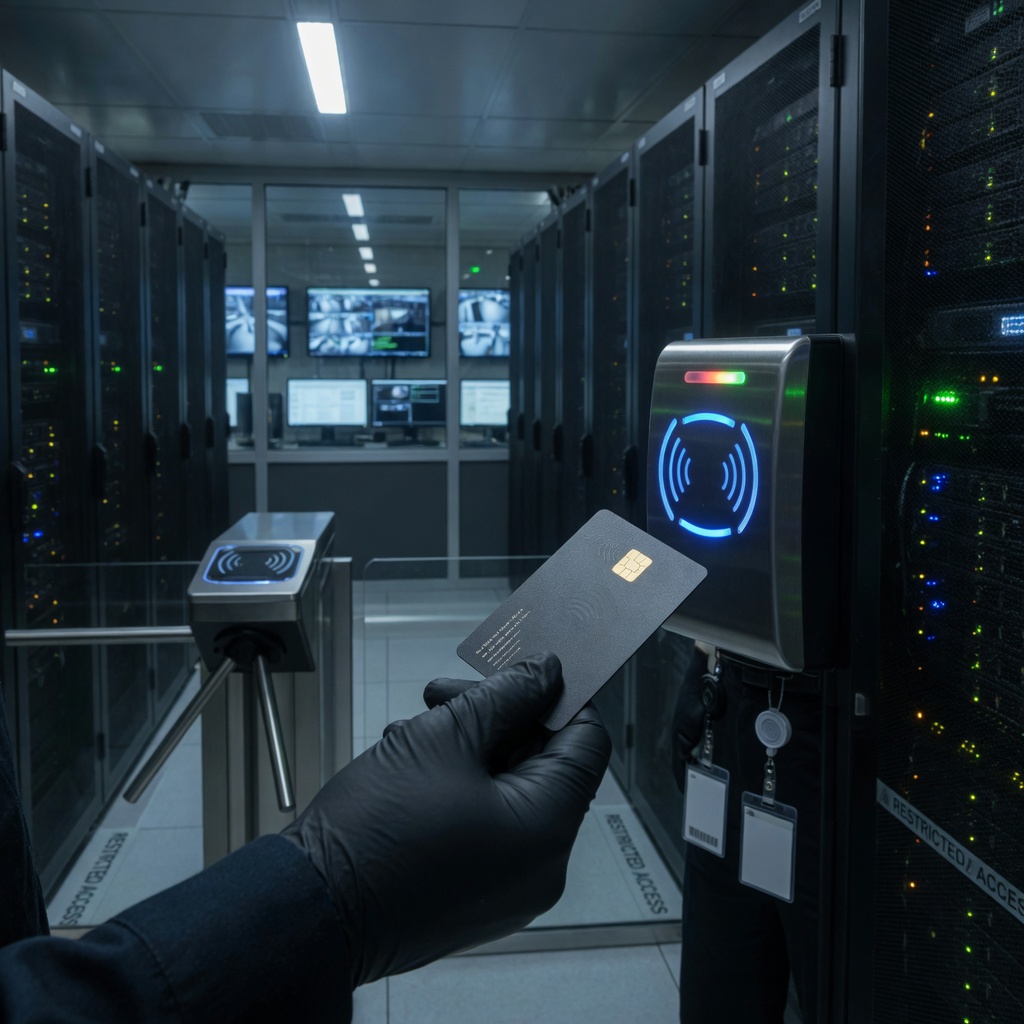
Modern data centers house some of the most critical digital infrastructure in the world. From cloud computing platforms and financial systems to healthcare databases and enterprise applications, these facilities require strict physical security measures. RFID (Radio Frequency Identification) cards have become a key component of data center security strategies, providing reliable access control, visitor management, employee tracking, and audit capabilities.
Organizations often deploy secure custom id cards integrated with RFID technology to ensure that only authorized personnel can enter sensitive areas within the facility.
RFID Access Control for Data Centers
Physical access control is one of the most important applications of RFID cards in a data center environment. Every entrance, server room, network operations center (NOC), and restricted area can be equipped with RFID readers that authenticate employee credentials before granting access.
Unlike traditional keys, RFID cards provide centralized administration. Security teams can instantly grant, modify, or revoke permissions without replacing locks or issuing new keys. Access rights can be customized based on an employee’s role, department, or security clearance level.
For example, a network engineer may have access to telecommunications rooms and equipment racks, while a facilities technician may only be authorized to enter mechanical and electrical areas. Every access event is automatically recorded, creating a complete audit trail that supports compliance requirements and security investigations.
Employee and Contractor Check-In/Check-Out
Data centers frequently host contractors, vendors, auditors, and temporary staff. RFID cards simplify the check-in and check-out process by automatically recording when individuals enter and leave the facility.
Upon arrival, visitors can be issued temporary RFID credentials that are valid only for specific areas and time periods. Security personnel can monitor occupancy levels in real time and quickly determine who is present inside the facility during emergencies.
Automated check-in/check-out records also reduce administrative overhead and eliminate inaccuracies associated with manual sign-in sheets. Detailed logs provide valuable information for operational reporting, compliance audits, and incident response procedures.
Securing High-Value Infrastructure
Data centers contain high-value assets including servers, storage arrays, networking equipment, backup systems, and power infrastructure. Unauthorized physical access could result in data theft, service disruption, or equipment tampering.
RFID-enabled access control systems help establish multiple layers of security. Facilities often implement security zones that require separate authentication events. Personnel may be required to present an RFID card at the building entrance, another secured doorway, and finally at an individual server cage or cabinet.
This layered approach significantly reduces the risk of unauthorized access and supports the principle of least privilege. Every movement through the facility can be tracked and correlated with security camera footage, environmental monitoring systems, and operational logs.
Radio Transmission Security and Encryption
One concern often associated with RFID technology is the possibility of card cloning or signal interception. Early generations of RFID cards relied primarily on transmitting static identification numbers, making them more vulnerable to unauthorized duplication.
Modern RFID credentials use sophisticated encryption technologies and mutual authentication mechanisms to protect communications between the card and reader. Technologies such as AES-128 encryption, DESFire EV3, and other secure credential platforms allow both the card and the reader to verify each other’s authenticity before exchanging data. This significantly reduces the risk of cloning and replay attacks.
In many deployments, the card does not simply transmit a fixed identifier. Instead, the card and reader participate in a cryptographic challenge-response process using encrypted keys. Even if an attacker captures the radio communication, the intercepted data cannot be reused to gain access because each authentication session uses unique values and encrypted exchanges.
Organizations seeking enhanced security frequently choose secure credential technologies such as proximity ID cards and other encrypted RFID solutions designed specifically for access control applications.
Integration with Data Center Security Systems
RFID access control systems are rarely deployed in isolation. Modern data centers integrate RFID credentials with video surveillance, visitor management platforms, security information systems, and building management systems.
When an employee presents an RFID card, the access control platform can automatically log the event, trigger camera recordings, update occupancy databases, and generate alerts if unusual activity is detected. Some facilities also combine RFID authentication with PIN codes or biometric verification to implement multi-factor physical security.
These integrations improve visibility across the facility while providing security teams with actionable intelligence and real-time monitoring capabilities.
Compliance and Audit Benefits
Many data centers operate under regulatory frameworks such as SOC 2, ISO 27001, PCI DSS, HIPAA, or industry-specific security standards. Demonstrating effective physical access controls is a common compliance requirement.
RFID systems provide detailed audit logs showing who accessed specific areas, when access occurred, and how long individuals remained within secured zones. These records can be retained for extended periods and presented during audits or security reviews.
Automated reporting capabilities help organizations demonstrate compliance while reducing the administrative burden associated with manual recordkeeping.
Conclusion
RFID enabled custom ID cards have become an essential component of modern data center security. They enable efficient access control, simplify employee and visitor check-in/check-out procedures, and provide complete audit trails for compliance and operational oversight. Advanced encryption and mutual authentication technologies help secure radio communications and protect against cloning attempts, making modern RFID credentials significantly more secure than earlier generations.
As data centers continue to support increasingly critical digital services, RFID-based access control systems will remain a foundational element of physical security strategies, helping organizations protect infrastructure, data, and personnel while maintaining operational efficiency.