Commercial property crime continues to climb, with businesses losing billions annually to theft, vandalism, and unauthorized access. In this environment, outdoor flood lights for houses and commercial buildings have become a frontline defense, transforming dark vulnerabilities into well-lit deterrents that criminals actively avoid. The technology behind these essential security tools has evolved dramatically, sparking an important debate among property managers: should you stick with traditional lighting systems or make the switch to LED outdoor lighting? This article cuts through the confusion to help commercial property managers make informed decisions that enhance both security and visibility across their properties. We’ll examine the tangible benefits each technology offers, walk through selection criteria for different outdoor environments, and provide practical solutions for implementation. Whether you’re upgrading an aging system or designing security lighting from scratch, understanding the differences between LED and traditional flood lights will directly impact your property’s safety profile and your operating budget.
The Evolution of Outdoor Lighting: From Traditional to LED
Outdoor flood lights for houses and commercial properties serve a singular critical purpose: projecting broad, effective beams of light across large areas to eliminate shadows and expose potential threats. These fixtures have anchored security strategies for decades, evolving from basic incandescent floodlamps to sophisticated systems capable of intelligent operation. Traditional options dominated the market for years, with halogen bulbs offering intense white light and high-intensity discharge (HID) fixtures—including metal halide and high-pressure sodium lamps—powering everything from warehouse perimeters to stadium parking lots. These technologies delivered raw brightness but came with significant trade-offs in energy consumption, heat generation, and maintenance demands. The industry’s pivot toward LED outdoor lighting represents more than an incremental improvement; it reflects a fundamental rethinking of how light is produced and deployed. Modern LED flood lights convert electrical energy directly into photons with minimal waste heat, achieving the same or greater illumination output at a fraction of the power draw. Manufacturers like Hyperlite have pushed this technology further with outdoor lights engineered specifically for commercial security applications, incorporating advanced thermal management, precision optics, and reliable construction. This shift toward energy efficiency and durability hasn’t just reduced operating costs—it has expanded what’s possible in security lighting design, enabling property managers to illuminate more area with fewer fixtures and far less ongoing maintenance.
Traditional Flood Lights: Pros and Cons
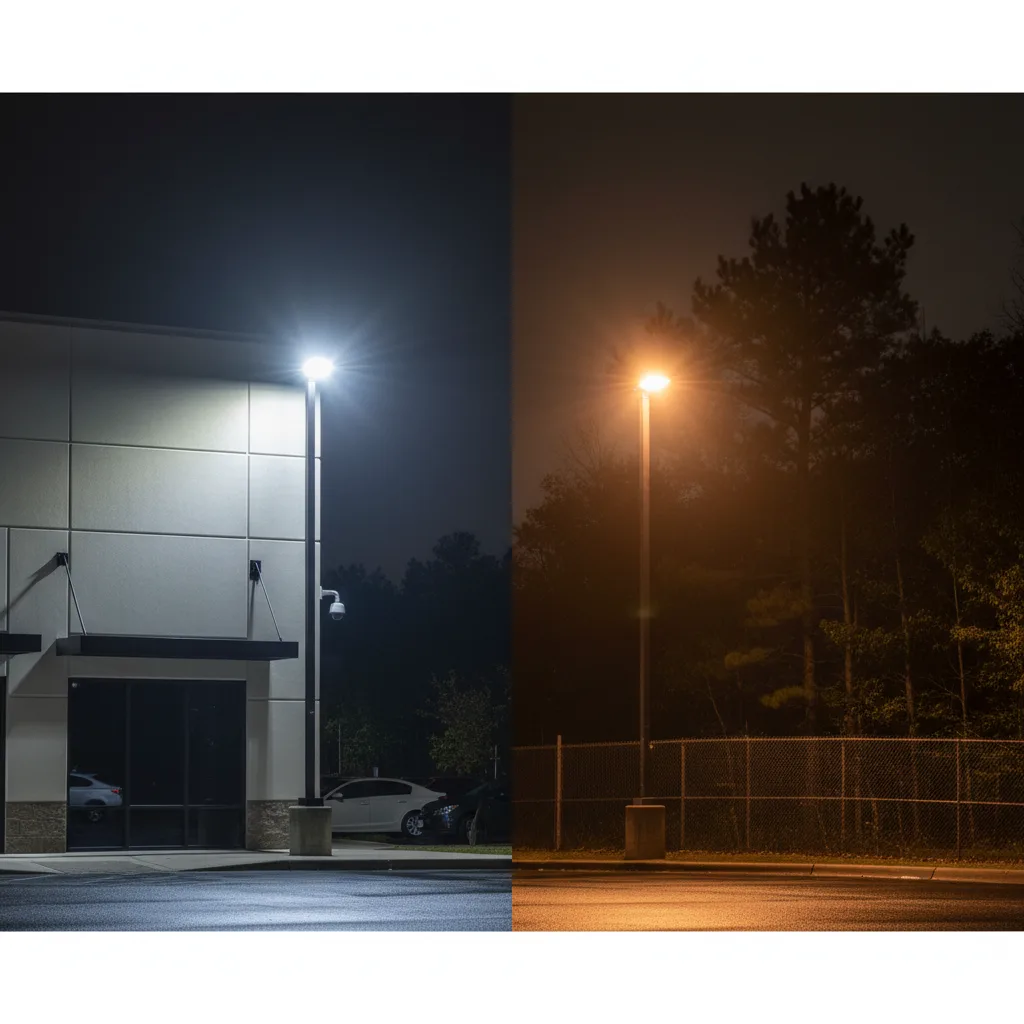
Traditional flood lights earned their place in commercial security through sheer output power and accessibility. Halogen floods produce a warm, high-CRI light that renders colors accurately, making them useful for identification purposes on camera footage. HID fixtures, particularly metal halide lamps, deliver enormous lumen packages suitable for illuminating expansive parking structures and loading docks. Initial purchase costs remain lower than LED equivalents, which historically made them attractive for budget-conscious installations. However, these advantages come with substantial operational penalties. A typical 500-watt halogen flood consumes five to ten times more electricity than an LED producing equivalent lumens. HID lamps require lengthy warm-up periods of several minutes before reaching full brightness—a critical liability when security demands instant response. Bulb replacement cycles of 2,000 to 6,000 hours mean maintenance crews are regularly swapping fixtures at height, incurring labor costs and creating periods of darkness between failure and replacement. Heat output also degrades surrounding housing components and limits mounting options near combustible materials.
LED Technology: A Modern Revolution
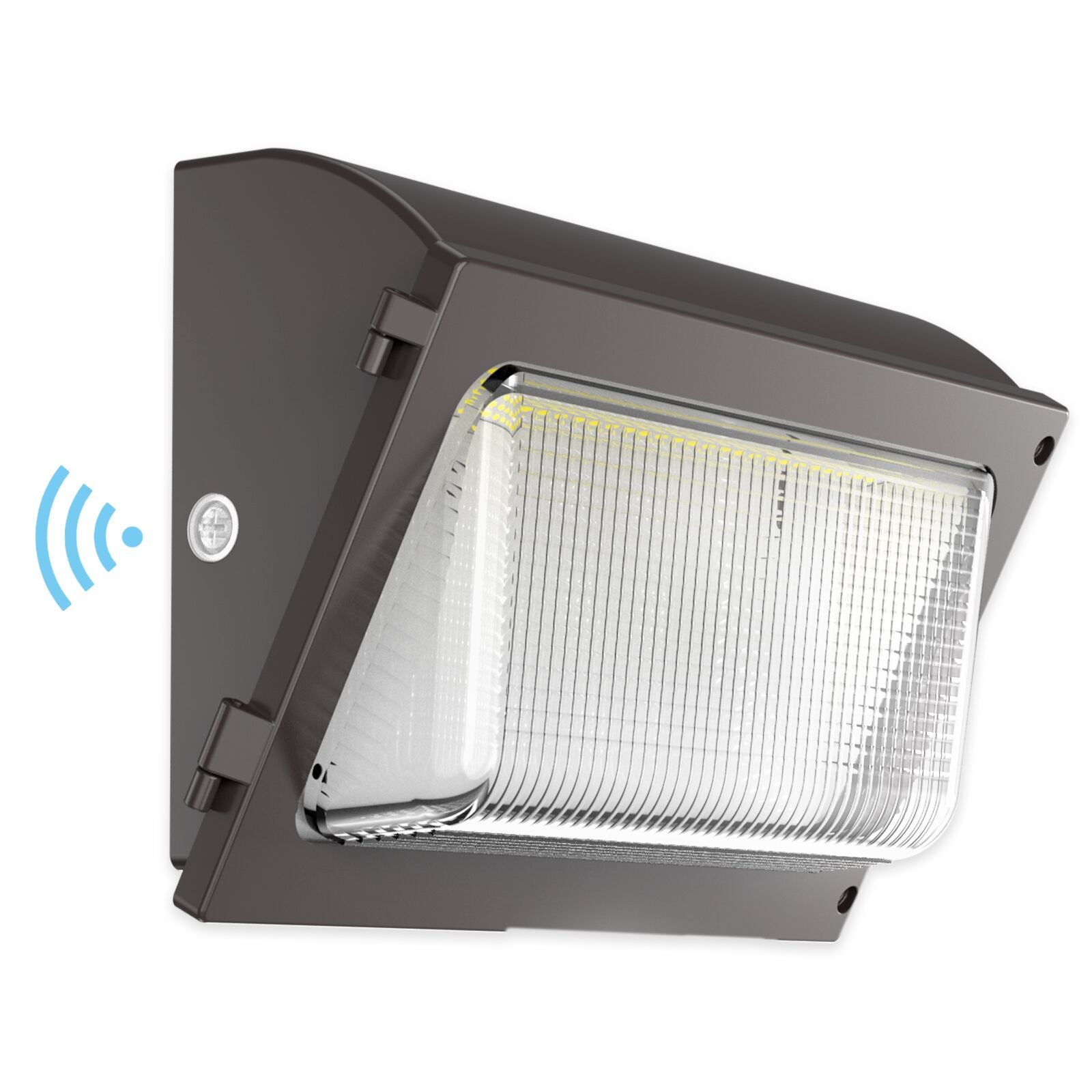
LED flood lights operate on an entirely different principle than their predecessors. Light-emitting diodes pass current through semiconductor material to produce photons directly, bypassing the inefficient heating of filaments or gas excitation that traditional technologies rely upon. This fundamental efficiency translates into immediate practical benefits for security applications. LED fixtures reach full brightness within microseconds of activation, making them ideal for motion-triggered security responses where instant illumination catches intruders off guard. Their lower heat output means housings remain cooler, extending the life of internal electronics and enabling sealed, weather-resistant lighting enclosures that protect against moisture, dust, and corrosive environments. Operating temperatures stay manageable even during continuous overnight operation, and the solid-state construction withstands vibration and impact far better than fragile glass bulbs or arc tubes. These characteristics combine to create fixtures rated for 50,000 hours or more of continuous service—effectively eliminating the replacement cycle that plagues traditional installations.
Key Benefits of LED Outdoor Flood Lights for Security
For commercial property managers evaluating lighting upgrades, understanding the concrete advantages LED outdoor lighting delivers over traditional alternatives is essential to justifying investment and achieving measurable security improvements. The benefits extend well beyond simple energy savings into territory that directly impacts how effectively your property deters criminal activity and supports incident response.
Energy Efficiency and Cost Savings
The energy equation between LED and traditional flood lights isn’t close. A 150-watt LED flood light typically produces the same lumen output as a 400-watt metal halide fixture, representing a 60% reduction in power consumption for identical illumination. Scale that across a commercial property running 40 or 50 fixtures from dusk to dawn, and annual electricity savings reach thousands of dollars. Property managers operating large retail centers or industrial campuses frequently report 50-70% reductions in lighting-related energy costs after converting to LED systems. The financial case strengthens further when you factor in LED’s 50,000-hour rated lifespan compared to roughly 6,000 hours for metal halide or 2,000 hours for halogen. Fewer replacements mean fewer maintenance truck rolls, less labor overhead, and zero periods where burned-out fixtures leave security gaps. Over a five-year horizon, the total cost of ownership for LED installations typically falls well below traditional systems despite higher upfront fixture costs. This long-term savings profile allows property managers to reinvest in additional coverage areas or complementary security technologies.
Durability and Weather Resistance
Commercial outdoor environments punish lighting equipment relentlessly. Rain, snow, extreme heat, salt air, and wind-driven debris all conspire to degrade fixtures and compromise performance. LED flood lights engineered for these conditions carry IP65 or IP66 ratings, meaning they’re completely sealed against dust intrusion and protected from effective water jets from any direction. Weather-resistant lighting constructed with die-cast aluminum housings and polycarbonate or tempered glass lenses resists corrosion and impact damage that would shatter traditional glass bulb enclosures. Hyperlite outdoor lights exemplify this rugged construction philosophy, incorporating finned heat sinks that maintain optimal LED junction temperatures even during summer heat waves while keeping internal electronics isolated from environmental contamination. The absence of fragile filaments or gas-filled arc tubes means LED fixtures tolerate vibration from nearby machinery, door impacts, or high winds without failure. This physical resilience translates directly into security reliability—lights that stay operational through storms, temperature extremes, and accidental contact maintain continuous deterrence without interruption. For properties in coastal, desert, or northern climates where traditional fixtures degrade rapidly, LED technology has eliminated weather as a meaningful threat to lighting system integrity. The enhanced brightness and superior color rendering of modern LEDs—often achieving CRI values above 80—also improve surveillance camera footage quality, making facial identification and vehicle recognition substantially more reliable during nighttime incidents.
Security Zone Illumination: Strategies and Importance
Security zone illumination refers to the deliberate, strategic placement of lighting to create overlapping fields of visibility that eliminate blind spots across a property’s most vulnerable areas. Rather than simply flooding an entire site with uniform brightness, effective security zone illumination divides a property into distinct zones—perimeter boundaries, transition areas, entry points, and high-value asset locations—each receiving lighting calibrated to its specific threat profile and surveillance requirements. This approach works because criminals conduct reconnaissance before acting; a property with clearly defined, well-lit zones signals active security management and dramatically increases the perceived risk of detection. Dark spots between fixtures or inconsistent coverage create the exact conditions intruders exploit to approach undetected, disable cameras, or conceal their activities. For commercial parking lots, positioning LED flood lights at corners and mid-points with overlapping beam patterns ensures continuous coverage even if one fixture fails. Building entrances benefit from higher-intensity downlighting that forces anyone approaching to be fully visible to cameras and passersby. Loading docks and service corridors require illumination that extends outward beyond the immediate work area, preventing anyone from lurking just outside the light’s reach. When paired with motion-activated fixtures in secondary zones, this layered approach maintains baseline visibility while delivering intensified brightness the moment movement is detected—startling intruders and triggering recording systems simultaneously.
Selecting Appropriate Outdoor Flood Lights for Different Spaces
Choosing the right outdoor flood lights for houses and commercial properties requires a systematic evaluation that matches lighting capability to each space’s unique demands. Property managers who skip this assessment often end up with over-lit areas wasting energy alongside under-lit zones that invite security breaches. Start by mapping your property into distinct areas based on size, function, and threat level. A sprawling parking lot demands different specifications than a narrow service corridor or a main entrance vestibule. For each zone, determine the required illumination level in foot-candles—parking areas typically need 1-5 fc for general safety, while loading docks and cash-handling areas may require 10-20 fc for detailed visibility and camera clarity.
Once you’ve established requirements, evaluate whether LED or traditional fixtures best serve each application. For nearly all commercial security scenarios today, LED outdoor lighting wins on every meaningful metric: instant-on capability for motion-triggered zones, consistent color temperature for camera integration, and dramatically lower operating costs across large fixture counts. The rare exception might be a temporary installation where initial purchase price outweighs long-term efficiency. When comparing products, focus on three critical specifications: lumen output determines raw brightness, beam angle controls how wide or narrow the light spreads, and color temperature affects visibility quality. Narrow beam angles of 30-60 degrees suit focused perimeter lighting, while 120-degree flood patterns cover broad open areas efficiently. For properties in harsh climates, prioritize weather-resistant lighting with minimum IP65 ratings and operating temperature ranges that match your local extremes. Finally, consider mounting height—higher poles require higher-output fixtures with tighter beam control to deliver adequate ground-level illumination without excessive light trespass onto neighboring properties.
Lighting for Parking Lots and Walkways
Parking lots represent the highest-risk zone on most commercial properties because they combine vehicle concealment opportunities, multiple entry and exit routes, and periods of isolation between peak traffic. Effective parking lot security lighting uses pole-mounted LED floods positioned at 20-30 foot heights with wide beam angles that create overlapping coverage patterns. Mount fixtures at lot corners and at intervals no greater than four times the mounting height to prevent dark gaps between pools of light. Walkways connecting parking areas to building entrances require continuous illumination at lower mounting heights—typically 10-12 feet—using fixtures with asymmetric beam distributions that light the path surface without creating glare that blinds pedestrians approaching from the opposite direction. Bollard-style LED fixtures or wall-mounted floods aimed downward work effectively along covered walkways. In both applications, choose fixtures with 4000-5000K color temperatures that produce neutral white light, maximizing contrast perception and supporting color-accurate surveillance footage throughout these high-traffic zones.
Lighting for Building Perimeters and Entrances
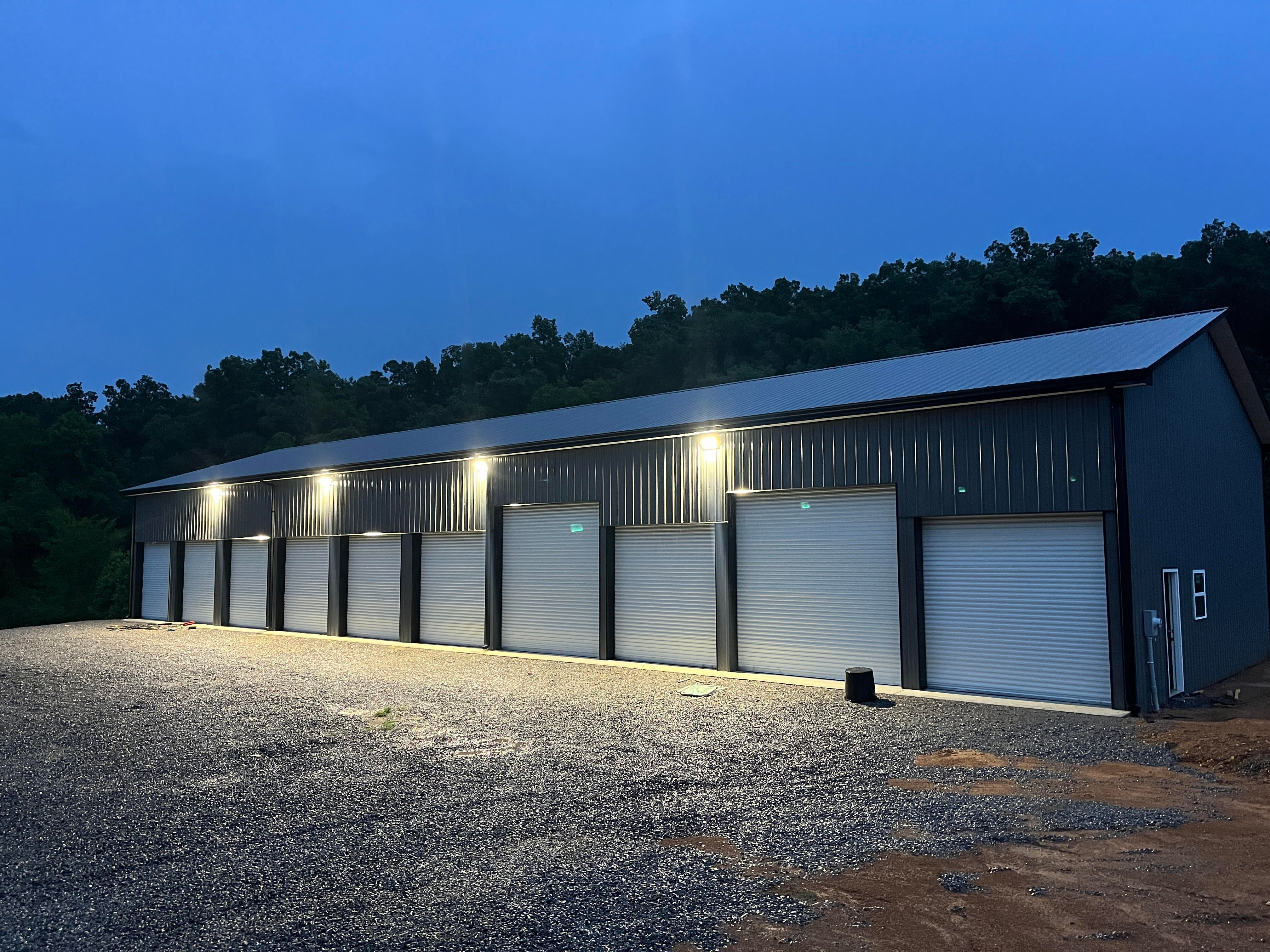
Building perimeters demand a different lighting philosophy than open lots. The goal here is to create a continuous band of illumination along walls, fences, and rooflines that makes it impossible for anyone to approach the structure undetected. Wall-mounted LED flood lights angled outward at 15-30 degrees from the building face illuminate the ground zone where intruders would walk while simultaneously backlighting anyone against the building’s surface for camera detection. Space these fixtures every 25-40 feet depending on output and beam width, ensuring no shadow pockets form between units. Main entrances deserve the highest illumination intensity on the property—both for security identification and as a psychological signal that this access point is actively monitored. Recessed canopy lights or high-output downfloods delivering 20+ foot-candles directly at door level ensure facial features remain clearly visible to overhead cameras. Secondary entrances, emergency exits, and service doors benefit from motion-activated LED floods that remain at a low standby brightness and surge to full output when triggered, conserving energy while delivering startling illumination that deters unauthorized use and alerts monitoring systems to activity at these typically unattended access points.
Implementation and Maintenance Solutions for Property Managers
Transitioning from traditional to LED outdoor lighting requires a structured approach that minimizes security gaps during the changeover. Begin with a professional lighting audit that maps current fixture locations, identifies coverage deficiencies, and prioritizes zones by threat level for phased upgrades. Hire licensed electricians familiar with commercial installations for any work involving new wiring runs or panel upgrades, though straightforward one-for-one fixture swaps on existing circuits can often be handled by qualified maintenance staff. Once installed, establish quarterly inspection routines that verify all fixtures are operational, clean lenses of accumulated grime that reduces output, and confirm that motion sensors and photocells trigger correctly. Weather-resistant lighting requires less frequent attention than traditional systems, but checking gasket seals and drainage weep holes before winter prevents moisture intrusion during freeze-thaw cycles. Document every fixture’s installation date and operating hours to anticipate end-of-life replacements before failures create dark spots. For properties still running traditional systems, prioritize converting high-security zones first—entrances, cash-handling areas, and isolated perimeter sections—then expand LED coverage as budget allows.
Why LED Flood Lights Are the Smart Choice for Property Security
The comparison between LED and traditional outdoor flood lights announces a clear winner for commercial security applications. LED outdoor lighting delivers superior performance across every metric that matters to property managers—consuming 50-70% less energy, lasting up to 25 times longer than halogen alternatives, and providing instant-on capability that traditional HID fixtures simply cannot match. The durability of weather-resistant lighting built with sealed housings and solid-state components ensures continuous operation through the harshest environmental conditions, eliminating the maintenance cycles and unexpected dark periods that compromise security with traditional systems. Selecting the right outdoor flood lights for houses and commercial properties ultimately comes down to matching fixture specifications to each zone’s unique requirements, from broad parking lot coverage to focused entrance illumination. Property managers who prioritize security zone illumination with strategically layered LED systems create environments where criminal activity becomes impractical and detection becomes unavoidable. The investment pays for itself through reduced energy bills, minimal maintenance demands, and measurable reductions in security incidents. If your property still relies on aging traditional flood lights, now is the time to conduct a complete lighting audit, identify your highest-risk zones, and begin a phased transition to modern LED solutions that protect both your assets and your bottom line.