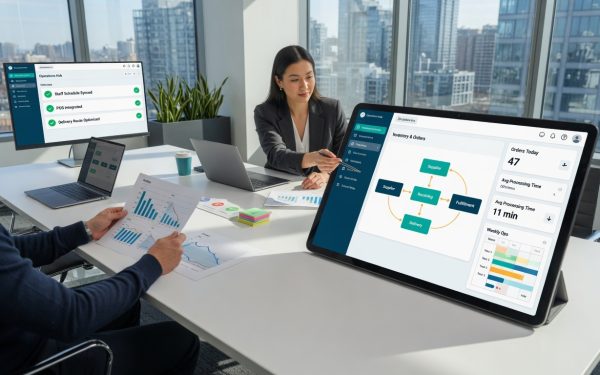
The modern workplace has changed dramatically over the last decade.
Organizations no longer operate only from centralized offices. Teams collaborate across countries, time zones, and digital platforms. Hiring has become global. Workflows have become increasingly distributed. And businesses now face growing pressure to scale quickly while maintaining operational stability.
In this environment, workforce management has become far more complex than simply hiring employees and assigning responsibilities.
Today’s organizations must build systems that support:
Collaboration
Communication
Retention
Productivity
Operational consistency
Long-term scalability
This shift is changing how companies think about people operations entirely.
Human resource management is no longer viewed solely as an administrative function. It has become deeply connected to organizational design, operational efficiency, and business growth.
At the same time, professionals across Latin America are becoming increasingly important contributors to globally distributed organizations, especially for U.S.-based companies building remote-first operational systems.
In this article, we’ll explore how businesses are creating scalable workforce systems, why distributed collaboration is reshaping organizational structures, and what modern companies must do to build sustainable people operations for long-term growth.
Workforce Growth Creates Operational Complexity
In smaller organizations, workforce management often feels relatively simple.
Communication happens naturally.
Roles remain flexible.
Decision-making moves quickly.
But as companies grow:
Teams become larger
Responsibilities become specialized
Communication becomes fragmented
Operational complexity increases
Without scalable systems:
Employees lose alignment
Processes become inconsistent
Productivity declines
Retention becomes more difficult
Growth without operational clarity creates instability.
This is why scaling companies eventually realize that workforce systems matter just as much as business strategy.
Why Modern Businesses Need Operational Clarity
As organizations expand, people operations become increasingly interconnected with overall business performance.
Without operational clarity:
Hiring becomes inconsistent
Onboarding slows down
Collaboration weakens
Performance expectations become unclear
Strong operational systems create:
Consistency
Accountability
Scalability
Better communication
And in distributed environments, these systems become even more critical.
The Shift from Administrative HR to Strategic Workforce Operations
Historically, many companies viewed human resources primarily as an administrative department responsible for:
Payroll coordination
Hiring paperwork
Policy management
Compliance processes
Today, workforce operations have evolved significantly.
Modern organizations increasingly rely on people operations to support:
Organizational scalability
Team alignment
Leadership development
Retention strategies
Operational efficiency
Workforce planning
People operations are no longer isolated from business growth.
They are central to it.
Why U.S. Companies Are Rethinking Workforce Structures
Several factors are reshaping workforce operations across the United States.
Remote Work Expansion
Distributed collaboration has become standard across many industries.
Talent Competition
Companies now compete globally for skilled professionals.
Rising Operational Costs
Hiring and maintaining large localized teams has become increasingly expensive.
Increased Need for Flexibility
Businesses must adapt quickly to changing operational demands.
These shifts are pushing organizations toward more scalable workforce models.
The Rise of Distributed Workforce Systems
Distributed work is no longer a temporary adjustment.
It is becoming a foundational operational model for modern businesses.
Organizations are increasingly building globally distributed teams to:
Access broader talent pools
Improve flexibility
Scale operations more efficiently
Maintain operational continuity
This transformation is changing how businesses think about workforce management entirely.
Why Latin America Has Become a Strategic Talent Region
Among global talent regions, Latin America has become especially important for U.S.-based businesses building distributed teams.
Several factors contribute to this trend.
Time Zone Compatibility
Real-time collaboration remains essential in distributed environments.
Latin American professionals can often work during standard U.S. business hours, improving:
Communication speed
Team coordination
Operational alignment
Strong Professional Expertise
Professionals across the region contribute to:
Customer support
Marketing operations
Engineering
Finance
Administrative coordination
Project management
Many already work within internationally distributed organizations.
Cultural Alignment
Shared communication styles and professional expectations reduce operational friction.
Long-Term Collaboration Potential
Many professionals seek stable, ongoing opportunities rather than temporary project work.
This supports organizational continuity and long-term workforce stability.
Why Communication Becomes Operational Infrastructure
In distributed organizations, communication is no longer simply a workplace skill.
It becomes operational infrastructure.
Poor communication creates:
Misaligned priorities
Delayed workflows
Employee frustration
Reduced accountability
Strong communication systems include:
Clear documentation
Transparent workflows
Structured collaboration channels
Defined operational ownership
The strongest organizations communicate intentionally rather than excessively.
Documentation Supports Organizational Stability
Documentation is often overlooked until operational problems emerge.
Without documentation:
Knowledge becomes isolated
Onboarding becomes inconsistent
Processes vary between teams
Strong documentation creates:
Continuity
Clarity
Scalability
Organizational resilience
At scale, documentation becomes essential infrastructure.
The Difference Between Hiring People and Building Systems
Many organizations focus heavily on recruitment while underestimating operational design.
But sustainable growth depends on more than hiring talented individuals.
Without systems:
Teams lose alignment
Expectations become inconsistent
Operational efficiency declines
Strong workforce systems create environments where people can:
Collaborate effectively
Understand responsibilities clearly
Scale operations sustainably
People matter.
But systems determine how effectively people can work together.
Why Sustainable Workflows Matter
Organizations built entirely around urgency often struggle long term.
Constant pressure eventually creates:
Burnout
Turnover
Operational instability
Sustainable workflows improve:
Retention
Productivity
Collaboration quality
Organizational consistency
Strong workflows include:
Clear planning systems
Reasonable expectations
Structured review processes
Transparent communication systems
Sustainable operations outperform reactive environments over time.
How Organizations Begin Scaling Workforce Operations
As businesses grow, many leadership teams begin exploring operational models like hr outsourcing while trying to improve scalability, workforce flexibility, and organizational efficiency.
However, the organizations that succeed long term rarely focus only on delegation.
Instead, they focus on building integrated workforce systems that support:
Communication
Operational clarity
Collaboration
Sustainable growth
The objective is not simply reducing administrative pressure.
It’s creating scalable organizational infrastructure.
Common Challenges in Distributed Workforce Systems
Communication Gaps
Remote environments can create misunderstandings.
Solution: Structured communication systems and clear documentation.
Employee Burnout
Always-connected work environments increase stress.
Solution: Sustainable workloads and operational boundaries.
Misaligned Expectations
Teams may interpret priorities differently.
Solution: Transparent planning systems and leadership alignment.
Knowledge Silos
Important operational information may remain isolated.
Solution: Documentation and collaborative workflows.
Tools Supporting Modern Workforce Operations
Modern organizations depend heavily on digital collaboration infrastructure.
Communication Platforms
Slack, Microsoft Teams
Project Management Systems
Asana, Jira, ClickUp
Documentation Platforms
Notion, Confluence
Video Collaboration
Zoom, Google Meet
Workforce Management Platforms
BambooHR, Rippling, Deel
The goal is not operational complexity.
It’s organizational clarity.
Opportunities for Professionals in Latin America
The growth of distributed workforce systems has created significant opportunities across Latin America.
Professionals who succeed internationally often focus on:
Communication Skills
Clear communication improves trust and collaboration.
Reliability
Consistency remains one of the most valuable professional qualities.
Adaptability
Modern workplaces evolve rapidly.
Organizational Awareness
Understanding workflows and operational systems improves effectiveness.
Professionals who combine these strengths are increasingly valued in global organizations.
Leadership in Distributed Workforce Systems
Managing distributed teams requires a different leadership mindset.
Strong leaders:
Prioritize clarity over control
Encourage autonomy
Build transparent systems
Support sustainable collaboration
Modern leadership is increasingly focused on enabling effective systems rather than monitoring activity constantly.
The Long-Term Benefits of Strong Workforce Systems
Organizations that invest in scalable workforce systems gain significant long-term advantages.
Better Scalability
Teams grow more efficiently.
Stronger Collaboration
Clear systems reduce operational friction.
Higher Retention
Sustainable environments improve long-term stability.
Greater Operational Stability
Structured systems improve organizational consistency.
A New Era of Workforce Operations
Businesses are entering a fundamentally different operational era.
The defining characteristics are:
Distributed collaboration
Flexible work structures
Global talent integration
Digital-first operations
The companies that succeed will not necessarily be the ones with the largest offices.
They will be the ones with the clearest systems.
Final Thoughts
Modern workforce management is no longer simply about hiring and administration.
It’s about building operational systems that allow organizations to scale sustainably, collaborate effectively, and support long-term business growth.
U.S. companies that embrace distributed collaboration—and integrate professionals from regions like Latin America into scalable workforce systems—are building organizations that are more adaptable, more resilient, and better prepared for the future of work.
At the same time, professionals across Latin America are gaining access to meaningful global opportunities and becoming increasingly important contributors to modern distributed organizations.
The future of workforce operations is not defined by office walls.
It’s defined by systems, communication, and the ability to collaborate effectively across borders.
And the organizations that understand this transformation will shape the future of global business.
FAQ
1. Why are scalable workforce systems important?
They improve communication, collaboration, operational consistency, and long-term business stability.
2. Why are distributed workforce models becoming more common?
Companies want greater flexibility, broader talent access, and scalable operational systems.
3. What makes Latin America attractive for distributed work?
Time zone compatibility, strong professional expertise, and cultural alignment with U.S. businesses.
4. What are common challenges in distributed workforce systems?
Communication gaps, burnout, misaligned expectations, and knowledge silos.
5. Why is documentation important in workforce operations?
It improves consistency, onboarding, scalability, and operational continuity.
6. What skills help professionals succeed in distributed organizations?
Communication, adaptability, reliability, and organizational awareness.
7. Is distributed work becoming a long-term operational model?
Yes. Flexible and globally connected workforce systems are increasingly becoming standard across industries.