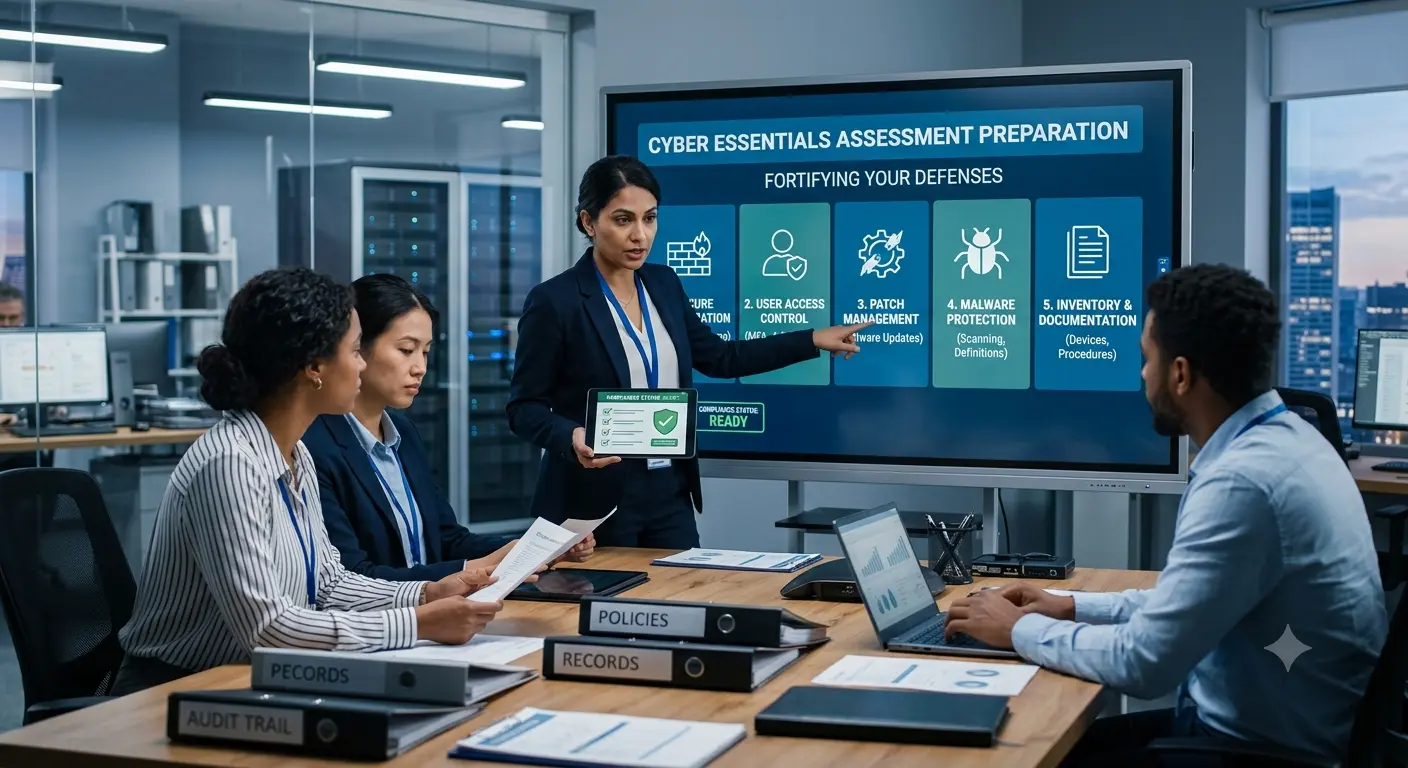
Preparing for an assessment starts with reviewing security controls, updating business systems, and documenting existing procedures. Taking these steps early helps businesses identify weaknesses before the assessment process begins. A structured approach supports compliance requirements and improves protection for business data.
Businesses working towards cyber essentials certification should begin with a full review of devices, software, and user access controls. Early preparation allows security issues to be corrected before the assessment takes place. Internal teams can then focus on maintaining consistent security standards across the organisation.
Review Existing Devices And Systems
Create an inventory of computers, laptops, servers, and mobile devices used across the business. Verify that supported operating systems are installed on every device connected to the network. Remove unnecessary applications and retire equipment that is no longer in use.
Confirm Approved Software Usage
Review the software employees use for daily business activities. Identify applications that no longer serve a business purpose or fall outside approved usage policies. Limiting unnecessary software helps reduce security exposure.
Apply Security Updates Across The Business
Security updates help address known vulnerabilities that attackers may exploit. Check that operating systems and business applications receive updates on a regular schedule. Maintain clear processes for installing updates across all devices.
Verify Patch Management Procedures
Review how updates and patches are deployed throughout the organisation. Confirm that critical patches receive prompt attention after release. Consistent patch management supports a secure IT environment.
Strengthen User Access Controls
Access permissions should reflect employee responsibilities and current business requirements. Remove inactive accounts and review administrator privileges regularly. Strong password policies help protect sensitive information.
The following access controls deserve particular attention:
- Enable multi-factor authentication for important accounts.
- Restrict administrator access to authorised personnel.
- Review user permissions on a regular basis.
- Remove access for former employees without delay.
Check Firewall Configuration
Firewall protection should remain active across business devices and networks. Review firewall settings to confirm that unnecessary connections are blocked. Proper configuration helps control traffic entering and leaving the network.
Maintain Malware Protection
Anti-malware protection should remain active and updated across all business devices. Regular scans help detect harmful files before they affect systems or users. Employee awareness also plays an important role in preventing security incidents.
Important malware protection measures include:
- Keep anti-malware tools updated.
- Schedule regular security scans.
- Train employees to recognise phishing emails.
- Report suspicious activity through internal procedures.
During the preparation process, cyber essentials requirements should be checked against current security practices. This review helps identify areas that require corrective action before assessment day. Accurate records can support the assessment and demonstrate established security procedures.
Prepare Internal Security Documentation
Document password policies, software update procedures, and access control practices used across the organisation. Keep records aligned with current business operations and security requirements. Well-maintained documentation provides valuable evidence during the assessment process.
Maintain evidence of completed updates, access reviews, malware scans, and firewall checks where possible. These records help show that security controls are active and reviewed in line with business needs. Clear documentation also makes future assessments easier to prepare for.
Work With Specialists For Security Compliance Preparation
Professional support can help businesses review existing security controls, identify compliance gaps, and prepare documentation required for the assessment process. Experienced specialists understand requirements related to access controls, patch management, firewall settings, and malware protection. Practical guidance also helps internal teams correct issues before the assessment begins.
A well-prepared assessment starts with clear security checks and reliable expert input. Working with qualified cyber security professionals can support stronger protection, cleaner records, and long-term compliance habits. This makes assessment preparation easier to manage and more valuable for business continuity.