ipv6 link local
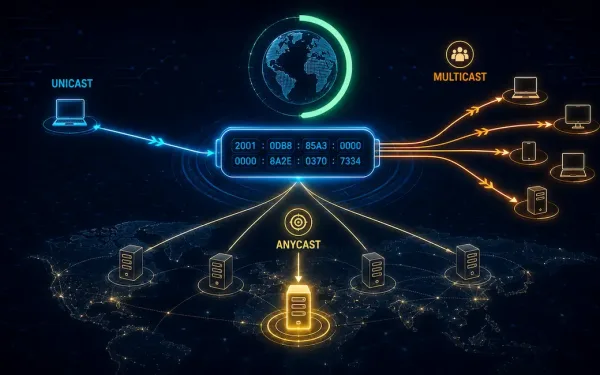
IPv6 Address Types Explained: Unicast, Multicast, and Anycast
What are the IPv6 address types? That’s the focus of this guide. Previous articles in this series covered IPv4 address classes, classless and classful addressing schemes, and special-purpose IP addresses, along with unicasting, multicasting, and broadcasting in IPv4. IPv6 addressing follows a similar conceptual split — unicast, multicast, and anycast — but with a much...
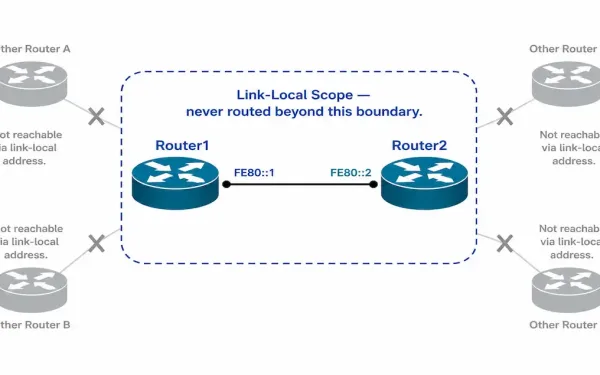
What is a Link-Local IPv6 Address
Routers configured with dynamic routing protocols such as OSPF or EIGRP must send and receive routing protocol messages with their directly connected neighbors, exchanging those messages between neighbors on the same subnet. In IPv4, those messages are sourced from the router’s configured IPv4 interface address — the same address used for everything else on that...
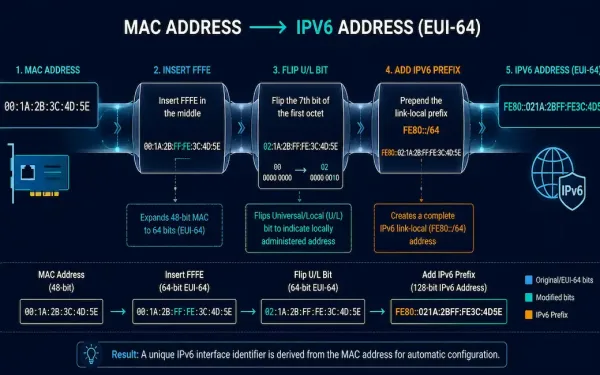
The EUI-64 Process: How IPv6 Interface IDs Are Generated
When a device configures an IPv6 address through Stateless Address Autoconfiguration (SLAAC), it gets the network prefix, typically a /64, from a Router Advertisement, but it has to generate its own 64-bit Interface ID independently. This guide covers exactly how that generation works: the EUI-64 process that derives an Interface ID from a MAC address,...