what does PPP stand for
CCNA
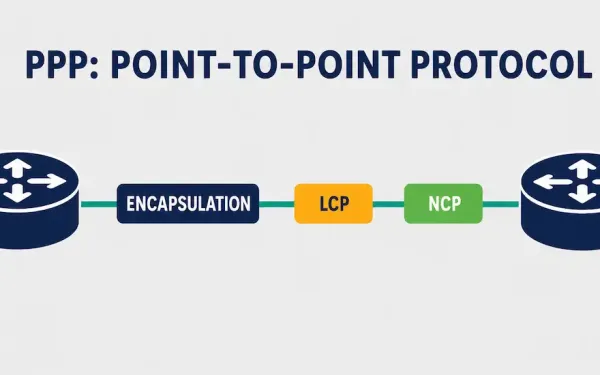
PPP Overview: The Point-to-Point Protocol Explained
PPP (Point-to-Point Protocol) is a WAN encapsulation protocol developed in the early 1990s as a successor to the older Serial Line Internet Protocol (SLIP). It’s an open standard, meaning the protocol can be used consistently across equipment from different vendors — a significant advantage over proprietary alternatives. PPP can run over a remarkably wide range...
CCNA
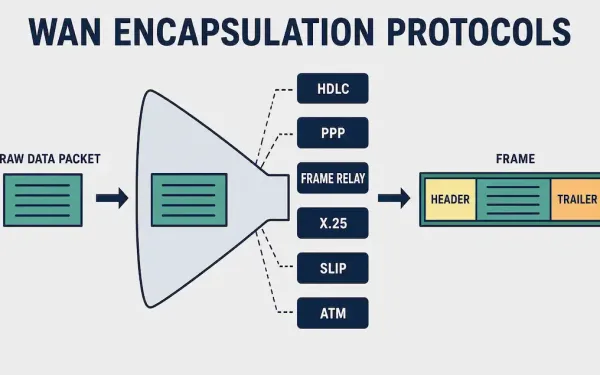
WAN Encapsulation Protocols: HDLC, PPP, Frame Relay, X.25, SLIP, and ATM
The network layer passes data down to the data link layer for transmission over the physical layer. The data link layer creates frames by adding the necessary checks and controls around that network layer data — a process called encapsulation. On a router’s serial interface, encapsulation must be explicitly configured to guarantee both ends of...