Truck accessories rarely get covered the way gadgets do — no benchmark comparisons, no teardown reviews, no spec table analysis. Most buyers decide based on a product photo and a price tag. That gap is expensive, because the engineering inside a quality tonneau cover is as deliberate as the engineering inside a well-built laptop hinge or a weatherproofed outdoor camera housing.
The materials science behind how a cover seals, flexes, and resists UV degradation over thousands of miles is exactly the kind of quiet engineering that tech readers already know to look for in other product categories. Apply the same thinking here and the buying decision becomes significantly clearer.
Aerospace-Grade Panels: What Aircraft Alloy Actually Means
The phrase “aircraft-grade aluminum” appears on a lot of truck accessory listings, and like most marketing language it is meaningless without context. What actually matters is the alloy grade, the gauge thickness, and whether the panel uses a composite core or solid aluminum throughout.
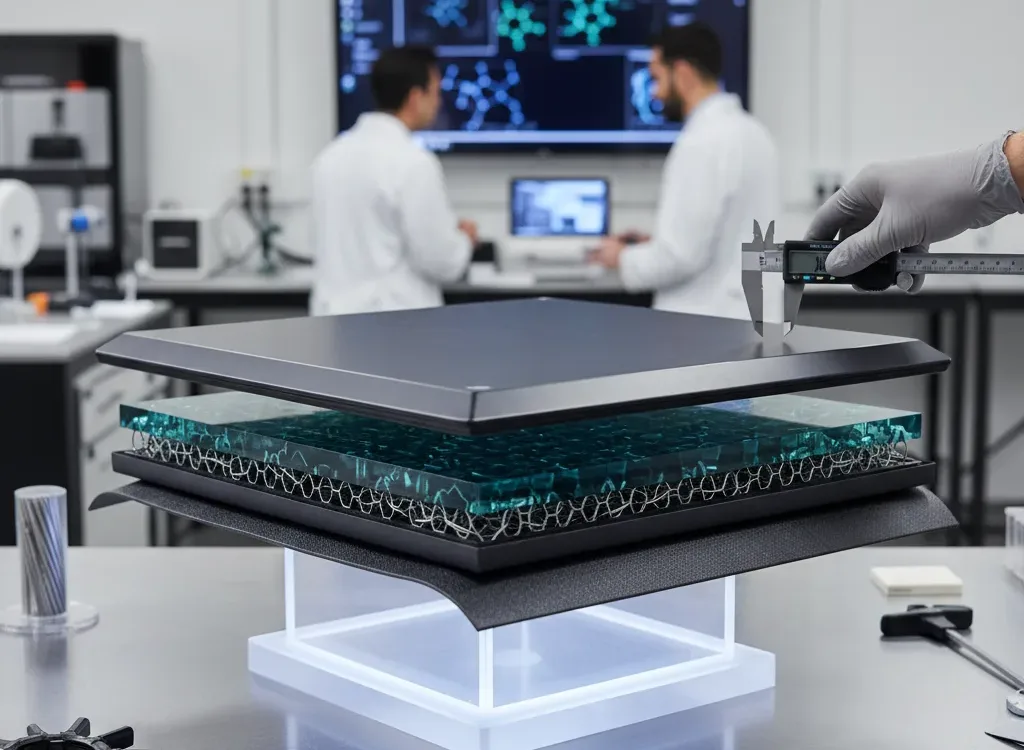
Better panels use a hybrid construction — a rigid aluminum outer shell over a high-density polymer core. That approach mirrors how aerospace and automotive structural panels are built: the outer layer handles surface stress and impact, the core provides stiffness without adding weight. It is the same principle behind carbon-fibre reinforced polymer panels in performance vehicles and aluminium-skinned sandwich panels in aircraft interiors. The practical result is a cover that holds its flat geometry under load without developing the micro-warps that cause sealing failures over time.
A panel that flexes under cargo weight is also a panel that flexes under thermal expansion and contraction. Each flex cycle widens the gap at the hinge seal — which is why weight rating is a more useful spec than finish quality. A stated load rating reflects hinge and panel system integrity under real stress, not just surface hardness. Covers that skip this figure in their listings usually have a reason for doing so.
Some premium covers go further with fiberglass reinforced polymer surface layers — the same FRP construction used in industrial enclosures, marine components, and outdoor electrical housings where impact resistance matters more than weight savings. FRP absorbs impacts that visibly dent a standard aluminum skin, making it relevant for truck owners who park in tight lots or load awkward cargo regularly.
EPDM Seals: The Same Chemistry Keeping Your Devices Waterproof
Weatherproofing a tonneau cover and weatherproofing an outdoor electronics enclosure are solving the same engineering problem with the same chemistry. EPDM — ethylene propylene diene monomer — is the compound of choice in both categories for the same reasons: it maintains elasticity across a wide temperature range, resists UV-induced hardening, and holds its compression set through thousands of open-and-close cycles without permanent deformation.
Single-density rubber gaskets — the type used in cheaper covers — harden within two or three seasons under freeze-thaw cycling. Once the compression set fails, the gasket no longer fills micro-gaps in the rail interface. Water finds its way in not through the panel face but along the rail edge where the seal has pulled away from the bed lip. The difference between a cover that leaks in year two and one that holds through year five is almost always the seal compound, not the panel material.
Premium covers pair EPDM seals with a dual-drain channel system, so moisture that gets past the primary gasket during heavy rain is channelled out the rear rather than pooling under the panel. This is the same redundancy principle used in IP67-rated device gaskets and military-spec connector seals — a single seal is a single point of failure; a drain system behind it is the fallback — the same redundancy principle used in fault-tolerant network design. Both need to perform under rapid temperature change without losing elastic return, and both use the same layered compound approach to achieve it.
The accelerated aging standards now applied to premium tonneau covers mirror the testing used for outdoor electronics housings — UV exposure cycling, humidity chamber testing, and freeze-thaw simulation across hundreds of cycles. A cover tested from -40°F to 180°F across a full humidity range has been validated against real failure modes, not just run through a single cold-chamber pass.
Smart Truck Tech: Where IoT Is Entering the Bed
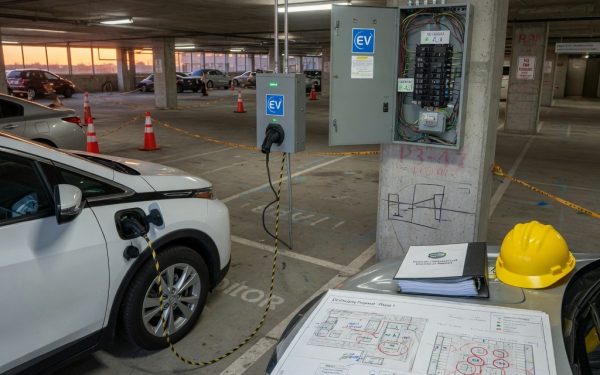
The tonneau cover category is beginning to see the same connectivity push that hit home security, automotive interiors, and industrial equipment over the past five years. The first wave of smart truck accessories has already arrived in adjacent categories — integrated bed lighting with app control, trailer monitoring systems with real-time load sensing, and aftermarket security sensors that push alerts to a phone when the tailgate opens without a key. The backend infrastructure behind these systems mirrors what powers IoT cloud platforms in industrial and enterprise settings — device registries, real-time data pipelines, and alert routing that scales from one truck to an entire fleet.
Tonneau cover integration with these systems is the logical next step. Several manufacturers are developing covers with embedded tamper sensors that communicate with the truck’s existing telematics system — flagging an unlatch event to a connected app. The security gap is real: a cover rated for hundreds of pounds of static load is only as secure as its latch mechanism, and a latch that cannot report its own state is a blind spot in any cargo security setup.
The more significant emerging development is covers built with integrated T-slot rail systems — allowing bed-mounted cameras, load sensors, and lighting bars to be added and repositioned without drilling into the bed. For tech-oriented truck owners, this reframes what a tonneau cover is: not just a panel that keeps rain out, but a mounting platform for the next layer of truck accessories. It is the hardware equivalent of a device with open expansion ports — the cover becomes infrastructure rather than a fixed component.
Load monitoring is the use case closest to wide deployment. Strain gauges integrated into bed rail systems can report cargo weight in real time to in-cab displays or connected fleet apps — useful for contractors managing payload compliance and operators tracking load distribution across multiple vehicles. The data infrastructure for this already exists in most modern trucks through the OBD-II port and factory telematics modules — the same ports and protocols that wireless networking engineers use when integrating vehicle sensors into connected fleet systems. The aftermarket accessory layer is where the sensing hardware is being added.
Reading a Truck Accessory Spec Sheet Like a Tech Buyer
The same discipline that makes a careful gadget buyer effective applies directly to truck accessory selection. Marketing language fills the same function in both categories — it is designed to trigger purchase without triggering scrutiny. The numbers that matter are almost always present but rarely highlighted.
For tonneau covers, the spec sheet items worth checking in order of importance: panel material grade and composite construction type, warranty duration and whether it differs between model tiers, weight rating under static load, seal compound type, and operating temperature range. A listing that provides all five is giving you testable performance claims. A listing that skips them is hoping you focus on the finish colour instead.
Warranty split between model tiers from the same manufacturer is one of the most honest data points available. When a company assigns different warranty terms to different product tiers built in the same facility, that split reflects tested performance differences — not arbitrary pricing. A company willing to make that distinction publicly has validated both products and knows where each one’s ceiling is.
Installation spec matters too, and it is where most post-purchase problems originate. Clamp-on rail systems are common across premium covers — the rails sit on the bed rail lip and are secured at engineered clamp positions. The torque sequence in the install manual is not a formality: unevenly torqued clamps create micro-gaps in the rail-to-bed seal that cause water intrusion at exactly the point most buyers assume is solid. Treat it the same way you would treat a thermal paste application — the gap between correct and approximate is the difference between a five-year seal and a first-winter leak.
The Total Cost Calculation That Most Buyers Skip
Truck accessory purchasing tends to be driven by sticker price in a way that laptop or phone purchasing rarely is — probably because the failure modes are less immediately visible. A phone that slows down after two years is obvious. A tonneau cover that starts leaking in month eighteen fails quietly, usually during the worst possible weather, and the replacement cost never gets mentally added to the original purchase.
The correct calculation is total lifespan cost: purchase price divided by years of reliable service. A cover at half the price that lasts two years before seal failure costs more over five years than a BAK tonneau cover at full price that holds its weather seal through a five-year warranty period. Warranty length is the manufacturer’s stated confidence interval on the seal and panel system — a figure determined by accelerated aging testing, not marketing convention.
The same logic applies to any truck accessory where materials quality determines lifespan. Modern protective coatings and sealing compounds cure faster, resist moisture absorption better, and are now tested against the same UV and thermal cycling standards used for outdoor electronics housings. The crossover between automotive materials science and consumer electronics durability standards is producing truck accessories that measurably outlast their predecessors. Independent reviews, warranty terms, and material specs together tell you more than any product photo. The spec sheet is public information — reading it before purchase costs ten minutes and saves the cost of an early replacement.
Conclusion
The engineering inside a quality tonneau cover is not visible from the outside of the box, which is why most buyers never look for it. But the same material science that keeps an outdoor electronics housing sealed through a harsh winter and a desert summer is working inside every EPDM-sealed, composite-panel cover on the market — the application is just less obvious.
Tech buyers already know how to read a spec sheet, compare warranty terms, and calculate total cost over a product’s lifespan rather than just its purchase price. Applied to truck accessories, that same discipline closes the gap between a cover that looks right in the parking lot and one that actually performs for five years of real use.
The smart truck category is also genuinely moving. IoT-connected accessories, integrated mounting systems, and load-sensing hardware are entering the bed in the same way connectivity entered the dash five years ago. A cover with an integrated rail system is not just a panel that keeps rain out — it is a mounting platform for the next layer of truck tech. Buying based on engineering specs rather than branding is how the same decision holds up three years from now.
Sources: BAKFlip Official Site (https://bakflipco.com), RealTruck BAKFlip MX4 Gen 3 (https://realtruck.com/p/bakflip-mx4-tonneau-cover/), Truck Bed Supplies (https://truckbedsupplies.com) — August 2026.