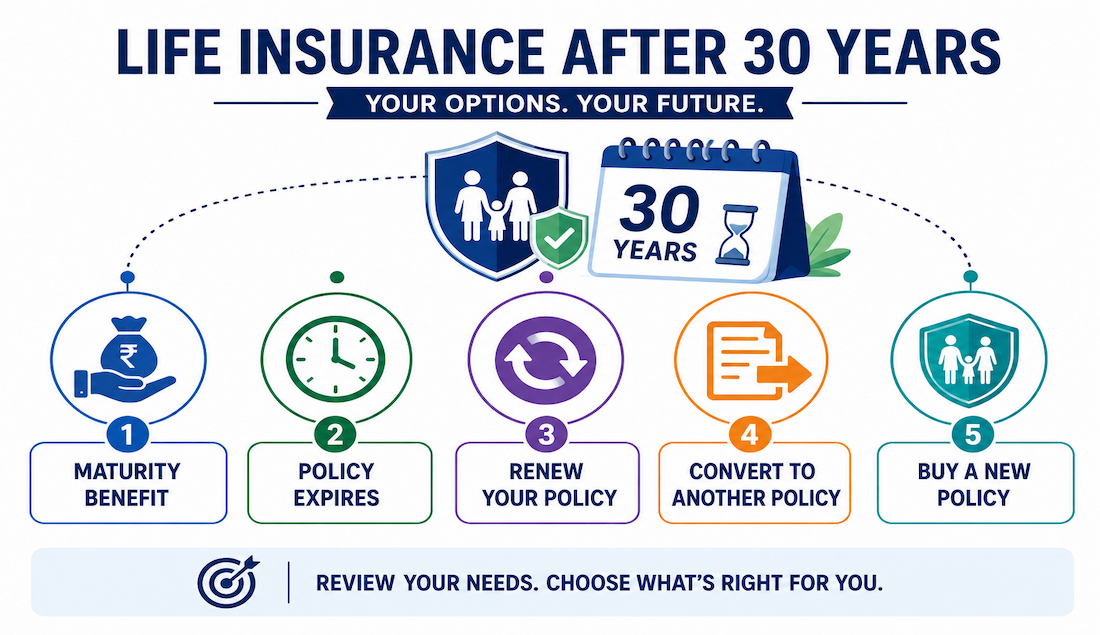
A life insurance policy may remain in force for decades, but what happens after 30 years depends on the type of policy you own. Some policies pay a maturity benefit, some simply end when the policy term expires, while others may offer renewal or conversion options, subject to the policy terms and conditions.
Understanding these possibilities before your policy reaches the end of its term can help you plan your finances more effectively.
Does every life insurance policy mature after 30 years?
No. Completing 30 years does not automatically mean your life insurance policy has matured. What happens depends on the type of policy and the policy term you selected when you purchased it.
For example, many term insurance policies provide cover for a fixed period. If the life assured survives the policy term, the cover generally ends without a maturity payout unless the policy specifically includes a return of premium feature. Savings-oriented life insurance plans, however, may pay a maturity benefit if the policyholder survives the policy term.
What happens when your policy reaches maturity?
A maturity payout is available only if your policy includes a maturity benefit. If you survive until the end of the policy term, the insurer pays the amount specified under the policy, subject to its terms and conditions.
The maturity amount may include the sum assured, guaranteed additions, bonuses or other benefits, depending on the type of policy. A standard term insurance plan generally does not pay a maturity benefit because it is designed to provide financial protection during the policy term. Understanding this distinction can help you choose a policy that matches your financial goals.
Can you continue your life insurance cover after 30 years?
In some cases, yes, but it depends on your policy. Some life insurance policies allow renewal or conversion to another type of life insurance, although these options vary between insurers and products.
If renewal is available, the premium is usually higher because it is based on your age and other underwriting factors at the time of renewal. Some policies also allow conversion to permanent life insurance within a specified period without requiring a new medical examination, subject to the policy conditions. Before your policy term ends, review your policy document to understand the options available.
Should you renew your policy or buy a new one?
The right option depends on whether you still need life insurance. If you continue to have financial dependants, outstanding loans or other long-term responsibilities, maintaining life cover may still be important.
However, if your children are financially independent, major liabilities have been repaid, and your financial goals have changed, your insurance needs may also be different. Reviewing your current responsibilities before your existing policy ends can help you decide whether renewing, converting or purchasing a new policy is more suitable.
When should you review your life insurance needs?
You should review your life insurance whenever your financial responsibilities change. A policy that suited you 30 years ago may not reflect your current circumstances.
Marriage, the birth of a child, retirement planning, taking a new home loan, or a significant increase in assets can all affect the amount and type of cover you need. Reviewing your insurance periodically helps ensure your policy continues to support your long-term financial goals rather than simply continuing because it has always been in place.
For those exploring life insurance plans offered by leading insurers through Bajaj Finance Insurance Mall, understanding the life insurance definition and reviewing your current needs before comparing policy options can help you make a more informed decision.
Conclusion
Completing 30 years does not always mean your life insurance journey ends. Depending on the type of policy, you may receive a maturity benefit, renew your cover, convert it to another policy or simply allow the policy to expire at the end of its term.
Understanding these options well before your policy reaches maturity gives you enough time to review your financial responsibilities and choose the approach that best suits your current needs.