A car crash claim can start forming before anyone fully understands the injury. In North Carolina, that is a serious concern because a small uncertainty about fault may carry major consequences under the state’s strict negligence rules. At the same time, many injuries do not show their full pattern immediately. Headaches, numbness, stiffness, dizziness, and back pain may become clearer only after the first shock wears off.
That gap between what is known right away and what becomes clear later is where many claims become vulnerable. Early guidance from a CR Legal Team North Carolina car accident lawyer can be relevant when the first account of the crash does not yet match the medical reality that develops over the next few days. The goal is to keep early assumptions from controlling a claim before the evidence has had time to tell the fuller story.
Time Shapes Proof
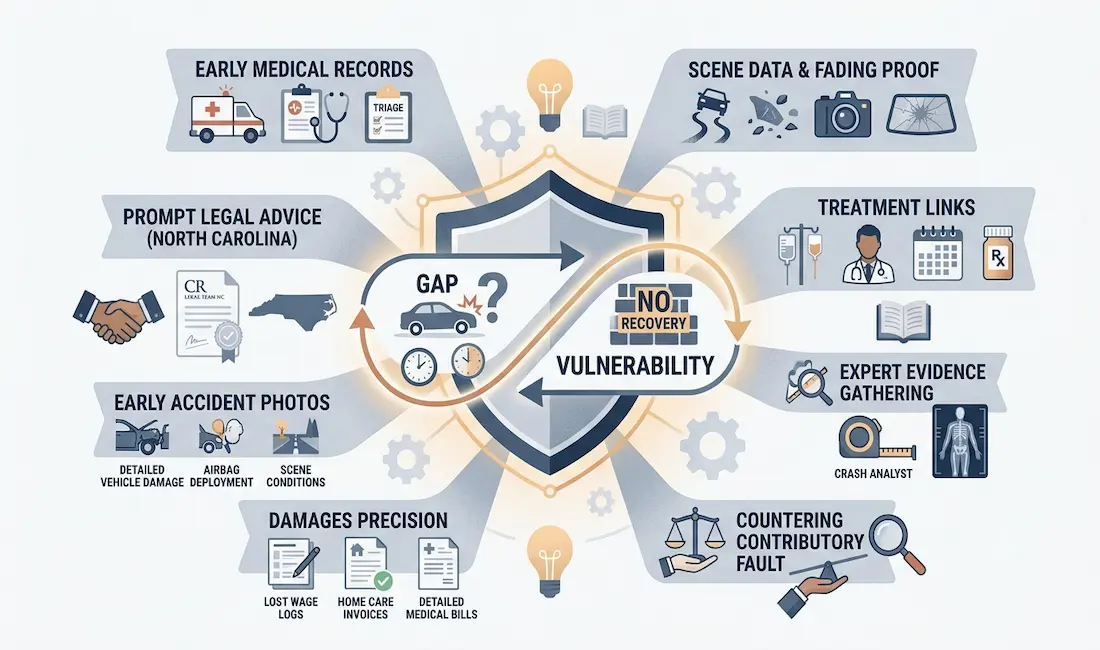
North Carolina claims demand early attention because contributory negligence can bar recovery after slight assigned fault. For that reason, a car accident lawyer sits naturally beside the discussion of rapid record gathering, witness identification, insurer notice, and scene preservation. That sequence matters because delays can weaken medical linkage, blur roadway facts, and leave injured people facing a thinner account of what happened.
Records Change Fast
Emergency records often capture pain complaints before outside opinions affect wording. Imaging dates, triage notes, medication orders, and follow-up visits can show whether dizziness, chest soreness, numbness, or headache appeared immediately. Counsel reviews those entries early and compares them with ambulance documentation and crash reports. If a chart omits a symptom, quick clarification may protect accuracy before an insurer labels that silence as proof of no harm.
Scene Data Fades
Roadway evidence has a short life. Skid marks wash off, debris gets cleared, traffic cameras overwrite footage, and damaged parts disappear into repair chains or salvage yards. Many vehicles also store event information on speed, braking, steering input, and seat belt use. Early legal action can trigger preservation requests before those sources change. That timing allows reconstruction experts to test whether physical evidence supports each driver’s account.
Treatment Links Pain
Medical care does more than document injury. Visit timing, therapy frequency, prescription changes, and specialist referrals can reveal how symptoms affected sleep, lifting, concentration, walking, and work tolerance. Lawyers study that sequence early so the claim reflects the full clinical picture. Without that groundwork, carriers may call later treatment unrelated. They may also reduce fractures, nerve irritation, or concussive symptoms to brief discomfort.
Experts Need Raw Facts
Physicians and crash analysts work best with original material. They need unfiltered scans, discharge instructions, scene measurements, repair images, body positioning, and phone records, rather than short summaries drafted later. Early legal review helps preserve those sources in usable form. Better inputs allow clearer opinions on force transfer, visibility, reaction time, and injury timing. Stronger expert reasoning also holds up better during hostile questioning.
Early Review Counters Blame
Insurers often look for small statements that can shift responsibility. A rushed apology, a confused estimate, or an incomplete roadside answer may later be framed as an admission. Early evidence review lets lawyers compare those comments with signal timing, map data, vehicle damage, and witness recollection. That step is especially important in North Carolina. Even a minimal assigned fault can block compensation under contributory negligence rules.
Damages Depend on Detail
Case value rarely turns on broad statements alone. Lost wage records, prescription receipts, mileage logs, therapy calendars, and home care invoices show what the crash actually cost. Lawyers who collect those items early can present damages with more precision and less guesswork. Clear figures also help explain future treatment, reduced earning capacity, and household strain. Those losses seldom appear in a repair estimate or discharge sheet.
Early Photos Matter
Photographs taken soon after impact can answer questions that later records cannot. Seat position, steering wheel damage, airbag deployment, shattered glass, bruising, and weather conditions may explain body movement inside the cabin. Lawyers review images early so medical findings align with visible crash mechanics. That consistency matters. A dashboard strike, shoulder restraint mark, or side intrusion pattern can support the clinical story when memory becomes less reliable.
What Early Files Often Include
Core Sources
Useful early files often include emergency department notes, ambulance sheets, diagnostic imaging, pharmacy histories, vehicle downloads, intersection video, repair photographs, and witness statements. Counsel may also seek employer attendance records, prior treatment charts, towing invoices, and smartphone metadata. Each source answers a separate question. Where those records overlap, the shared details can strengthen causation, support credibility, and narrow room for speculative defense theories later.
Delay Creates Gaps
Delay invites a weaker narrative to harden. Once a car is repaired, swelling changes, or surveillance footage cycles out, recovering proof becomes harder and sometimes impossible. Early analysis reduces that risk and gives counsel a firmer strategy before formal demand talks begin. It also helps families document symptoms, track appointments, and handle insurer communication with greater care. Good timing often prevents small omissions from becoming major disputes.
Conclusion
Early review of medical records and crash evidence is really a search for accuracy. Lawyers who move quickly can align symptom onset, vehicle data, witness accounts, and financial loss before gaps distort the story. That disciplined beginning can shape settlement discussions, expert support, and trial strength months later. In serious collision cases, the first close look at the facts often affects every later decision made by injured people and their families.