Day: August 31, 2019
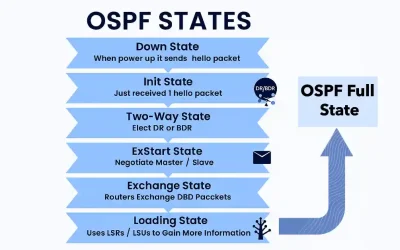
OSPF Router States and OSPF Process Explained
When an OSPF router is first connected to a network, it follows a link-state routing process to achieve convergence. This involves building adjacencies, exchanging information, and progressing through various neighbor states. We’ll start with the overall OSPF process before diving into the states. OSPF Process Overview Step 1: Create Adjacencies with Neighbors An OSPF-configured router...
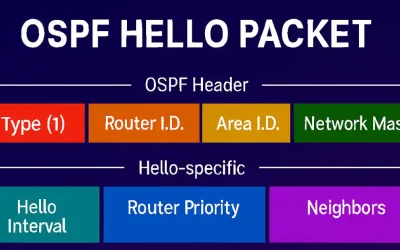
Master OSPF Hello Packets: Essential Guide for Cisco Certification (Updated 2025)
OSPF Hello packets (Type 1) are sent periodically on all interfaces, including virtual links, to establish and maintain neighbor adjacencies. Multicast to 224.0.0.5 (AllSPFRouters), these packets enable dynamic discovery of neighboring routers. They advertise parameters for adjacency and elect Designated Routers (DR) and Backup Designated Routers (BDR) on multi-access networks. Point-to-point links skip DR/BDR election....
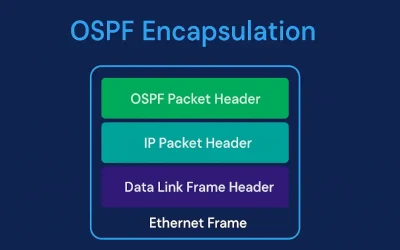
Master OSPF Encapsulation: Essential Guide for Cisco Certification (Updated 2025)
Open Shortest Path First (OSPF) operates at the Internet Protocol’s network layer, encapsulated solely by IP and local data-link headers. This encapsulation enables efficient routing in enterprise networks. When transmitted over Ethernet, OSPF messages include a data-link frame header, an IP packet header (with protocol field 89), and an OSPF packet header, ensuring reliable delivery....
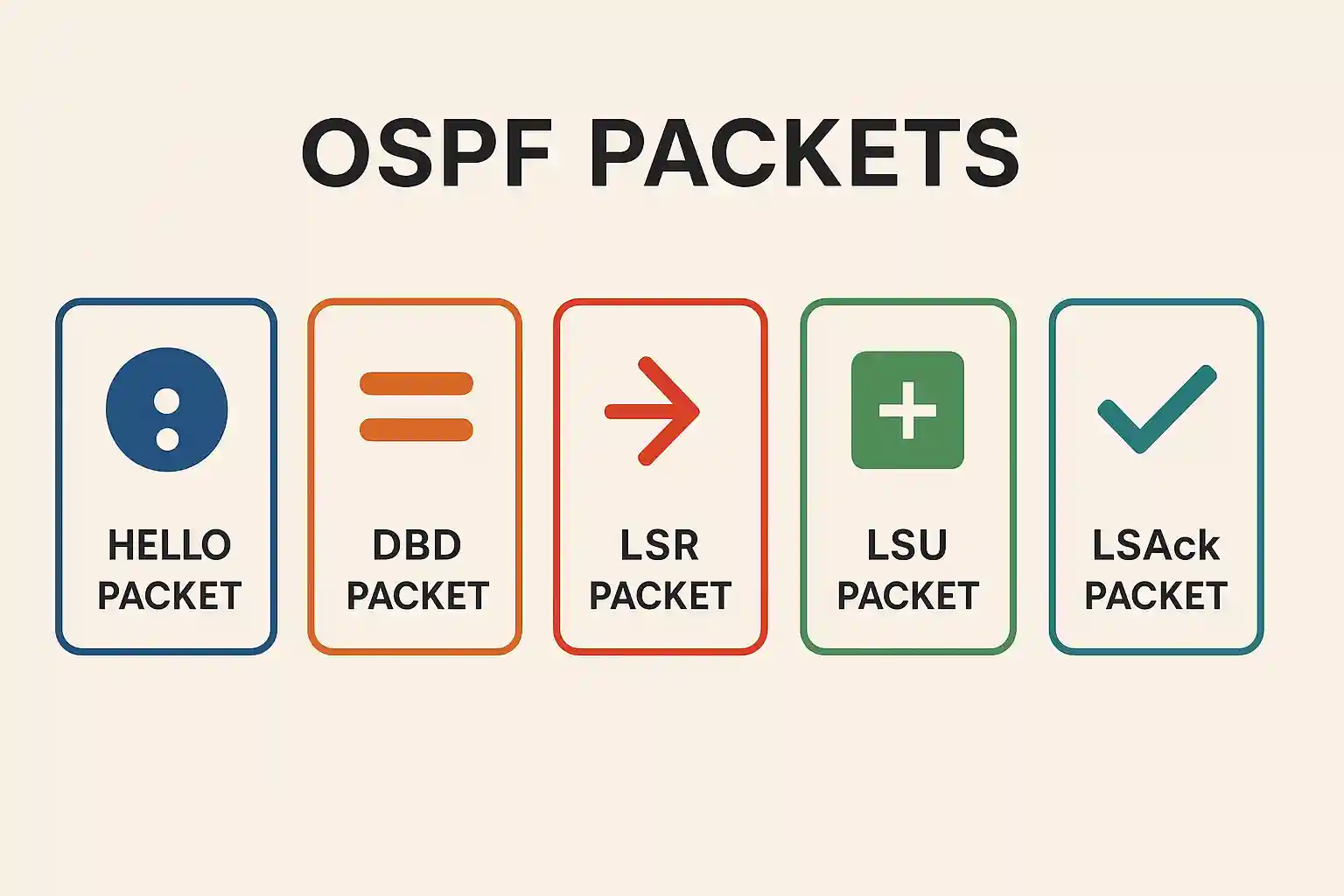
Master OSPF Packets Type: Essential Knowledge for Cisco Certification (Updated 2025)
Open Shortest Path First (OSPF) is a powerful link-state routing protocol widely used in enterprise networks and a key topic for CCNA and CCNP certifications. OSPF relies on five distinct packet types to establish neighbor adjacencies, exchange routing information, and maintain a consistent Link-State Database (LSDB) across routers in an area. Understanding these OSPF packets—Hello,...
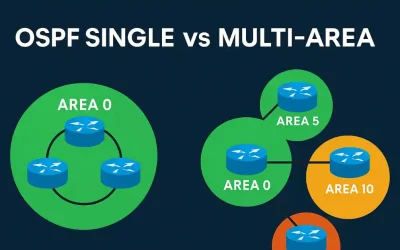
Understanding Single-Area OSPF vs. Multi-Area OSPF
Open Shortest Path First (OSPF) is a link-state routing protocol widely used in enterprise IP networks for its efficiency and scalability. Unlike distance-vector protocols like RIP, OSPF uses a hierarchical design, segmenting networks into areas to optimize routing. Each area consists of routers sharing identical Link-State Databases (LSDBs), containing topology information. For CCNA and CCNP...
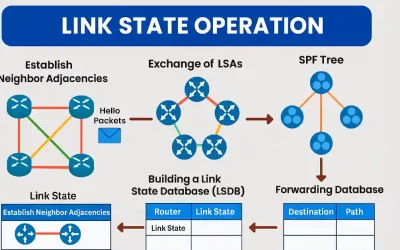
Link State Operation – Exclusive Explanation (Updated 2025)
Link state routing protocols, such as OSPF and IS-IS, are fundamental in modern networks due to their efficiency and scalability. For CCNA and CCNP students, mastering link-state operations is crucial for exams and real-world troubleshooting. This article dives into how these protocols work, focusing on OSPF as the primary example. Unlike distance-vector protocols, link-state protocols...
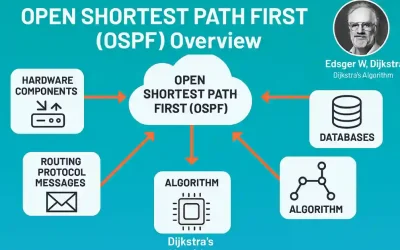
Introduction to Open Shortest Path First (OSPF)
Open Shortest Path First (OSPF) is a link-state routing protocol replacing the distance vector routing protocol, RIP. RIP was acceptable in the early days of networking. RIP uses hop count as the metric, which does not work better in the larger network. Open Shortest Path First (OSPF) has many advantages over RIP. It can scale...