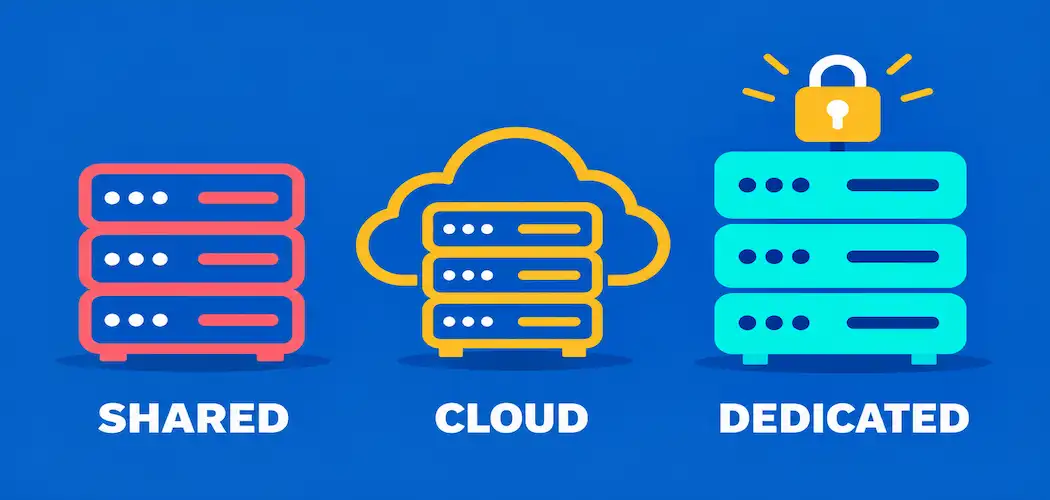
Shared hosting and VPS plans work fine for a lot of businesses — until they don’t. The moment traffic spikes unpredictably, security requirements tighten, or performance starts depending on resources you can’t fully control, dedicated server hosting becomes worth a serious look. This guide covers the real reasons businesses choose dedicated servers, how the cost comparison actually works, and where cloud hosting fits into the decision.
Why Businesses Choose Dedicated Servers
Better Security
Dedicated hosting puts an entire physical server under your control, with no other tenants sharing resources or access. That matters because shared hosting environments carry a specific risk: a security issue on another site sharing your server’s resources can, in some configurations, affect your own site’s performance or exposure.
With a dedicated server, you set your own security protocols, choose your own software stack, and aren’t dependent on how other customers on a shared environment handle their own security practices. For businesses handling sensitive customer data, payment information, or anything with real compliance requirements, this level of control is often the deciding factor.
A Dedicated IP Address
Shared hosting typically means sharing an IP address with every other site on that server — sometimes thousands of them. That creates two real problems: you’re competing for the same resource pool as unrelated sites, and if another site sharing your IP gets flagged or blacklisted for spam or malicious activity, your own site’s reputation can take collateral damage through no fault of your own.
A dedicated server gives you a unique IP address tied solely to your business, removing that shared-reputation risk entirely.
Full Administrative Control
Dedicated hosting comes with full root access — something shared hosting plans don’t offer. That means installing exactly the software you need, configuring security settings precisely, and customizing the server environment rather than working within whatever constraints a shared platform imposes. For businesses with specific compliance, performance, or software requirements, this level of control often isn’t optional.
No Shared Resources
On shared or VPS hosting, your site’s performance depends partly on what everyone else sharing that server is doing. A traffic spike on a neighboring site can slow yours down. With a dedicated server, every bit of CPU, RAM, and storage is yours alone — which translates into more consistent performance, particularly for high-traffic sites or resource-intensive applications.
Does Dedicated Hosting Actually Save Money?
This is where the honest answer is “it depends on scale and usage pattern,” not a flat yes or no.
Dedicated servers cost significantly more upfront than shared or basic VPS hosting — there’s no getting around that. But for businesses with consistently high resource needs, the comparison shifts: cloud and VPS costs that scale with usage can actually exceed a dedicated server’s flat monthly cost once traffic and resource demands reach a certain threshold. A dedicated server’s cost is predictable and fixed regardless of traffic spikes, while cloud costs can fluctuate significantly with usage — which cuts both ways depending on whether your traffic is steady or unpredictable.
The honest comparison isn’t “dedicated vs. cheap shared hosting” — it’s total cost of ownership at your actual, realistic scale. A small site with modest, steady traffic will almost always find shared or VPS hosting more cost-effective. A business with consistently high resource demands, strict uptime requirements, or compliance needs that mandate dedicated infrastructure often finds the economics flip in dedicated hosting’s favor once you account for performance, security, and avoided downtime costs.
Dedicated Servers vs. Cloud Hosting
This comparison matters more today than it did a few years ago, since cloud infrastructure has become the default choice for many businesses that would previously have defaulted straight to dedicated hosting.
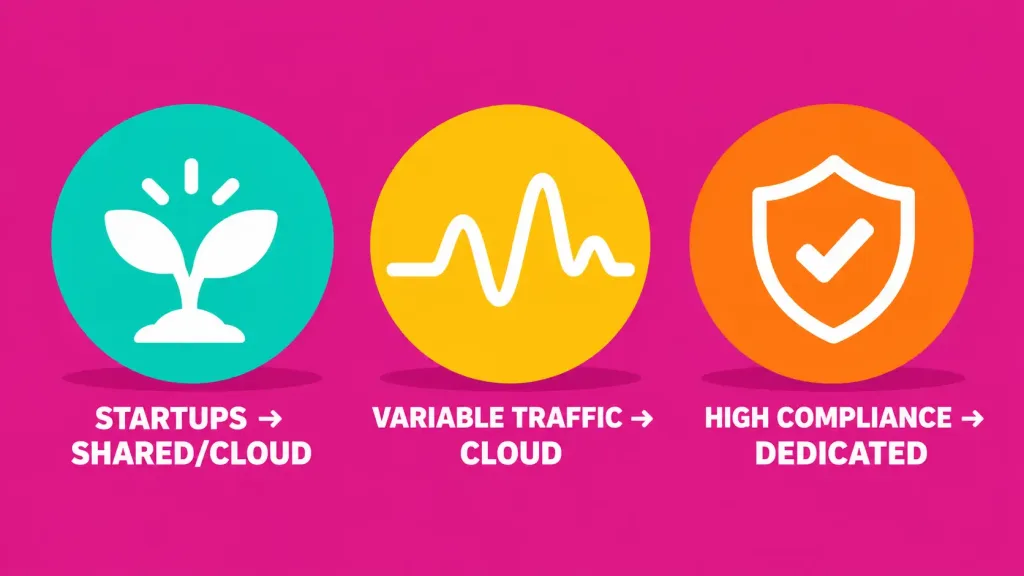
Cloud hosting offers flexible, on-demand scaling — you pay for what you use, and capacity can expand or contract quickly in response to traffic changes. This suits businesses with variable or unpredictable traffic patterns well.
Dedicated servers offer predictable costs, maximum control, and consistent performance that doesn’t depend on a shared infrastructure’s current load — better suited to businesses with steady, high resource demands, strict compliance requirements, or specific hardware/software configurations that cloud environments can’t easily accommodate.
Some businesses use both: dedicated infrastructure for core, performance-critical systems, and cloud resources for more variable workloads. This hybrid approach is increasingly common rather than treating the choice as strictly either/or.
Is Dedicated Hosting Right for Your Business?
Dedicated hosting tends to make the most sense for mid-size to large businesses with consistent, high-volume traffic, strict security or compliance requirements, or specific performance needs that shared environments can’t reliably deliver. Most early-stage startups don’t need this level of infrastructure immediately — shared or VPS hosting, or a flexible cloud plan, typically serves better in the early stages, with an upgrade path to dedicated hosting once traffic and requirements genuinely justify it.
When evaluating providers, companies like BudgetVM offer dedicated server plans with a range of configurations — worth comparing against your specific traffic, security, and budget requirements alongside other established providers before committing.
Frequently Asked Questions
Is a dedicated server always more expensive than shared hosting?
Upfront, yes — dedicated hosting costs significantly more than basic shared plans. At scale, with consistently high resource demands, the total cost comparison can shift, since cloud and VPS costs that grow with usage sometimes exceed a dedicated server’s flat monthly rate.
Do I need a dedicated server for a small business website?
Usually not initially. Shared or VPS hosting typically covers early-stage needs more cost-effectively, with dedicated hosting becoming worth considering as traffic, security requirements, or compliance needs grow.
What’s the difference between dedicated hosting and cloud hosting?
Dedicated hosting gives you a single physical server with fixed, predictable costs and full control. Cloud hosting offers flexible, usage-based scaling better suited to variable or unpredictable traffic patterns.
Does a dedicated server guarantee better security?
It gives you more control over security configuration and removes shared-resource risk, but security still depends on how well you (or your provider) implement and maintain it — a dedicated server isn’t automatically secure without proper configuration.
Can I switch from shared hosting to a dedicated server later?
Yes, this is a common upgrade path as a business’s traffic and requirements grow beyond what shared or VPS hosting can reliably support.
The Bottom Line
Dedicated servers earn their higher cost through genuine advantages: full control, dedicated resources, a unique IP address, and security configuration that doesn’t depend on how other tenants on a shared server behave. Whether that trade-off makes sense for your business comes down to actual scale and requirements, not a blanket rule — small or early-stage businesses are usually better served by shared or cloud hosting, while businesses with consistent high traffic, strict compliance needs, or specific performance requirements often find dedicated hosting’s economics work out in their favor once the full picture is considered.