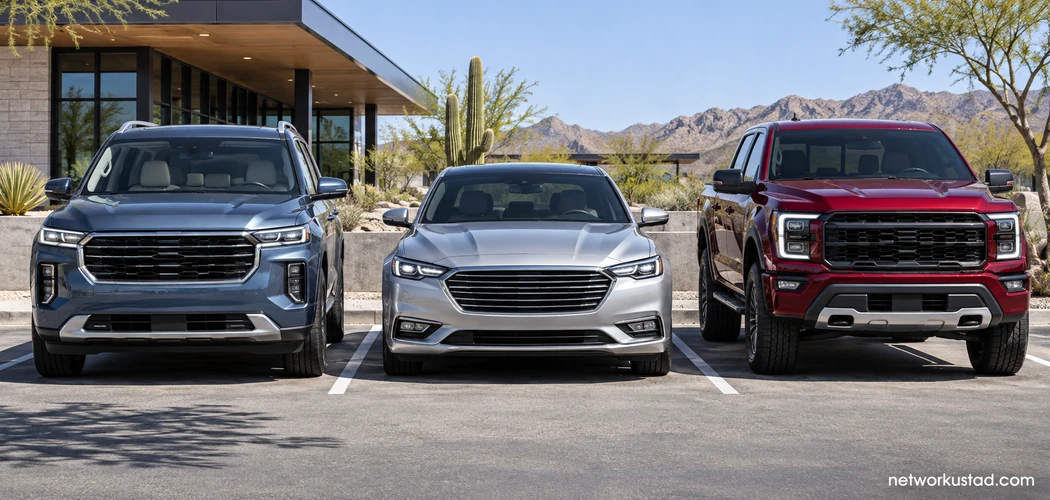
To choose a large vehicle, start with the job it needs to do most weeks. A three-row SUV can carry more people than a sedan, but the third row may leave too little room for luggage. A pickup can carry bulky items in its bed, but those items need protection if you want to leave them outside in bad weather. A large sedan may suit four or five people and their luggage if they can load everything through its trunk opening.
Bring your real requirements to the showroom. Count the seats you use, list the items you often carry, and measure the parking space where the vehicle will spend most nights. If towing matters, write down the trailer you plan to use and its expected loaded weight. These checks help you compare vehicles without paying for space or equipment that solves a problem you rarely have.
Choose a Large Vehicle Based on Your Most Frequent Trip
Think about a normal week first. If you carry two adults, two children, and a stroller every weekday, test that arrangement before picturing a holiday with seven people. If you transport a workbench or bags of soil every weekend, compare the load floor and opening with the dimensions of those items. If you need extra seats only a few times a year, decide how much everyday cargo space and parking convenience you are willing to trade for them.
| Vehicle type | Useful when you regularly need | Check before buying |
|---|---|---|
| Three-row SUV or crossover | Extra seats and an enclosed cargo area | Third-row access, luggage space with all seats upright, and garage fit |
| Large sedan | An enclosed trunk and seating for up to the vehicle’s rated capacity | Trunk opening, rear-seat comfort, and whether bulky items fit |
| Crew-cab pickup | Rear passenger seating plus an open bed for bulky or dirty cargo | Bed length, weather protection, payload, and overall length |
| Minivan | Frequent loading of passengers or child seats and flexible enclosed space | Seat layout, door access, and cargo space with the seats you use in place |
The body style gives you a shortlist. The layout of the exact model tells you whether it works for your household. Compare how easily your passengers can get in and out, how many bags fit with those people aboard, and what happens if you have to fold a seat. Those details can change even between trims of the same model.
Check Passenger Space Before You Choose a Large Vehicle
Sit in each row you plan to use. Set the driver’s seat for your usual position first, then sit behind it. Check whether there is room for your feet and whether the backrest and seat height feel comfortable. If adults will use the third row, ask them to try it. A seat that works for a short ride may feel different on a longer trip. The entry path matters as much as the room once you are seated.
If you use child seats, bring the seats you own if the seller permits a fit check. Read the vehicle and child-seat instructions for permitted seating positions and installation requirements. See how the second row moves, whether you can reach the third row with the seats installed, and whether people can still buckle up comfortably. A demonstration with no child seats installed can hide the exact access problem you are trying to solve.
Ask who will use the vehicle and what they need to carry to it. A high step may be manageable for one passenger and uncomfortable for another. Check how much space the doors need to open in the parking place you use most. If someone routinely carries a mobility aid, sports gear, or a folded stroller, include it in the test. An extra seat counts only if the person who needs it can reach and use it.
Measure Cargo Space Before You Choose a Large Vehicle
A cargo-volume figure is useful for comparing a shortlist, but the shape of the space can decide whether your gear fits. Measure the opening, the narrowest area between the wheel housings, and the depth behind the seats you use. Note the load floor height and whether the vehicle has a deep well or a raised lip. If you need to load heavy items, try lifting an empty box to that height before assuming it will be easy every week.
With a three-row vehicle, test the space behind the third row with it upright. If you need one third-row seat and more cargo room, check whether the exact vehicle lets you fold part of that row independently. For a sedan, measure the trunk opening as well as the trunk interior. A box may fit inside once positioned but be too tall to pass through the opening. For a pickup, confirm what fits with the tailgate closed and how you plan to protect or secure what you carry.
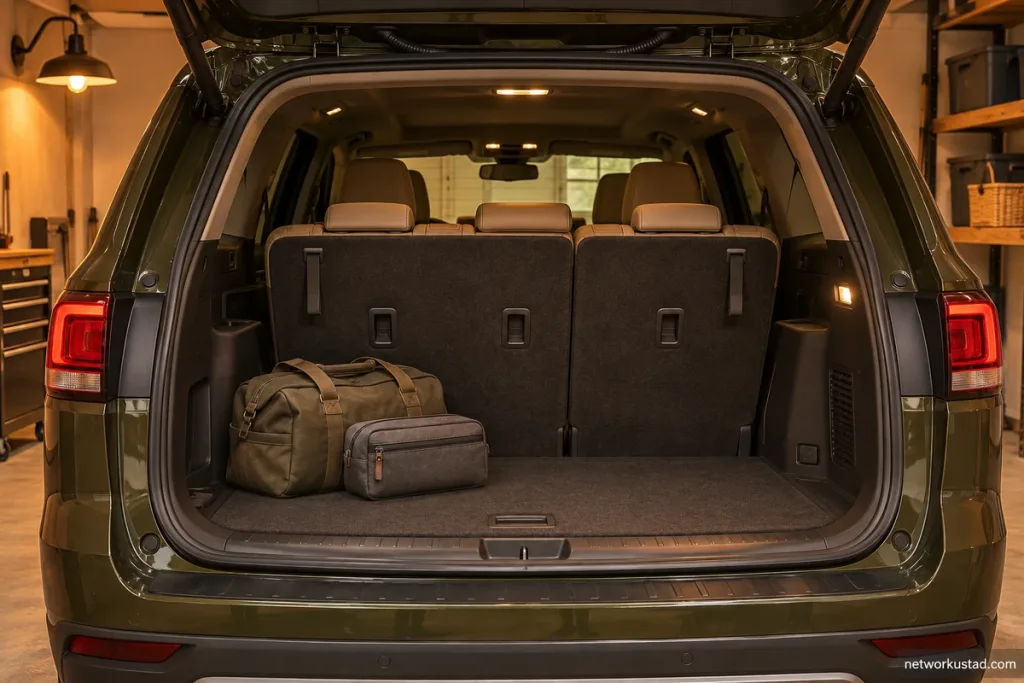
For example, imagine you normally carry five people, two rolling bags, and a folded stroller. An SUV with a third row may be useful if the rear seats can stay folded on most trips. If you sometimes bring a sixth passenger, test how the same gear fits with one seat in that row upright. Take a tape measure and use the actual bags or equivalent boxes. This is a better comparison than choosing the model with the largest maximum cargo figure.
Check Parking Before You Choose a Large Vehicle
Measure your garage or driveway, including the usable width through the opening. Compare the vehicle’s height with the lowest point it has to clear. Check whether the width includes mirrors, and account for the room you need to open the doors. If you park under a low ceiling, consider whether the liftgate can open there. A vehicle that fits on paper may be awkward to load or exit.
Look at the roads and parking facilities you use most. A long pickup may be comfortable on the highway and difficult to turn into a narrow parking spot. A sedan may have a lower roofline but still take up a long space. If you regularly use a tight garage, ask the seller for a test drive that includes a comparable space. Practice a normal turn and a reverse park, with a passenger helping you assess what you can see.
On a test drive, notice the view through the windows and mirrors before relying on cameras. Check whether you can see the edge of the hood or the back corners well enough to place the vehicle. Try the parking aids on the exact trim you are considering. They may vary by equipment package. The best test is a maneuver you make every day, at a pace you would normally use.
Check Towing and Payload for the Exact Configuration
If you need to tow, start with the trailer’s expected loaded weight. Add the people and cargo you normally carry in the vehicle, plus any equipment you plan to install. Ask for the manufacturer’s towing information for the exact engine, drivetrain, and equipment package. An advertised maximum may apply to a specific configuration and loading scenario. It can differ from the capability of a vehicle with the same model name on the lot.
Check the vehicle’s labels and manual for the ratings that apply to your unit. Trailer tongue load can use part of the vehicle’s available payload, along with passengers, cargo, and accessories. The trailer’s weight also needs to fit the applicable tow and equipment limits. Ford’s towing guide illustrates how those checks relate to each other. Use the documentation for your own vehicle to determine its limits.
If you cannot confirm the trailer’s loaded weight or the vehicle’s configuration, resolve that before buying on the strength of a tow rating. A dealer or qualified towing specialist can help identify the documentation and equipment you need. If you tow only occasionally, compare how each candidate works without the trailer too. A model you can park and load easily may be a better fit if it also meets your verified towing requirements.
Choose a Large Vehicle With Ownership Costs in Mind
Check the exact model year and configuration when you compare safety information. Start with NHTSA vehicle safety ratings for U.S. models and see which tests were reported. Then confirm which driver-assistance features are installed on the trim you can buy. A feature described in a manufacturer’s brochure may be optional or available only in a different package.
When you choose a large vehicle, compare the full price and your expected running costs. Include the same period of ownership for each candidate. Collect insurance quotes for the exact vehicles where possible, look at tire sizes and replacement costs, and estimate fuel or charging based on your usual mileage and routes. For an EV, check where you would charge and whether the location fits your routine. If you would need to pay for parking or charging equipment, include that in the comparison.
A short test drive can reveal which costs or trade-offs matter to you. Bring the passenger who will spend the most time in the back. Drive on a familiar type of road and check seat comfort, ride, and visibility. Try loading an item you regularly carry. If a vehicle is difficult to use on a routine trip, a larger cargo figure or more expensive trim is unlikely to fix that problem.
Use a Shortlist to Choose a Large Vehicle
Keep a row in your notes for each vehicle you test. Record the model year, trim, and seating layout. Add three columns for requirements: what must fit, what you use most weeks, and what would be nice to have. Mark the garage opening or trailer requirement as a firm constraint if it applies. Use the remaining columns to compare trade-offs after a vehicle passes those checks. That way an appealing feature cannot hide a problem you would have to live with every day.
Suppose your shortlist includes a three-row SUV and a crew-cab pickup. Both can carry the people you regularly drive, but only the SUV keeps your bags enclosed without adding equipment. The pickup has a useful bed for supplies you move once a month. Try both vehicles on a route with a tight turn, then load the bags you use on an ordinary trip. You may find the choice depends on one repeated task instead of the longest list of features.
Use the same notes when you compare used listings. A listing service can help you find candidates, but the seller should still confirm the exact equipment before you travel to see one.
Frequently Asked Questions
How do I choose a large vehicle when I only need extra seats occasionally?
Test the vehicle with your usual passengers and cargo first. Then see what changes when you use the extra seats. If those seats get used only a few times a year, decide whether you want to carry their weight and lose their storage space every week. A smaller seating layout may suit most trips, while a rental or a second vehicle may make sense for the exceptions.
Is a pickup always the better choice for bulky cargo?
It depends on what you carry and how you need to protect it. An open bed can be useful for materials you would rather keep outside the cabin. An enclosed cargo area may suit luggage or equipment that must stay dry. Compare the opening or bed dimensions, the load height, and how you would secure the items you actually carry.
What should I bring to a test drive?
Bring a tape measure, your parking dimensions, and a short list of tasks to try. If allowed, bring the child seat, stroller, or empty box that is hardest to fit. Ask to check the exact trim rather than a better-equipped demonstration vehicle. When you choose a large vehicle this way, the decision comes down to things you can verify: who fits, what fits, and how easily you can use it on a normal day.