Most advice on customer relationships says some version of the same thing: communicate, be honest, respond quickly. All true. None of it tells you what to actually do on a Tuesday morning when you’re deciding how to structure a loyalty program or what to say in a complaint email.
This guide skips the platitudes and gets into the mechanics — segmentation, loyalty structure, complaint handling, and the metrics that actually tell you whether your customer engagement efforts are working. Customer relationships aren’t built on good intentions alone. They’re built on specific, repeatable systems.
Start With Segmentation, Not Generic “Understanding”
Every marketing article says “understand your customers’ needs.” Fine. But understanding starts with knowing that not all your customers have the same needs, which means treating them identically is already a mistake.
Segment your customer base by something meaningful — purchase frequency, order value, tenure, or product category. A first-time buyer and a five-year repeat customer shouldn’t get the same email, the same offer, or the same tone. The first needs reassurance and onboarding. The second needs recognition and maybe an early look at something new.
A simple starting point: split customers into new, active, and at-risk (meaning they haven’t purchased in a while). Each group gets a different message. New customers get a welcome sequence that explains what to expect. Active customers get relevant recommendations based on past purchases. At-risk customers get a specific, honest re-engagement offer — not a generic “we miss you” email that says nothing.
This is the foundation everything else in this guide builds on. Skip segmentation, and even a well-written email campaign ends up talking past most of the people reading it.
Build a Loyalty Program With Actual Structure
“Offer loyalty points” is advice with no teeth. A real loyalty program has tiers, clear value, and a redemption path customers actually use.
A workable structure looks something like this: a points system tied to dollars spent, with meaningful thresholds — not one point per dollar that takes two years to redeem for anything worthwhile. Tiered status (bronze, silver, gold, however you want to brand it) that unlocks better perks as customers spend more, which gives people a reason to consolidate their purchases with you instead of splitting them across competitors.
Referral incentives work best when both sides benefit — a discount for the person referring and a discount for the new customer, not just one-sided. That symmetry is what actually motivates people to refer, rather than feeling like they’re doing your marketing for free.
Track redemption rates, not just enrollment. A loyalty program with thousands of sign-ups and almost no redemptions isn’t actually building loyalty — it’s just a list. If redemption is low, the rewards probably aren’t compelling enough, or the path to earn them is too unclear.
Handle Complaints With a Real Process, Not Just Good Intentions
“Take care of customers when they have problems” needs an actual process behind it, or it’s just a nice sentiment that falls apart the first time volume gets high.
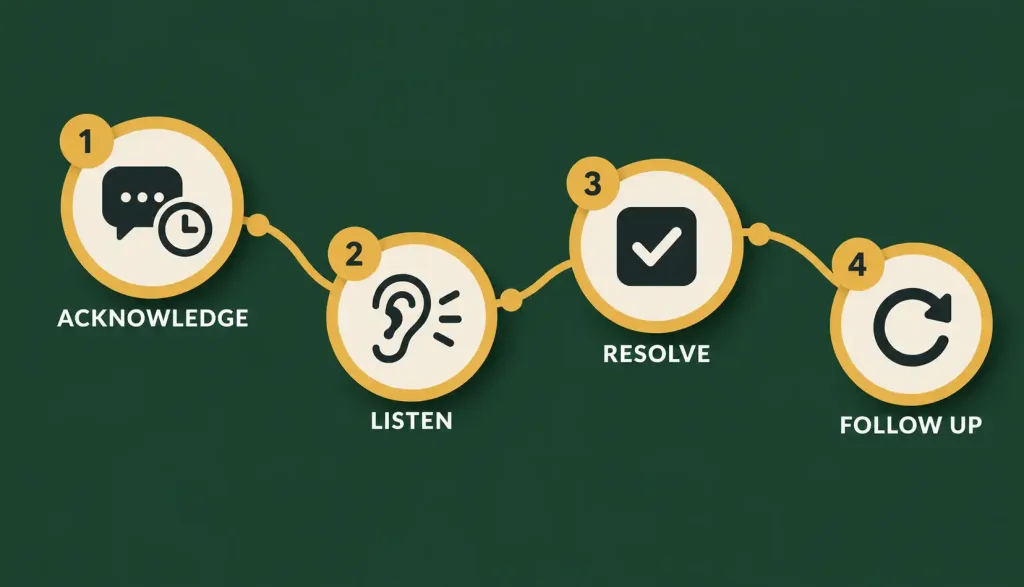
A workable complaint-handling process has four parts. First, acknowledge quickly — even a same-day “we’re looking into this” response, before you have a resolution, meaningfully reduces frustration. Second, listen fully before proposing a fix; a customer who feels rushed past will stay upset even if you technically solve their problem. Third, resolve with a clear action — replacement, refund, or a concrete next step, not vague reassurance. Fourth, follow up after the resolution to confirm it actually worked, which most businesses skip entirely.
That fourth step matters more than it seems. A customer who hears from you again after their issue is resolved, confirming everything’s fine, remembers that far longer than the resolution itself. It signals the relationship mattered beyond the transaction.
Set a real response-time target and hold to it. Twenty-four hours for an initial acknowledgment is a reasonable standard for most small and mid-sized businesses. Publish that standard internally, and measure against it — a target nobody tracks isn’t really a target.
Use Communication Cadence, Not Just “Being Transparent”
“Keep communication open” is true but vague. What actually builds trust is a predictable cadence customers can rely on.
If you send a monthly newsletter, send it monthly — not six weeks one month and two weeks the next. If you promise updates during a service disruption or a shipping delay, send them on a schedule, even if the update is just “still working on it, here’s the current status.” Predictability itself builds trust, independent of whatever the actual content says.
Transparency also means being upfront about limitations. If a product is backordered, say so clearly, with a realistic timeline — not an optimistic one you’ll have to walk back later. Customers generally tolerate bad news delivered honestly far better than good news that turns out to be false.
Reward Loyalty in Ways That Feel Personal, Not Automated
Generic “thank you for your loyalty” emails rarely move anyone. What works better is specificity tied to actual behavior.
Recognize milestones that matter to the individual customer — their first purchase anniversary, reaching a spending tier, or a meaningful order count — rather than blanket promotions sent to your entire list on the same day. A message that references something specific to that customer reads as genuine attention, not automation dressed up to look personal.
Early access works well here too. Letting your best customers see a new product or a sale before the general public costs you very little and signals real status, which a generic 10%-off code doesn’t.
Measure What Actually Indicates a Strong Relationship
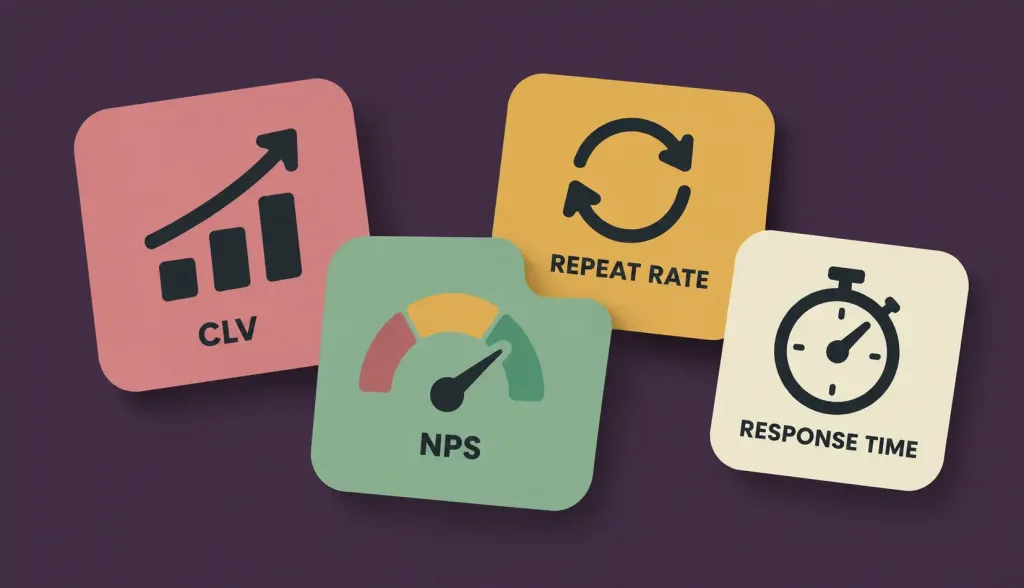
None of the above means much if you’re not tracking whether it’s working. A few metrics that tell you more than vanity numbers:
Customer Lifetime Value (CLV) — the total revenue a customer generates over their relationship with you. Rising CLV over time is one of the clearest signs your relationship efforts are paying off, more meaningful than any single campaign’s performance.
Net Promoter Score (NPS) — a simple “how likely are you to recommend us” survey, scored on a 0–10 scale. It’s not perfect, but tracked consistently over time, it gives you an early warning system for relationship health before it shows up in sales numbers.
Repeat purchase rate — the percentage of customers who buy more than once. A low repeat rate, even with strong first-purchase numbers, usually points to a relationship problem somewhere after the sale.
Response time and resolution rate — how quickly you acknowledge issues, and how often the first response actually resolves them. Both matter more than survey scores for customers who’ve had an actual problem.
Track these quarterly at minimum. A single data point doesn’t tell you much — the trend does.
Bringing It Together
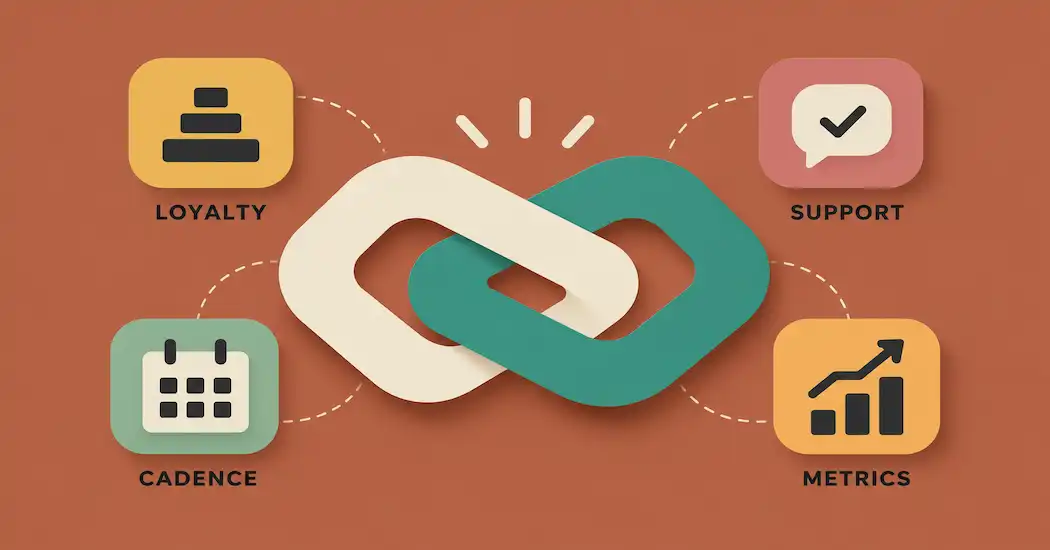
Close customer relationships aren’t the output of good intentions. They’re the output of segmentation that treats different customers differently, a loyalty structure with real value and clear redemption, a complaint process with defined steps and response times, a communication cadence customers can actually rely on, recognition that feels specific rather than automated, and metrics that tell you honestly whether any of it is working.
None of this is complicated. Most of it just requires actually building the system instead of relying on good intentions to carry the relationship on their own.
Frequently Asked Questions
What’s the fastest way to improve customer relationships with limited resources?
Start with response time. Acknowledging issues within 24 hours, even without a full resolution yet, is one of the highest-impact, lowest-cost changes available to most businesses.
Do loyalty programs actually work for small businesses?
Yes, but only with real structure — tiered value and a clear redemption path. A loyalty program that’s hard to understand or slow to pay off won’t change behavior, regardless of business size.
What’s a reasonable customer complaint response time?
Twenty-four hours for an initial acknowledgment is a workable standard for most small and mid-sized businesses. Full resolution time will vary by issue complexity, but the acknowledgment itself should be fast.
How often should I measure customer relationship metrics?
Quarterly at minimum. CLV, NPS, and repeat purchase rate all need enough data points over time to show a meaningful trend rather than noise from a single month.
Is personalization really worth the effort for a small customer base?
Often more so than for a large one — with fewer customers, specific, individualized recognition is more achievable and tends to have an outsized effect on loyalty compared to generic messaging.