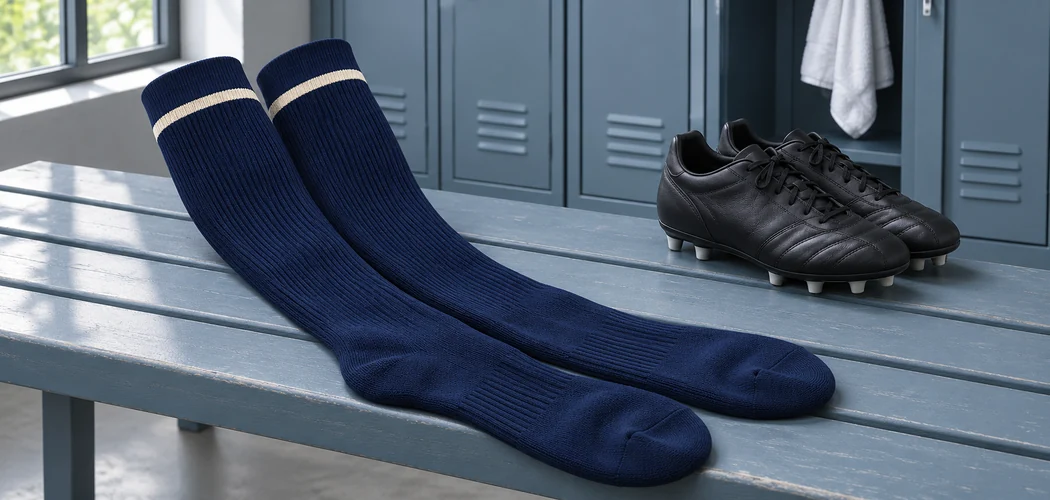
Long sports socks can cover a high boot cuff, sit over shin guards, or give you the uniform coverage your team requires. The right pair depends on what you wear with it. A padded sock that feels comfortable in a roomy hiking boot might crowd your toes in a snug cleat.
Start with the height you need, then choose the thickness your footwear can accommodate. Try one pair before buying several. Five minutes walking in the right shoes will tell you more about the fit than pulling on a sock by itself.
Choose the Right Height for Long Sports Socks
Sock height describes where the cuff sits on your leg. Brands use terms such as crew, mid-calf, over-the-calf, and knee-high, and those labels can fit differently depending on your leg length. Check the product photos or measurements if you need the cuff to clear a boot or cover a guard.
| Height | Where to start | What to check |
|---|---|---|
| Crew | Training shoes or lower-cut hiking footwear | The cuff sits above the shoe collar during movement. |
| Mid-calf | Higher boot collars or extra lower-leg coverage | The cuff stays where you want it when you bend your ankle. |
| Over-the-calf or knee-high | Team uniforms and sports that use shin guards | The sock covers the guard and lies flat behind the knee. |
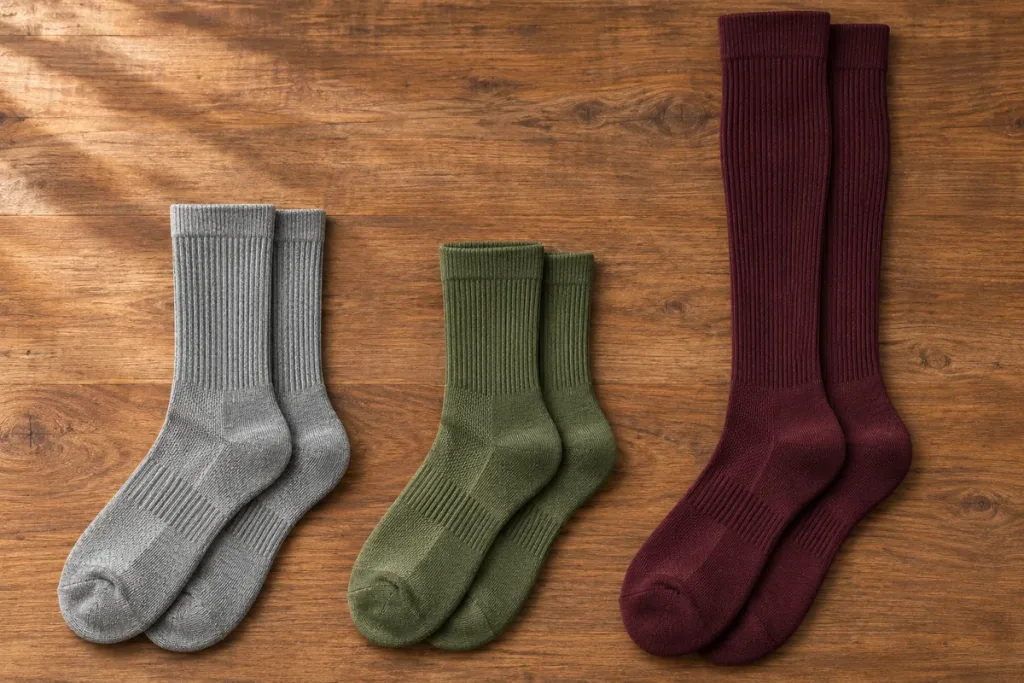
For football or soccer, bring your shin guards when you check fit. Pull the socks on as you would before a match. Walk, squat, and bend your knees. Check whether the fabric bunches at the front of the ankle or the cuff slips down over the guard. If you are buying for a team, confirm the required color and coverage before ordering.
If you are shopping online, a sports sock collection can help you compare styles. Open the individual product’s size chart and check how the brand measures its socks before choosing a pair.
Check Fit With Your Actual Footwear
Start with your shoe size and use the chart for that specific sock. When you put it on, the heel pocket should line up with your heel and the fabric should lie smoothly around your toes. If the sock is too large, you may feel extra material shifting in the shoe. If it is too small, the heel may sit too far forward and the toe box may feel tight.
Put on both shoes and lace them the way you normally do. Walk and change direction. If your toes feel crowded or a seam rubs, try a thinner pair or another size. For a tall sock, check whether the cuff feels comfortable around your calf once you have moved for a few minutes.
If you are between sizes, see whether the manufacturer gives guidance for that model. Check calf measurements when a brand lists them, especially if a tall sock often feels tight even when the foot fits.
Match the Fabric and Cushioning to the Activity
The material and thickness affect how a sock feels inside your shoe. They also change how much space is left around the foot. REI’s hiking sock guide covers the relationship between fit, cushioning, fabric, and warmth.
- Light cushioning is a starting point for close-fitting cleats or warm-weather training. Look for a smooth toe seam and enough room for your toes after lacing up.
- Targeted cushioning puts more padding at areas such as the heel and forefoot. It can suit a shoe that fits well with thin fabric elsewhere.
- Thicker cushioning may feel comfortable in roomy boots on cool days. Try it in the boot first because the added bulk can change the fit.
Polyester and nylon are common in athletic socks. Merino blends are another option for hiking or cooler conditions. Check the blend and knit as well as the main fiber. A thick sock can feel warm in a material you would otherwise choose for summer. If you will train on consecutive days, consider how easily the pair washes and dries between sessions.
Test One Pair Before Buying More
- Wear your usual gear. Try the socks with your regular shoes, boots, or shin guards.
- Move as you normally would. Walk, bend your knees, and change direction. For hiking boots, try a few steps on an incline if you can.
- Check where the fabric shifts. Notice whether the heel stays seated, the toe seam rubs, or the cuff drops.
- Wash and try them again. Follow the care label. Check the fit and cuff tension before ordering more pairs.
For a longer session, pay attention to where discomfort starts. A heel that feels fine when you first put the shoe on may rub after the sock shifts. Use that experience to decide whether to change the size, the cushioning, or the way the shoe fits.
What to Buy for Your Sport
For a team sport with shin guards, start with the required cuff height and check the fit over the guard. For training in a snug shoe, prioritize a smooth fit and light cushioning. For hiking in higher boots, choose a cuff that clears the collar and enough cushioning to suit both the boot and the weather. Once you find a pair that stays in place and feels comfortable in motion, you have a reliable size and style to reorder.