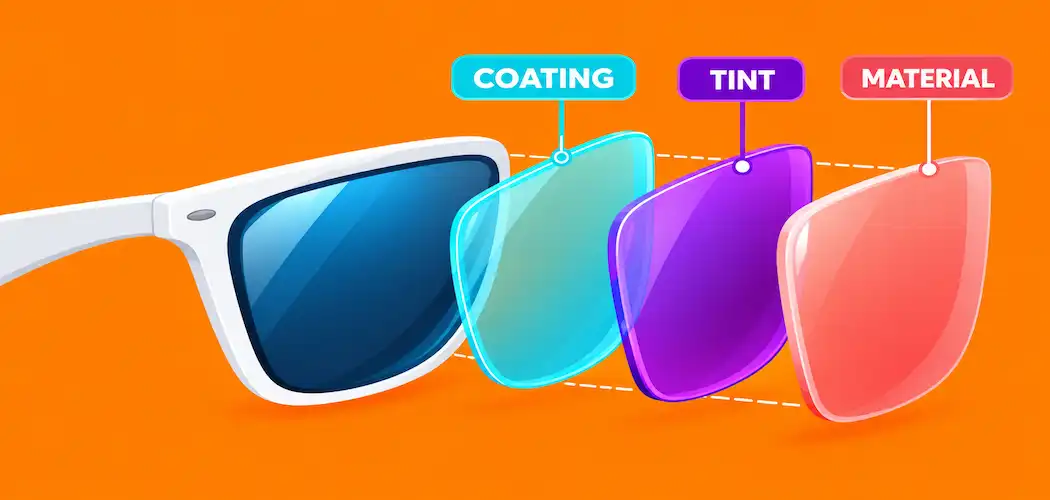
A scratched or broken lens doesn’t have to mean replacing a whole pair of sunglasses, especially if you’ve already broken in a comfortable frame or paid for a premium one. Replacement lenses are often a fraction of the cost of new sunglasses, and choosing the right ones comes down to a handful of genuinely important factors: material, coatings, tint, and where you actually buy them. This guide covers all four.
Lens Material
The base material shapes everything from durability to weight to cost.
Polycarbonate lenses are lightweight, highly impact-resistant, and block UV light effectively — a strong choice for sports and any high-intensity activity where durability matters most. They also tend to be the most affordable option of the three.
Plastic (CR-39) lenses are also lightweight and offer good scratch resistance and UV protection, but they’re noticeably less impact-resistant than polycarbonate, making them a better fit for everyday wear than high-impact sports use.
Glass lenses are the most traditional option — heavier, excellent in optical clarity, and genuinely scratch-resistant, but also the most prone to shattering on impact. One common misconception worth correcting here: glass isn’t inherently worse at UV protection than plastic or polycarbonate. UV protection in any lens comes primarily from an applied coating or treatment, not the base material itself — a properly treated glass lens offers UV protection comparable to a properly treated polycarbonate one. Weight and impact resistance, not UV blocking, are glass’s real trade-offs.
Coatings
Beyond the base material, coatings add specific functional benefits:
Anti-reflective (AR) coating reduces glare and reflections on the lens surface — genuinely useful for driving, where reflected glare off other surfaces can be a real visibility issue.
Polarized coating cuts glare from reflective surfaces like water, snow, and pavement by filtering specific light wavelengths, making it a strong choice for fishing, boating, and driving.
Scratch-resistant coating extends lens lifespan by reducing surface damage from everyday handling.
UV protection coating is the one that actually matters most for eye health — this is what blocks harmful UV rays, and it’s worth confirming explicitly rather than assuming any given lens includes it, regardless of base material.
Tint
Tint affects both how much light reaches your eyes and how colors appear:
- Clear or near-clear lenses suit low-light or nighttime use, letting the most light through.
- Gray lenses are a versatile everyday choice, reducing glare while preserving natural color perception.
- Brown or amber lenses enhance contrast and depth perception, good for bright outdoor conditions.
- Yellow or gold lenses boost contrast in low-light conditions.
- Green or blue lenses offer solid overall contrast and glare reduction for general outdoor use.
Prescription Options
If you need corrective lenses, replacement sunglass lenses can usually be made with your prescription built in:
- Single vision lenses correct one distance (near or far) — suited to a specific task like reading or driving.
- Bifocal lenses correct two distances with a visible dividing line, useful for people who need both near and distance correction.
- Progressive lenses correct multiple distances without a visible line, a good fit for varied daily activities.
Where to Buy: Comparing Real Options
This is a genuinely competitive market, and a few established options are worth comparing directly rather than defaulting to the first one you find:
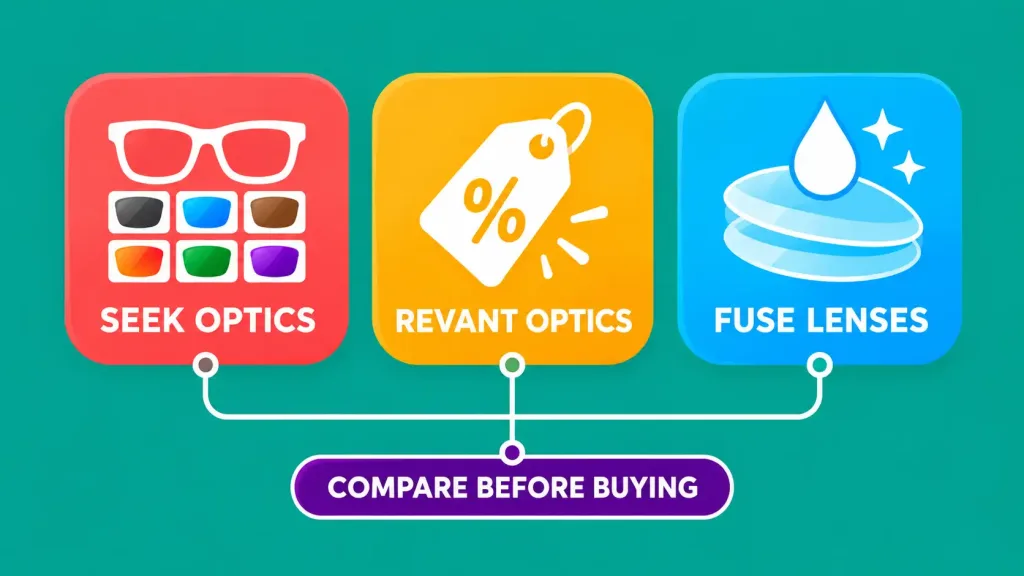
Seek Optics has operated in the aftermarket lens space since the early 2010s, offering replacement lenses compatible with a wide range of brands including Oakley, Ray-Ban, and REVO, generally at a significant discount compared to buying directly from the original brand.
Revant Optics is another established aftermarket option, also covering a broad range of major sunglass brands, often cited alongside Seek Optics as a direct comparison point for price and fit quality.
Fuse Lenses similarly specializes in aftermarket replacement lenses across popular sunglass brands, with its own range of coatings and tint options.
Your optometrist or an eyewear store remains a solid choice if you want in-person fitting help, particularly for prescription lenses where a precise fit matters more than with non-prescription replacements.
Whichever route you choose, confirm specifically: UV protection rating, impact resistance standard (look for ANSI Z80.3 compliance, the standard most reputable aftermarket lenses meet), and return/warranty policy before ordering — these vary enough between providers to be worth checking rather than assuming.
Frequently Asked Questions
Is glass or polycarbonate better for sunglass lenses?
It depends on your priority. Glass offers superior optical clarity but is heavier and more prone to shattering. Polycarbonate is lighter and far more impact-resistant, making it the better choice for sports or active use. UV protection depends on the coating applied, not the base material, for either option.
Do all replacement lenses include UV protection?
Not automatically — it depends on whether a UV coating is applied. Always confirm this explicitly rather than assuming it’s included by default.
Can I get prescription lenses in my sunglasses frames?
Yes, most replacement lens providers and optometrists can incorporate a prescription into single vision, bifocal, or progressive lens options.
How much cheaper are aftermarket replacement lenses compared to buying new sunglasses?
Significantly, in most cases — aftermarket lenses from providers like Seek Optics, Revant Optics, or Fuse Lenses are commonly a fraction of the cost of a full new pair, especially for premium frame brands.
What should I check before ordering replacement lenses online?
UV protection rating, impact resistance certification (ANSI Z80.3 is the standard to look for), exact frame compatibility, and the provider’s return or warranty policy.
The Bottom Line
Choosing the right sunglass replacement lenses comes down to matching material and coatings to how you’ll actually use them — polycarbonate for durability and sport, glass for optical clarity if weight and impact risk aren’t concerns, and the right coating combination for your specific lighting conditions. Several established providers — Seek Optics, Revant Optics, and Fuse Lenses among them — compete in this space, and comparing UV protection, impact standards, and warranty terms across a couple of options is worth the extra few minutes before you order.