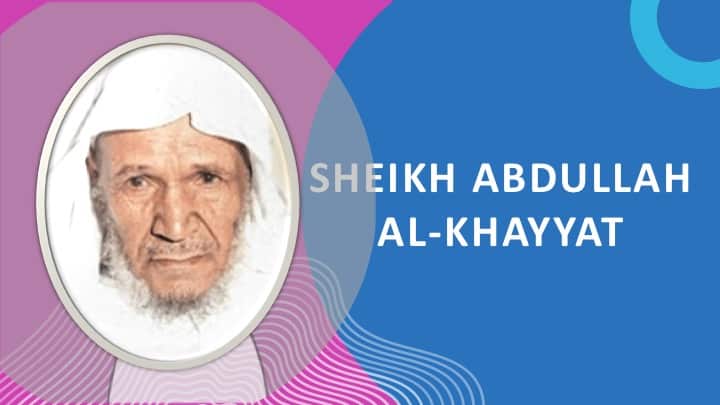
Few religious positions carry the weight of leading prayers at the Grand Mosque in Mecca, the holiest site in Islam. Among the scholars who have held this role, the Khayyat family holds a distinctive place in its history, with members of the family serving as Imam across more than one generation. Sheikh Abdullah Al-Khayyat is remembered as part of that lineage — a scholar whose life was devoted to Islamic learning, teaching, and service to the Grand Mosque.
This piece looks at what’s known about his life and legacy, the broader significance of the role he held, and why his family’s connection to the Grand Mosque continues to matter in the history of the holy site.
The Office He Held
The Imam of the Grand Mosque in Mecca holds one of the most significant religious positions in the Islamic world, responsible for leading the five daily prayers at the site that houses the Kaaba — the focal point toward which Muslims worldwide orient their prayers. The role has historically been filled by scholars recognized for deep knowledge of Islamic law, Quranic recitation, and personal piety, and the appointment has carried enormous symbolic as well as religious weight for centuries.
Becoming Imam of the Grand Mosque has never been simply a matter of seniority. It requires recognized scholarly standing, a reputation for sound judgment in matters of Islamic law, and the trust of the religious and governing authorities responsible for overseeing the holy sites. Historical records of the Grand Mosque’s imams and preachers through the Saudi era document a long line of scholars who held this responsibility, each contributing to the religious life of the mosque during their tenure.
The Khayyat Family’s Connection to the Grand Mosque
The Khayyat family name appears more than once in the historical record of the Grand Mosque’s imamate, reflecting a multi-generational connection to the role that is relatively rare even among the scholarly families traditionally associated with Mecca’s religious institutions. A later member of the family, Sheikh Osama Khayyat, has served as an Imam of the Grand Mosque since the late 1990s, continuing a family legacy that traces back to Sheikh Abdullah Al-Khayyat’s own service in the role.
This kind of generational continuity isn’t incidental in the context of Mecca’s religious institutions — families with a documented history of scholarly service often raise children within that same tradition of study, mentorship, and religious commitment, and the responsibility of caring for the Grand Mosque’s spiritual life has in some families passed from father to son or across generations in this way.
What His Service Represented
While the precise dates and details of Sheikh Abdullah Al-Khayyat’s tenure are not something we were able to independently verify against a primary historical source for this piece, his service as Imam reflects the broader qualities the role has always demanded: deep grounding in Islamic scholarship, a reputation for piety and sound judgment, and a commitment to the daily spiritual life of the Grand Mosque and the millions of worshippers who have prayed there under the guidance of imams across generations.
Scholars who held this position were typically also engaged in teaching, often training the next generation of Islamic scholars and contributing to religious education more broadly across Mecca and beyond. The imamate of the Grand Mosque has historically functioned not just as a ceremonial leadership role but as a center of ongoing religious scholarship and instruction.
Why This Legacy Still Matters
The continuity of families like the Khayyats within the Grand Mosque’s history speaks to something larger than any one individual’s tenure: the way religious knowledge and responsibility have been passed down, generation to generation, within Mecca’s scholarly community. Sheikh Abdullah Al-Khayyat’s place in that lineage, and the fact that his family’s connection to the Grand Mosque continued well beyond his own service, reflects a pattern of devoted religious service that has helped shape the spiritual life of Islam’s holiest site across more than a century.
For Muslims reflecting on figures like Sheikh Abdullah Al-Khayyat, the lesson isn’t really about any one set of biographical facts — it’s about the broader tradition of scholarship, humility, and dedicated service that figures holding this position have historically represented, and the responsibility that comes with caring for a site of such profound significance to over a billion people worldwide.
A Note on Sources
Biographical details about historical religious figures from this era are not always consistently documented across available sources, and in preparing this piece, we were unable to independently confirm several specific details sometimes attributed to Sheikh Abdullah Al-Khayyat, including exact birth and tenure dates. We’ve focused this piece on what can be reasonably established — his place within the Khayyat family’s documented, multi-generational connection to the Grand Mosque’s imamate — rather than restating specific dates we could not verify. Readers with access to authoritative Arabic-language biographical sources or official Saudi religious authority records are welcome to point us toward more precise documentation, which we would be glad to incorporate.
Frequently Asked Questions
What is the Imam of the Grand Mosque responsible for?
The Imam leads the five daily prayers at the Grand Mosque in Mecca, the site housing the Kaaba, and historically has also played a role in religious teaching and scholarship connected to the mosque.
Is the Khayyat family still connected to the Grand Mosque today?
Yes. Sheikh Osama Khayyat has served as an Imam of the Grand Mosque since the late 1990s, continuing a family connection to the role that traces back to earlier generations, including Sheikh Abdullah Al-Khayyat.
How is an Imam of the Grand Mosque selected?
Historically, the position has required recognized Islamic scholarly standing, a reputation for piety and sound religious judgment, and the confidence of the religious and governing authorities responsible for the holy sites.
Why is it hard to find precise biographical details about historical imams from this era?
Documentation standards and record-keeping varied significantly across different periods and regions, and not every historical religious figure’s biography was as thoroughly or consistently documented in sources accessible today as more recent appointees.
The Bottom Line
Sheikh Abdullah Al-Khayyat holds a place in the Khayyat family’s documented, multi-generational connection to one of Islam’s most significant religious offices. While not every specific detail of his life is something we could independently verify here, his service reflects the broader tradition of scholarship and devotion that the imamate of the Grand Mosque has represented for generations — a tradition his family’s continued connection to the role has helped carry forward into the present day.