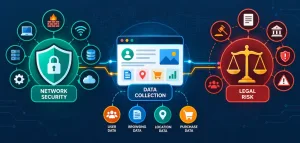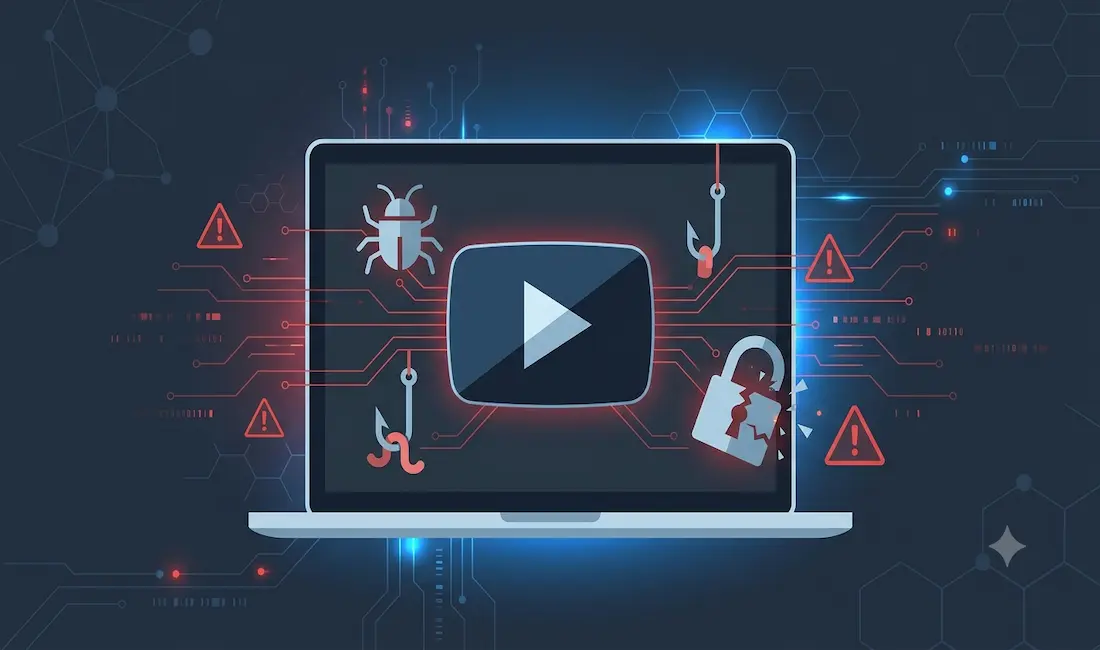
If you have searched for WCOForever, you were almost certainly looking for a place to watch TV shows, movies, or anime for free. Sites like it promise unlimited entertainment at no cost, with no subscription and no sign-up. What that promise leaves out is the price you actually pay, and it is not measured in dollars. Free pirate streaming sites have become one of the most reliable ways for cybercriminals to reach ordinary people, turning a quiet evening of binge-watching into malware infections, stolen passwords, drained bank accounts, and hijacked devices.
This article takes the security-first view of WCOForever and the broader ecosystem of free streaming sites it belongs to. Rather than telling you where to stream, it explains what these sites really are, how they make money from you even when you pay nothing, the specific threats they expose you to, the warning signs to watch for, and the safe, legal ways to get the same entertainment without handing criminals access to your digital life.
What Is WCOForever?
WCOForever is one of many free, unauthorized streaming sites that host copyrighted TV shows, movies, and anime without permission from the studios or distributors that own them. Unlike legitimate services such as Netflix, Disney+, or Crunchyroll, these sites hold no licenses for the content they display. They do not pay the creators, they are not subject to the security, privacy, and consumer-protection standards that legal platforms must meet, and they can appear, disappear, change domains, and reappear under slightly different names at any time.
That instability is not accidental. Because the content is unlicensed, these operations exist in a legal grey zone and frequently shift domains to stay ahead of takedown notices and law-enforcement action. For a visitor, this means the site you land on today may be run by a different operator tomorrow, may serve entirely different advertising networks from one visit to the next, and offers no accountability whatsoever if something goes wrong. There is no support desk, no security team, and no recourse when your device is infected or your data is stolen.
It is worth being clear about the framing these sites use. Words like “curated,” “exclusive,” and “original content” are marketing language borrowed from legitimate services to make a piracy operation feel trustworthy. Pirate sites do not curate, license, or produce anything. They aggregate stolen content and wrap it in a familiar-looking interface, and that veneer of legitimacy is part of what makes them dangerous.
If It’s Free, How Do They Profit From You?
Running a large streaming site costs real money for servers, bandwidth, and storage. If you are not paying a subscription, the operation is being funded some other way, and understanding how reveals exactly where the risk comes from.
The primary revenue source is advertising, but not the ordinary, vetted advertising you see on mainstream websites. Pirate sites rely heavily on low-quality, high-volume ad networks that accept adverts legitimate networks would reject, including deceptive, adult, and outright malicious ones. These networks pay per impression and per click, which is why these sites are saturated with pop-ups, redirect chains, fake play buttons, and overlays designed to make you click something you did not intend to.
Some operations go further and monetize visitors directly. This can include cryptomining scripts that hijack your device’s processor to mine cryptocurrency while you watch, aggressive tracking that harvests and resells your browsing data, and schemes that pressure you into installing software or “recommended” apps that are really malware. Investigations have also linked piracy networks to organized crime, including money laundering and the operation of botnets used for large-scale attacks. In short, the business model of a free streaming site depends on extracting value from you through your attention, your device’s resources, your data, or your security, and often all four at once.
The Real Cybersecurity Dangers of Sites Like WCOForever
The risks here are not hypothetical or exaggerated. Security researchers have quantified them repeatedly, and the findings are consistent and stark. According to one widely cited study, visits to piracy sites are associated with a malware risk up to 65 times higher than visits to legitimate websites. A separate analysis found that 76 percent of the UK’s thirty most-visited pirate sites were actively exposing users to scams, financial fraud, and explicit content. Here are the specific threats that make up that risk.
1. Malware, Ransomware, and Spyware
Free streaming sites are a leading distribution channel for malicious software. Simply clicking a play button, or one of the fake buttons designed to look like it, can trigger downloads of malware, ransomware, and spyware that compromise your device and, through it, your entire home network. Ransomware can lock your files and demand payment to release them. Spyware can silently record what you type, including passwords and payment details. Because the infection often requires no obvious action beyond a single click, victims frequently have no idea they have been compromised until the damage is done.
2. Malvertising: Attacks Hidden in the Ads
The single largest threat vector on these sites is malvertising, or malicious advertising. Instead of hacking a site directly, attackers buy or inject ads through advertising networks, and those ads carry the attack. What makes malvertising especially dangerous is that it can deliver malware without any direct interaction from you.
The scale of this is not theoretical. Microsoft’s threat intelligence team uncovered a malvertising campaign that began in late 2024 and compromised close to one million devices worldwide. The attack started on illegal streaming websites, where malicious ads and embedded redirect links sent users through a chain of sites before delivering malware. In that campaign, attackers even embedded redirectors within the video frames themselves, and the final payloads were information-stealers designed to harvest credentials and target crypto wallets and browser-stored data. This is the reality behind the pop-ups and redirects on a site like WCOForever: they are not merely annoying, they are the delivery mechanism for real attacks run by sophisticated threat actors.
3. Phishing and Credential Theft
Pirate streaming sites frequently redirect visitors to phishing pages, fake login prompts, and fraudulent “you have won a prize” or “your device is infected” pop-ups. These are engineered to trick you into handing over usernames, passwords, and financial information. Once attackers have a set of credentials, the damage spreads well beyond the streaming site, because so many people reuse the same password across multiple accounts. A password entered on a fake prompt can become the key to your email, your banking, and your social media through credential-stuffing attacks, where stolen login pairs are tested automatically across hundreds of services.
4. Fake VPN and “Fix Your Device” Scams
A common tactic on these sites is the deceptive security prompt. Some falsely claim to have detected your IP address or a virus on your device, then pressure you into buying a “recommended” VPN or downloading a cleanup tool. The VPN is often a low-value or fraudulent product, and the cleanup tool is frequently malware in disguise. The scam works by weaponizing exactly the security anxiety that a suspicious-looking site provokes, turning your caution against you.
5. Identity Theft and Financial Fraud
The combination of the threats above adds up to a serious risk of identity theft and direct financial loss. Research into the illicit streaming economy has found that users are routinely exposed to scams, malware, phishing, and identity fraud, often with little or no recourse when things go wrong. In the UK alone, earlier research estimated that nearly 3.6 million illegal streamers fell victim to viruses, fraud, or personal data theft, and close to one million had money stolen directly as a result. When your credentials, payment details, and personal information are harvested and resold, the consequences can follow you long after you have closed the browser tab.
6. No Privacy, No Protection, No Recourse
Legitimate platforms are bound by data-protection laws and consumer-protection standards, and they invest heavily in securing your account and personal information. Pirate sites are bound by none of this. There is no guarantee about how your data is handled, no security team responding to breaches, and no support to turn to when your account or device is compromised. You are, in effect, trusting your device and your personal information to an anonymous operator whose entire business depends on monetizing you as aggressively as possible.
Beyond Cybersecurity: The Legal Picture
The security risks are the most immediate danger, but the legal environment around illegal streaming is tightening as well. Enforcement has become significantly more aggressive in recent years. In October 2025, an Irish High Court ordered 480,000 euros in damages against an illegal streaming operator, and a Europol operation in November 2025 dealt a major blow to piracy businesses. While enforcement has historically focused on the operators of these services rather than individual viewers, the direction of travel is clear, and accessing unlicensed content sits on the wrong side of copyright law in most countries. For an individual, the practical risk remains overwhelmingly a security one, but the legal exposure is not zero and is growing.
Warning Signs a Streaming Site Is Dangerous
You can often identify a high-risk streaming site before it does any harm. Be extremely cautious of any site that shows these red flags:
- Excessive pop-ups and redirects. If clicking anywhere opens new tabs or bounces you through multiple sites, the advertising is unvetted and likely malicious.
- Fake play buttons. Multiple “play” buttons, where the real one is buried among decoys designed to trigger downloads or redirects, is a classic pirate-site tactic.
- Prompts to install software or apps. Legitimate streaming works in your browser or through official, store-verified apps. A prompt to install a “special player” or codec is a malware warning sign.
- Alarming security pop-ups. Messages claiming your device is infected or exposing your IP address, especially those pushing a specific VPN or cleanup tool, are scams.
- Requests for logins or payment details on unfamiliar pages. Never enter credentials or card information in a pop-up or on a page you were redirected to.
- Constantly changing domains. If a site frequently moves to new web addresses, that is a sign it is evading takedowns, not a sign of resilience.
How to Stay Safe: Legal Streaming Alternatives
The good news is that the same content people seek on sites like WCOForever is available through legitimate services that do not put your security at risk. Many are surprisingly affordable, and several are free and fully legal.
For anime specifically, which is a large part of what draws people to sites like WCOForever, Crunchyroll and HIDIVE offer enormous licensed libraries, including simulcasts of new episodes shortly after they air in Japan. Both have free or low-cost tiers. For general TV and film, the major subscription services, Netflix, Disney+, Amazon Prime Video, Max, and Hulu, cover most mainstream content, and rotating a single subscription month to month is an inexpensive way to work through a watchlist.
If cost is the concern, there is a strong and growing selection of free, ad-supported legal streaming services. Platforms such as Tubi, Pluto TV, The Roku Channel, and Crackle offer thousands of movies and shows at no charge, funded by ordinary, vetted advertising rather than malvertising. Your local public library is another genuinely free and often overlooked option: many libraries provide free access to services like Kanopy and Hoopla with a library card, offering films, documentaries, and series with no ads at all.
Choosing any of these means you get the entertainment you were looking for while keeping the security, privacy, and legal protections that pirate sites strip away.
Practical Steps to Protect Your Devices
Whether or not you have visited a risky site, a few security fundamentals dramatically reduce your exposure to the threats described here:
- Use unique, strong passwords for every account, ideally managed with a reputable password manager, so a single stolen credential cannot unlock your other accounts.
- Enable multi-factor authentication (MFA) everywhere it is offered. Even if a password is stolen, MFA blocks most account-takeover attempts.
- Keep your operating system, browser, and apps updated, since many attacks exploit known vulnerabilities that updates have already fixed.
- Run reputable, up-to-date security software and a browser with strong ad- and tracker-blocking, which cuts off many malvertising attacks before they load.
- Never install “players,” codecs, or apps that a streaming site prompts you to download. Legal streaming does not require them.
- If you have used a site like this, act now: run a full malware scan, change the passwords for any accounts you may have entered, and watch your bank and card statements for unfamiliar activity.
Conclusion
WCOForever and the wider world of free streaming sites offer a tempting proposition, unlimited entertainment for nothing, but the real cost is paid in security and privacy rather than money. These sites fund themselves through malicious advertising, data harvesting, and their entanglement with organized cybercrime, and they expose visitors to malware, ransomware, phishing, credential theft, and identity fraud at rates many times higher than legitimate websites. The million-device malvertising campaigns and multi-million-dollar enforcement actions of recent years are not distant statistics; they are the direct consequence of the ecosystem these sites belong to.
The safer path is also the easier one. With affordable subscriptions, genuinely free ad-supported platforms, and library-based services all offering the same shows and films legally, there is no longer any good reason to gamble your devices, your data, and your identity on a pirate site. Protect your credentials, keep your software current, stay alert to the warning signs, and enjoy your entertainment from sources that are working to keep you safe rather than to exploit you.
Frequently Asked Questions
Is it safe to visit WCOForever or similar free streaming sites?
No, visiting free pirate streaming sites carries a significantly elevated security risk, with studies associating piracy sites with malware exposure many times higher than legitimate websites. The danger comes primarily from malicious advertising, fake download prompts, and redirect chains that can deliver malware, sometimes without any direct interaction on your part. Even if a site appears to work normally, you have no assurance about how it handles your data or what its advertising networks are doing in the background.
Can I get a virus just from watching, without downloading anything?
Yes, this is one of the most dangerous aspects of these sites. Malvertising can deliver malware through the advertisements alone, without you deliberately downloading a file, and Microsoft documented a campaign originating on illegal streaming sites that compromised close to a million devices this way. Fake play buttons and automatic redirects can also trigger downloads or send you to malicious pages after a single click. Running strong security software and a capable ad-blocker reduces this risk, but it does not eliminate it on a site built around malicious advertising.
What should I do if I have already used a site like WCOForever?
Take a few protective steps promptly. Run a full scan with reputable, up-to-date security software to check for malware, and change the passwords for any accounts whose credentials you may have entered on or near the site, especially if you reuse passwords. Enable multi-factor authentication on important accounts, and keep an eye on your bank and card statements for any unfamiliar transactions over the following weeks. If you notice signs of a serious compromise, consider seeking professional help to clean the device.
Are there free and legal ways to stream TV shows, movies, and anime?
Yes, there are many. For anime, Crunchyroll and HIDIVE offer large licensed libraries with free or low-cost tiers, while services like Tubi, Pluto TV, The Roku Channel, and Crackle provide thousands of movies and shows for free with ordinary, vetted advertising. Many public libraries also offer free, ad-free access to services such as Kanopy and Hoopla with a library card. These options deliver the same entertainment without the security and legal risks of pirate sites.
Why are pirate streaming sites so full of aggressive ads and pop-ups?
Because advertising is how these free sites make money, and they rely on low-quality ad networks that legitimate sites avoid. These networks pay for impressions, clicks, and redirects, which is why the sites are engineered with pop-ups, fake buttons, and overlays to generate as many of those as possible. Unfortunately, those same networks are the primary channel through which malvertising and scams are delivered, so the aggressive advertising is not just an annoyance but the core of the site’s security risk.