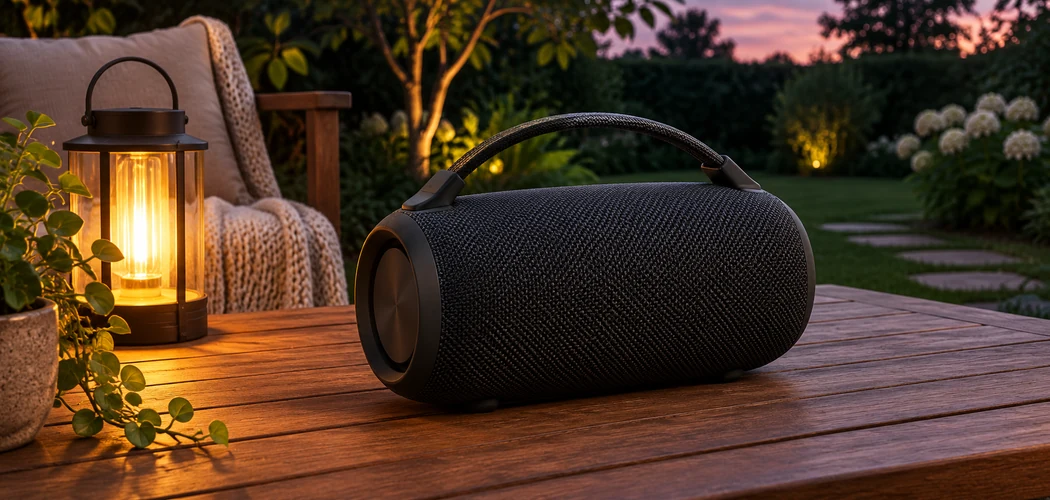
A speaker that casts a warm glow across a patio table can make a summer evening more pleasant. Take the same speaker camping and you may discover that the light is too dim to find anything in your bag, or that running it all evening leaves less battery for music the next morning. The features that make sense depend on where you set the speaker and what you expect the light to do.
Start by picturing a typical outing. Where will the speaker sit? How far away will the phone be? Will there be a place to charge it? A model that stays on a covered porch faces different demands from one you carry to a beach or through a campground.
Compare Outdoor Bluetooth Speakers With Lights by Use
For a patio or balcony, look for a stable base, simple controls, and a light you can dim or switch off. A speaker near the middle of a table can play at a comfortable level without having to reach every corner of the yard. If you mainly listen while eating or chatting, check how clear it sounds at the quieter level you’ll actually use.
For camping, pay attention to the packed weight, charging connector, and what happens when the battery gets low. Carry it with the rest of your gear before deciding whether it earns the room it takes up. If the site has quiet hours, check whether the light can stay on with the audio off. That feature can matter more than pairing two speakers.
At the beach or pool, look at the exact exposure the speaker is rated for. Sand, splashes, and immersion present different problems. Decide where you can place the speaker securely and keep the charging port protected. A shoulder strap or handle can help during transport, but check whether it comfortably carries the product’s weight and whether the mounting point is intended for that use.
Read the Water-Resistance Rating Before Taking It Outside
Look for an IP rating in the manufacturer’s specifications or manual. The first position describes protection against solid particles and the second describes protection against water. An X in either position means the marking gives no rating in that position. For example, IPX6 describes water protection without specifying a dust rating.
Garmin’s IPX6 explanation distinguishes a water-jet rating from an immersion rating. IPX6 covers powerful water jets under specified test conditions. For a speaker that could fall into water, look for an immersion rating and check the manufacturer’s depth, duration, and use limits. Follow the instructions for the exact model you are buying.
Also check whether the stated rating depends on closing a port cover or removing a cable. A model approved for use around splashes with the cover closed may have different instructions while plugged in. Read how the manufacturer says to clean and dry the speaker after exposure to moisture, salt, or sand. Put it somewhere dry before you open ports or charge it, following the manual’s directions.
Product descriptions may also use words such as rugged or weather-resistant without giving a test result. If you’re buying for a particular exposure, ask the seller for the rating or manual. The specs should answer the question directly enough that you can tell whether the setting you have in mind falls within the stated limits.
Decide What the Light Needs to Do
A flickering flame effect works well for ambience. For reading a label, looking inside a bag, or preparing food after dark, check whether the light also has a steady mode that puts light where you need it. A bright ring around a speaker can look attractive in a photo while leaving the table below it dim.
Check whether the speaker has separate controls for audio and light. Could you turn the light off from the device, or do you need a phone app? Can you run the light without streaming music? If you’re planning to use it around other people at night, see whether it can stay at a low brightness without flashing or pulsing.
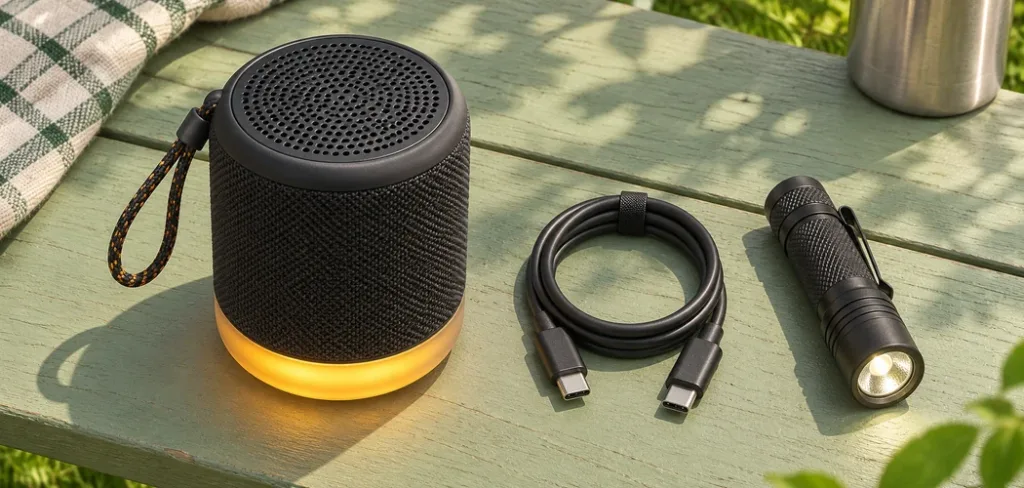
Think about what you would do if the speaker battery ran out. If you need a light to navigate or handle an essential task, carry a separate flashlight or headlamp. Then the speaker’s light can serve as a convenience at the table, and you can move it to wherever the sound works best.
Compare Battery Life With the Light on
A headline playtime number is only useful when you know how it was measured. Check whether the manufacturer specifies volume, light settings, and whether another speaker was paired. For example, the JBL Pulse 5 specification sheet notes that music playtime depends on volume and audio content. If a listing doesn’t give a figure for the combination of sound and lighting you plan to use, treat its runtime as an estimate.
Work backward from the outing. Suppose you want background music for three hours on Friday and again on Saturday, with the light on for both sessions. Allow extra time if you expect to use the light after the music stops. Plan for at least six hours of that combined use and decide how you’ll recharge if the speaker falls short. If you’ll bring a power bank, confirm the connector and charging requirements before packing.
Try your settings at home while you can still return the speaker. Start with a full charge, choose your usual volume and light mode, and play music for the length of a normal evening. Check the remaining charge and time how long it takes to recharge with the adapter you plan to bring. A battery indicator with only a few steps may be too coarse to predict an exact number of hours, but the trial can show whether your plan is realistic.
Ask whether the manufacturer supports playback during charging if you expect to leave the speaker plugged in. Check any conditions on doing so, including the location and protection of ports. A cable stretched across a patio is inconvenient regardless of the battery size. A charging spot close to where you normally store the speaker can be the simpler solution.
Check Sound, Pairing, and Where You’ll Put It
Place the speaker where you expect it to sit. A small speaker on a solid table may sound different from the same speaker hung from a hook or set on a towel. Play one familiar song and a spoken recording at a level that suits the space. Listen from the chairs people will actually use. If you have to turn it up sharply to reach the far end of a table, try moving it before judging the speaker’s output.
Test Bluetooth with the phone where you usually keep it. Walk behind the patio door or around the corner if that is part of your normal use. Walls, obstructions, and placement can change how a connection behaves, so a range figure from a product listing is only a starting point. If someone else will control the music during a gathering, practice switching phones before guests arrive.
If you want two speakers, check which models can pair and what the feature does. A stereo pair sends separate left and right channels. A group or party mode may instead play the same program through several speakers. Model compatibility matters, especially if you already own one unit. For outdoor listening on your own, compare the trade-offs in NetworkUstad’s guide to Bluetooth headphones and wireless earbuds.
Check the controls in dim light. Can you find power and volume without accidentally changing the light mode? Ask what happens when a phone disconnects and whether the speaker remembers its previous settings. To test placement, try it on the table, shelf, or mount you’ll use. Check that the speaker is stable and that cables and straps stay clear of walkways.
Compare the Exact Model Before Buying
Product listings sometimes group several versions under one name. If you’re looking at an ANERIMST torch-style speaker or a similar design, verify the model number on the box or the product itself. Check the matching manual for the IP rating, available ports, light modes, and charging instructions. Confirm whether the listing includes one speaker or a pair and which accessories arrive with it.
For a gift, think about where the recipient will use it most. A patio listener may appreciate independent light controls. A camper may care more about packed weight and compatibility with chargers already in their bag. Compare the return terms, especially if you’re unsure how they’ll like the sound or the color of the light in their space.
Before deciding, check three things in a realistic test. The speaker should be loud enough where people sit, the light should do the job you expect, and the battery should last through an ordinary outing with both features in use. If a model can do those things and you can protect it from the exposure you expect, you have a practical basis for choosing it.