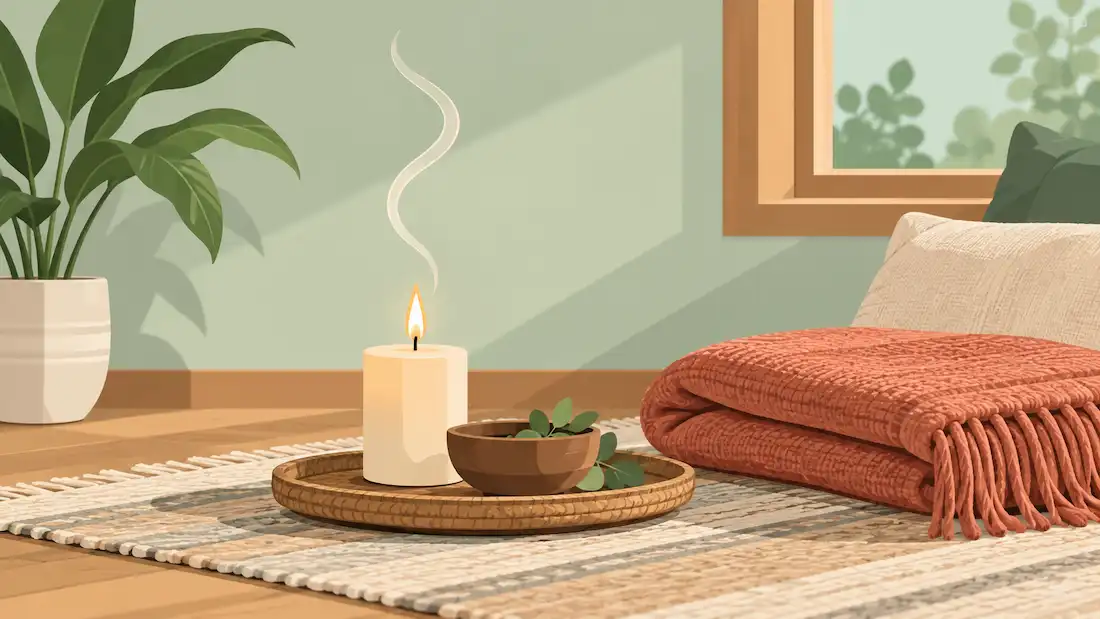
A cluttered room, a stressful week, a space that just feels “off” — a lot of people respond to these moments with some version of the same instinct: clear the air, reset the space, start fresh. Across many cultures and spiritual traditions, that instinct has taken the form of specific rituals — burning herbs, using sound, decluttering with intention — grouped loosely under the term “energy clearing.”
This piece covers five of the most common practices, what they actually involve, and an honest look at what’s really behind why people find them helpful. These are ritual and mindfulness practices, not medical treatments, and they’re worth approaching that way — as meaningful personal or cultural practice, not as a scientifically measurable intervention.
1. Smudging with Sage
Smudging — burning dried herbs, most commonly white sage, and letting the smoke move through a space — is a practice with deep roots in Indigenous traditions, particularly among various Native American nations, where it carries specific cultural and spiritual significance. It has also been widely adopted outside those traditions in recent decades, often stripped of its original cultural context.
If you choose to try it, the practice itself is simple: light a bundle of dried herb, let it smolder rather than flame, and allow the smoke to drift through the room while you focus on the intention of clearing the space. Worth knowing: white sage has faced real over-harvesting pressure due to its popularity in non-Indigenous wellness markets, so if this practice appeals to you, sourcing from a supplier that harvests sustainably — or learning about and respecting the practice’s origins — is worth doing thoughtfully rather than treating it as a disconnected wellness trend.
2. A Warm Salt Bath
Bathing rituals involving salt — sea salt, Epsom salt, or Himalayan salt — appear across many cultures as a way to mark a transition: the end of a hard day, a moment of intentional rest, a symbolic “washing away” of stress. Fill a bath with warm water, add a handful of salt, and use the time to slow down and mentally set aside the day’s tension.
This is worth being honest about: there’s no scientific basis for salt water “drawing out negative energy” in any literal sense. What a warm bath genuinely offers is real and well-supported — warm water relaxation, a few minutes of enforced slowing down, and the psychological value of a ritual that marks a clear beginning or end to a stressful period. That’s a legitimate benefit on its own, without needing an energetic explanation attached to it.
3. Sound with Singing Bowls
Singing bowls, often made of metal or quartz crystal, produce a sustained resonant tone when struck gently or when a mallet is circled around the rim. Sound-based relaxation has genuine, researched psychological benefits — many people find a slow, resonant tone genuinely calming, in much the way ambient music or white noise can lower stress in the moment.
What the practice doesn’t have is solid scientific evidence for literally “dispersing negative energy” from a room or a body. If you find the sound soothing, that’s a real and legitimate reason to use singing bowls as part of a relaxation practice — the calming effect doesn’t require an energetic mechanism to be worth valuing.
4. Visualization and Affirmations
Visualization — picturing a specific calming image, like a wave of light moving through your body — paired with spoken affirmations is a practice with actual, reasonably well-studied psychological grounding, distinct from the other items on this list. Techniques resembling guided visualization show up in legitimate therapeutic contexts, including some forms of relaxation training and cognitive behavioral approaches, because deliberately directing attention and self-talk can genuinely shift mood and reduce stress in the moment.
To try it: find a quiet space, close your eyes, picture something calming and specific, and pair it with a short phrase that reflects how you want to feel — something like “I’m setting this down” or “I’m starting this moment fresh.” The psychological mechanism here isn’t mysterious — it’s attention, repetition, and intentional reframing — but that doesn’t make the effect less real for people who find it useful.
5. Decluttering and Reorganizing Your Space
This is the practice on the list with the most straightforward, uncontroversial support: physical clutter is genuinely associated with higher reported stress and difficulty concentrating for many people, and the relationship between a tidy, organized space and a calmer mental state is well-documented in general psychology, independent of any claims about “energy.”
Clearing out items you no longer need, organizing what remains, and creating open, breathable space in a room you spend real time in is a practical, evidence-grounded way to support a calmer environment — no ritual framing required, though plenty of people pair it with one anyway.
The Honest Takeaway
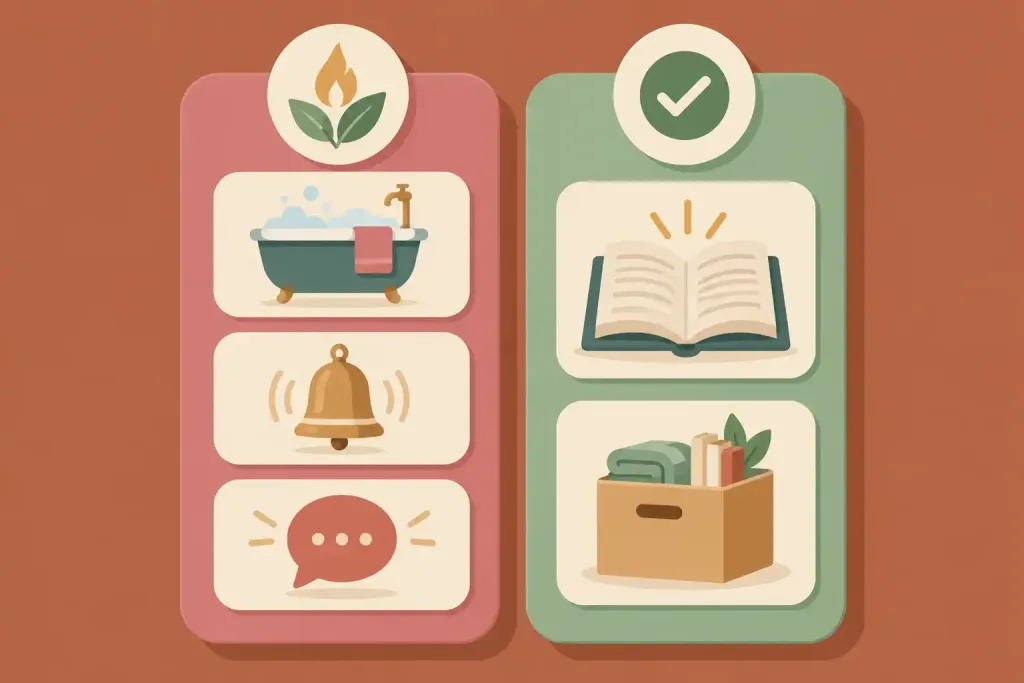
None of these five practices have been shown to measurably affect any literal “energy field,” and it’s worth being upfront about that rather than implying otherwise. What they do offer, for many people, is real: a structured ritual that marks a transition, a few minutes of deliberate slowing down, a sensory experience (scent, sound, warmth) that’s genuinely calming, and in the case of decluttering, a well-supported practical benefit. If a practice like this helps you feel calmer or more settled, that benefit is real and worth having — the honest framing is simply that the mechanism is ritual, attention, and self-care, not a literal clearing of energy.
If you’re drawn to any of these for cultural or spiritual reasons specific to a tradition — smudging in particular has real cultural significance — it’s worth learning about and respecting that context rather than treating the practice as a generic wellness hack.
Frequently Asked Questions
Does smudging actually clear negative energy?
There’s no scientific evidence for a literal energy-clearing effect. The ritual itself can offer genuine psychological value — a structured way to mark a transition or reset a space — and for many practitioners it carries real cultural and spiritual significance separate from any measurable physical claim.
Is there scientific evidence behind sound healing with singing bowls?
The calming effect of slow, resonant sound is genuinely supported by general research on relaxation and sound; the specific claim that singing bowls “clear” energy is not something with scientific backing.
Do visualization and affirmations actually work?
The underlying mechanism — directing attention and using intentional self-talk to shift mood — has real grounding in psychology and shows up in legitimate therapeutic techniques, separate from any energetic framing.
Is decluttering actually linked to feeling calmer?
Yes, this is the best-supported item on this list. Clutter is commonly associated with higher reported stress, and an organized space is broadly linked to a calmer mental state in general psychological research.
Should I be careful about where I source sage for smudging?
Yes. White sage has faced real over-harvesting pressure due to rising demand, and the practice itself originates in specific Indigenous traditions — sourcing thoughtfully and learning about that context is worth doing if you choose to practice it.
The Bottom Line
These five practices can offer genuine value — as ritual, as a prompt for mindfulness, as sensory relaxation, or in the case of decluttering, as a practically supported way to reduce stress. What they can’t honestly claim is a scientifically demonstrated effect on literal “energy.” Approaching them as meaningful personal or cultural ritual, rather than as medical or scientifically proven interventions, is both more accurate and, for most people, exactly what makes them worth doing in the first place.