
ChillWell 2.0 uses a fan and water to produce a breeze for someone sitting nearby. If you’re shopping for a unit to cool a bedroom or an entire living room, that distinction matters more than the words “portable AC” in a listing. A desktop cooler and a portable air conditioner solve different problems. Start by deciding whether you want moving air at one seat or a lower temperature across the room.
This guide explains the device using the seller’s description and general guidance on evaporative cooling. The seller’s description establishes how the product is designed to operate. It gives you less information about what you’ll feel in your own room, especially if the air is already humid. Consider your space, your climate, and how long you need the cooling to last before you buy.
How ChillWell 2.0 Cools the Air Around You
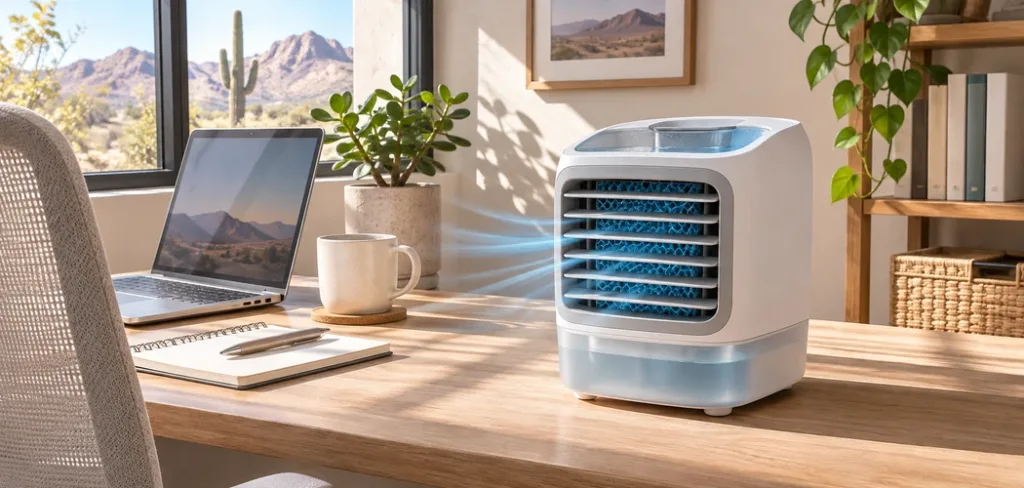
The ChillWell 2.0 seller’s FAQ describes filling a water tank and using a cartridge to evaporate the water. A fan moves air through the unit. Some liquid water becomes vapor, which can lower the temperature of the air passing through the wet material while adding moisture to that air. The effect is easiest to notice when you sit in the airflow.
Think about how the device would sit on your desk. If it’s across the room or pointed toward an empty chair, you may notice less difference than if it blows toward the part of the desk you actually use. Furniture, distance, and fan speed affect whether you feel the breeze. A cooler reading close to the outlet tells you about the air at that point. A thermometer farther away can tell you whether the room itself changed.
Evaporative cooling has more room to work when the air is dry. As humidity rises, less water can evaporate under otherwise similar conditions. The Honeywell’s evaporative cooler manual explains why water evaporates more readily in dry air. Its guidance describes a different model and does not establish ChillWell’s performance. Climate averages are a starting point. Indoor conditions on the day you use it are what affect evaporation.
A room-sized evaporative cooler can move much more air and may be designed to bring in outdoor air while letting indoor air escape. Those are different operating conditions from a small device that recirculates the air at a desk. If you read specifications or energy comparisons for larger units, check their size and installation assumptions before applying those numbers to a tabletop model.
A Personal Cooler, a Fan, and a Portable Air Conditioner
A regular fan moves room air. It can make you feel cooler when the air passes over your skin, and it needs no water tank or wet cartridge. If what you want is a steady breeze while you work, compare an ordinary desk fan first. Consider the direction you can aim it, its speed settings, the space it takes up, and how easy it is to clean.
A personal evaporative cooler also moves air, with the added effect of water evaporation. It may suit a single person in a dry room who wants airflow at a desk or workbench and is willing to refill and clean the unit. In a humid room, the difference you feel compared with a fan may be small. If several people are sitting in different parts of a room, one small outlet may do little for anyone outside its airflow.
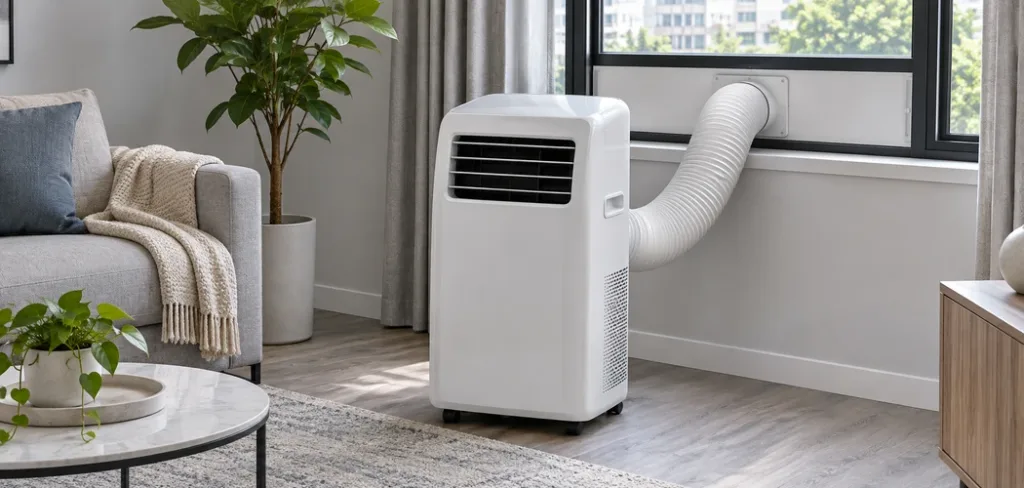
A compressor-based portable air conditioner moves heat out of the room through an exhaust that normally leads outdoors. Look for a rated cooling capacity and check how the exhaust fits your window. Measure the window opening and check your lease or building rules before assuming you can install the kit. If you’re comparing two portable AC models, use like-for-like capacity ratings, including the U.S. Department of Energy’s seasonally adjusted cooling capacity where listed.
If a window installation is impractical and you’re considering a permanent system, NetworkUstad’s ductless split AC guide introduces another room-cooling option. Installation costs and permissions can be quite different from those for a device that sits on a desk.
A window unit is another option where the window and building rules allow it. If you’re trying to cool a room at night, think about the heat coming through windows, how much of the space you need to cool, and where the unit will sit. A cooling device that feels useful during a short desk session may solve very little of a warm bedroom’s problem several hours later.
How to Read Cooling, Noise, and Energy Claims
Start with what the seller actually measured. A claim about an outlet temperature needs the room temperature, humidity, and measurement position to be meaningful. A claim about room cooling needs the room size, airflow, and test duration. Moving a thermometer from the outlet to the opposite side of the room can change what you learn. The most useful test conditions are the ones that resemble the place and time you plan to use the device.
The same principle applies to electricity. A small fan-powered device may use less power than a compressor-based unit, and the two devices may deliver very different amounts of cooling. If you have a measured or rated power draw in watts, multiply it by the hours of use and divide by 1,000 to estimate kilowatt-hours. For example, a hypothetical 20-watt appliance running for five hours uses 0.1 kilowatt-hours. That is a calculation example, not a ChillWell rating. Multiply by your electricity rate to estimate the usage charge and leave any fixed charges out of that comparison.
Check noise claims the same way. A reading in decibels is easier to interpret when you know the distance, fan setting, and background noise. The sound that matters at a work desk might come from a few feet away. At night, a change in tone when the fan speeds up may stand out even if the advertised number looks low. If you can’t listen before buying, read the return terms and leave enough time to try the device where you intend to use it.
Treat a cartridge as part of the cooling system unless the exact product has independent documentation showing a specific filtration performance. A visible mesh or damp pad does not establish that a device reduces airborne allergens. Check the model documentation for the controls it actually offers. Several fan speeds can change the strength of the breeze without giving you a thermostat that maintains a set room temperature.
What to Check Before You Buy
Match the listing to the exact model, especially if a seller uses several spellings or product names. Look for the manual, what comes in the box, the power connection, and instructions for initial setup. If portability matters, check the model’s power requirements and any stated run time under the settings you expect to use. A device can be easy to carry and still need a particular outlet or cable to work as planned.
Read the care instructions for the tank and cartridge. Find out how often the manufacturer asks you to clean them and whether a replacement cartridge is available. Include replacement supplies, shipping, and any return charges in the cost. If you’re comparing a personal cooler with an ordinary fan, the expense and effort of keeping a water-based unit clean are part of the decision.
Placement matters if you’ll use it around a laptop or paperwork. Make sure the device can sit level where you want it and that you can fill or empty it without carrying an open tank over your electronics. Follow the manual’s instructions for placement, cleaning, and storage. If the device won’t be used for a while, check how the maker says to empty and dry it before putting it away.
Also check who sells the unit and who handles returns. If the listing promises a money-back period, note when it starts, whether opened items qualify, and where you have to send the product. A return policy is especially useful for a comfort purchase because the effect depends on your room and where you sit.
Which Type of Cooling Fits Your Room?
For a single seat in a dry room, a tabletop evaporative cooler may be worth comparing with a desk fan. Decide how close you can place it, how much airflow you want, and whether you’ll keep up with the tank and cartridge. If the room is already humid, a fan can give you moving air without a water reservoir. Check the exact product’s features and return terms before paying for extras you may rarely use.
If your goal is to cool a bedroom, shared room, or other enclosed space, compare air conditioners sized for that space and check how you’ll install or vent one. Think about which room you need to cool, how warm it gets, and when you’ll use it. These answers give you a better shopping list than a product name. For example, if you only need a little airflow while you work at a desk, room cooling capacity may be irrelevant. If you need the bedroom temperature to come down, it becomes one of the first things to check.
Product information
This guide summarizes the seller’s description and general cooling guidance. Performance depends on room conditions, placement, and the exact model. Check the current instructions before purchase or use.