
TikTok’s ad platform has matured well past “try it and see” — there’s now a genuine, well-documented workflow for running eCommerce ads on it, with real budget minimums and performance benchmarks set by TikTok itself rather than guesswork. The platform’s short-form, native-feeling ad format is genuinely different from Facebook’s, and that difference changes both the opportunity and the cost structure. Here’s an honest, current look at how it actually works.
Why TikTok Ads Are Worth Considering for eCommerce
TikTok’s ad format rewards content that feels native to the platform — a product demo shot like a creator’s own video, not a polished studio ad — which tends to produce higher engagement than a traditional display or feed ad on other platforms. For eCommerce specifically, that engagement translates into real traffic and conversion opportunity, particularly for visually demonstrable products (beauty, gadgets, apparel, home goods) that benefit from a short video showing the product in use.
That said, TikTok ads aren’t a universal fit. Products that are hard to demonstrate visually, or that depend on a longer, more considered purchase decision, tend to perform better on platforms built around more deliberate browsing. Honest expectations matter more than hype here — this is a real channel with real upside, not a guaranteed path to runaway sales. If you’re still building out the broader marketing plan this fits into, our guide to building a successful eCommerce marketing strategy covers the fundamentals (goals, retargeting, checkout optimization) that a channel-specific push like TikTok ads should sit on top of, not replace.
Finding Products Worth Advertising
Before building a campaign, it helps to know what tends to work on the platform: products in an accessible price range (commonly cited as roughly $20–$40, since TikTok’s audience skews toward quick, lower-consideration purchases) with strong visual or demonstrable appeal. Tools like TikTok’s own Ads Library (searchable within TikTok Ads Manager) let you see what ad creative competitors in your space are actually running, which is a legitimate way to validate demand and get creative inspiration before committing budget. Third-party product-research tools exist too, though their accuracy and value vary, so treat any specific “winning product” claim from a tool as a starting hypothesis to test, not a guarantee.
Setting Up Your Account and Funding
Setting up a TikTok Ads Manager account is free and doesn’t require funding upfront — you add funds when you’re ready to launch a campaign, similar to most ad platforms. If you’re selling through Shopify, TikTok’s integration (the TikTok Sales Channel) can sync your product catalog directly into TikTok’s Business Center, which streamlines campaign creation since you won’t be manually re-entering product details.
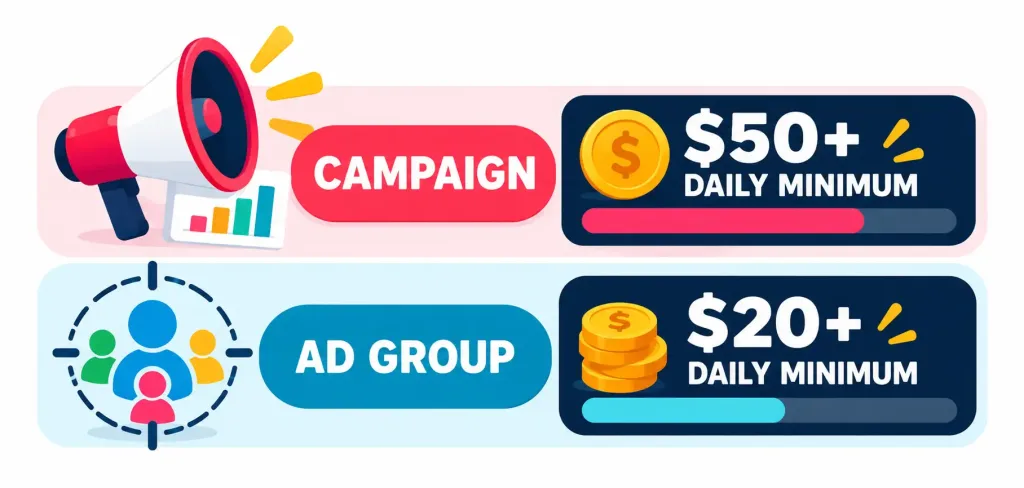
On budget specifically, it’s worth knowing TikTok’s actual platform minimums rather than a rule of thumb from an outdated guide: as of TikTok’s own current documentation, a campaign-level daily budget must exceed $50, and an individual ad group’s daily budget must exceed $20. These are the platform’s enforced floors, not just a suggestion — budget below them and your campaign simply won’t launch. Always check TikTok Ads Manager’s current help documentation directly before setting a budget, since platform minimums and policies do get updated.
Preparing Ad Creative
Creative is where TikTok ads live or die, more than on most platforms. A handful of creative formats consistently perform well:
- Stitch-style or duet-style content that feels like a response to a trend
- Genuine customer reviews or testimonials shot informally
- Green-screen style explainer content
- Voiceover-driven product demos
- Short storytelling formats (before/after, unboxing, problem-solution)
Having several creative variations ready before launch matters because TikTok ad performance tends to decay faster than on platforms with longer-form ad formats — audiences scroll past repeated creative quickly, so a rotation of fresh variations keeps performance from flatlining.
Structuring Your Campaign
A typical eCommerce setup uses a Website Conversion campaign objective, targeting the markets where your store actually ships and where you have fulfillment capacity — commonly the US, Canada, UK, and Australia for English-language stores, though this should match your actual business, not a default list. Within that campaign, multiple ad groups each testing a couple of creative variations let you identify which content resonates before scaling spend behind the winners.
Reading Your Results Honestly
Rather than relying on a fixed “check after $5 spent” rule — which isn’t a documented TikTok benchmark, just a popular rule of thumb circulating in marketing content — the more reliable approach is to let an ad group reach statistical significance for your specific audience and price point before judging it, and to compare your own account’s historical performance over time rather than anchoring to any single external benchmark number. Cost-per-click, click-through rate, and cost-per-thousand-impressions all vary meaningfully by industry, season, and targeting, so a specific CPC or CTR figure quoted in an older article should be treated as a loose reference point at best, not a pass/fail threshold.
Benefits and Real Tradeoffs
What TikTok ads genuinely offer:
- Strong engagement potential for visually demonstrable products
- A younger, highly active audience that many other platforms struggle to reach as effectively
- Creative flexibility — native-feeling content tends to outperform polished traditional ads
What to go in expecting honestly:
- Creative fatigue sets in faster, meaning an ongoing content pipeline isn’t optional
- The audience skews toward impulse-friendly, lower-consideration purchases, which doesn’t suit every product category
- Platform policies, minimums, and best practices change often enough that any specific number should be double-checked against TikTok’s current documentation before you build a campaign around it
The Bottom Line
TikTok Ads for eCommerce is a legitimate, worthwhile channel for the right kind of product — one that demonstrates well on video and fits an accessible price point — run with honest expectations about creative turnover and platform-specific audience behavior. Treat any specific dollar figure or performance benchmark you read (including the ones in this guide, over time) as a starting point to verify against TikTok’s own current Ads Manager documentation, not a fixed rule, since the platform’s minimums and typical costs do shift.
Frequently Asked Questions
What’s the minimum budget to run TikTok ads?
Per TikTok’s own current documentation, a campaign’s daily budget must exceed $50, and an individual ad group’s daily budget must exceed $20. These are platform-enforced minimums, so check TikTok Ads Manager directly before budgeting, since they can change.
What kind of products perform best on TikTok ads?
Products that demonstrate well in short video — visually interesting, easy to show in use — at an accessible price point tend to perform best, since TikTok’s audience skews toward quick, lower-consideration purchases rather than long deliberation.
How many ad creatives should I have ready before launching?
More than one, and ideally several variations across different formats (reviews, demos, storytelling). TikTok ad creative tends to fatigue faster than on other platforms, so a rotation keeps performance from declining as quickly.
Is there a reliable rule for when to judge an ad group’s performance?
Not a fixed dollar-spend rule — that’s a popular shorthand, not a documented TikTok benchmark. A more reliable approach is letting an ad group gather enough data for your specific audience and price point, and comparing results against your own account’s history rather than a generic external number.