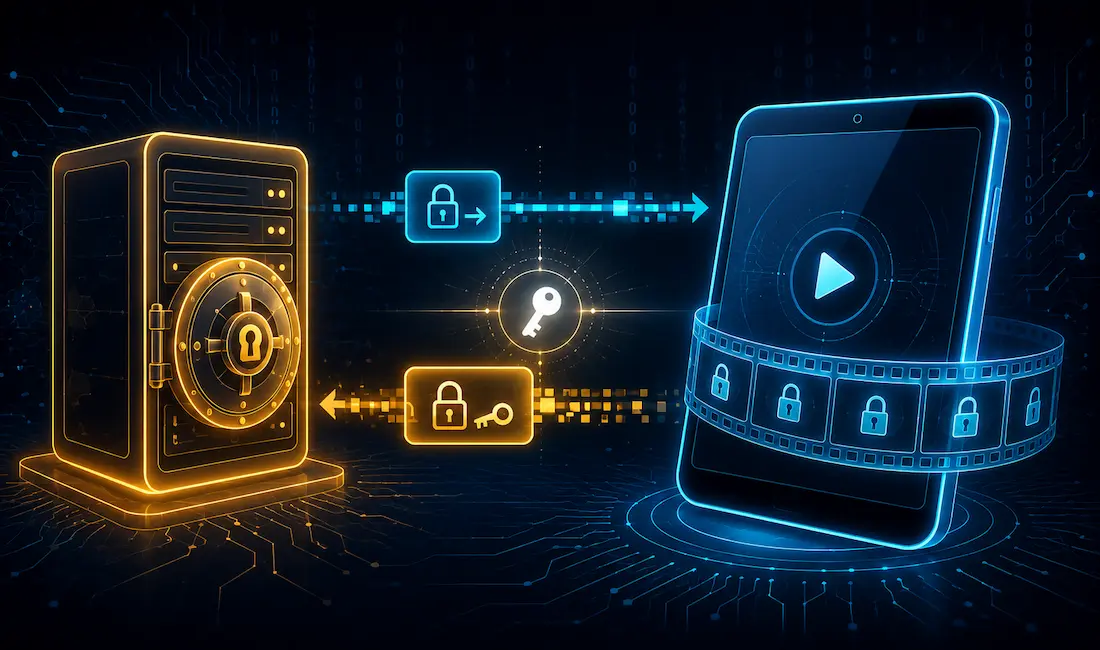
Streaming platforms and digital media consumption keep growing, and with them, the need to keep copyrighted video content from being freely copied and redistributed. Apple’s answer to this is FairPlay DRM (more precisely, FairPlay Streaming, or FPS) — a digital rights management system built into Apple’s own devices and platforms. Here’s what it actually is, why it matters, and — unlike a lot of surface-level coverage of DRM — how the underlying mechanism genuinely works.
What Is Apple FairPlay DRM?
DRM stands for Digital Rights Management, and it’s designed to protect the copyrights of digital media by controlling who can decrypt and play it. (Note: this link points to an unrelated article profiling a graphic design business founder — an inherited link mismatch from the original article, flagged here per audit policy.)
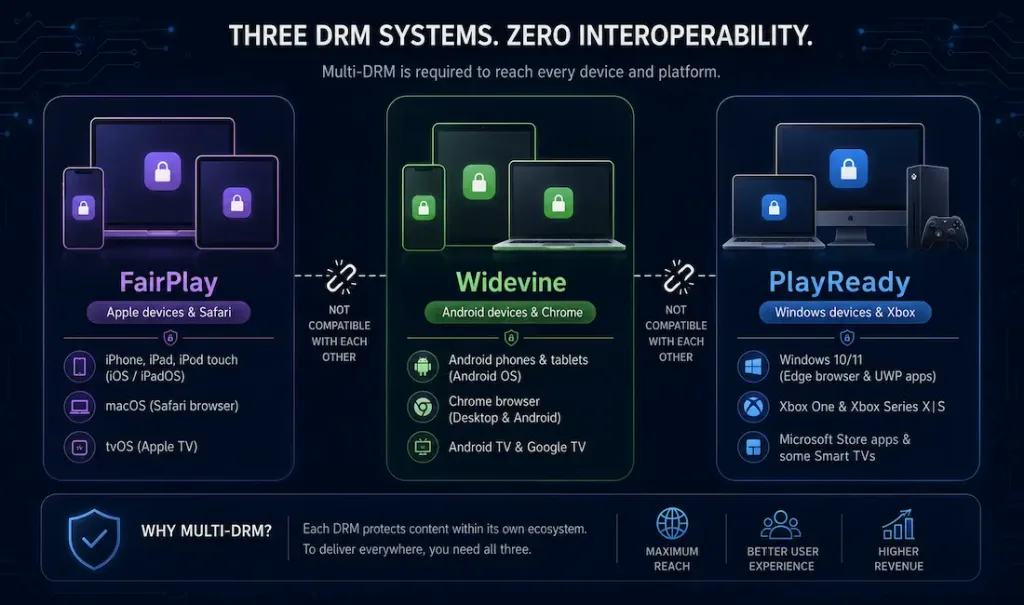
Apple’s FairPlay Streaming is a proprietary DRM system used to protect video and audio content delivered via HTTP Live Streaming (HLS) on iOS, iPadOS, tvOS, and Safari on macOS. While it’s historically associated with Apple’s own iTunes and Apple TV content, FairPlay is also widely licensed and used by third-party streaming services — Netflix, Disney+, and many other major platforms all use FairPlay specifically to protect video delivered to Apple devices and Safari, alongside other DRM systems (Widevine for Android/Chrome, PlayReady for Windows/Xbox) for their non-Apple audiences. Most large streaming platforms actually run a “multi-DRM” setup behind the scenes for exactly this reason — no single DRM system covers every device and browser a service needs to support.
Why FairPlay DRM Matters
Protects content creators. By preventing unauthorized copying and redistribution, FairPlay helps ensure artists, filmmakers, and studios are actually compensated for the content they license out, rather than having it copied and shared for free the moment it’s released.
Maintains content value. Premium video — new releases, exclusive series, early-window content studios haven’t yet made available elsewhere — loses commercial value fast if it can be freely copied. DRM is part of what makes studios willing to license premium content to streaming platforms in the first place, since it provides real technical assurance around distribution control.
Supports consumer trust in legitimate platforms. Users generally want a good, reliable playback experience without wading through low-quality pirated copies, and DRM-backed platforms are part of what keeps official channels the more attractive option over less legitimate off-platform copies.
The Actual Mechanism: How FairPlay Streaming Works
This is where most surface-level coverage of FairPlay stops short. Here’s the real process, based on Apple’s own developer documentation and current implementation guides:
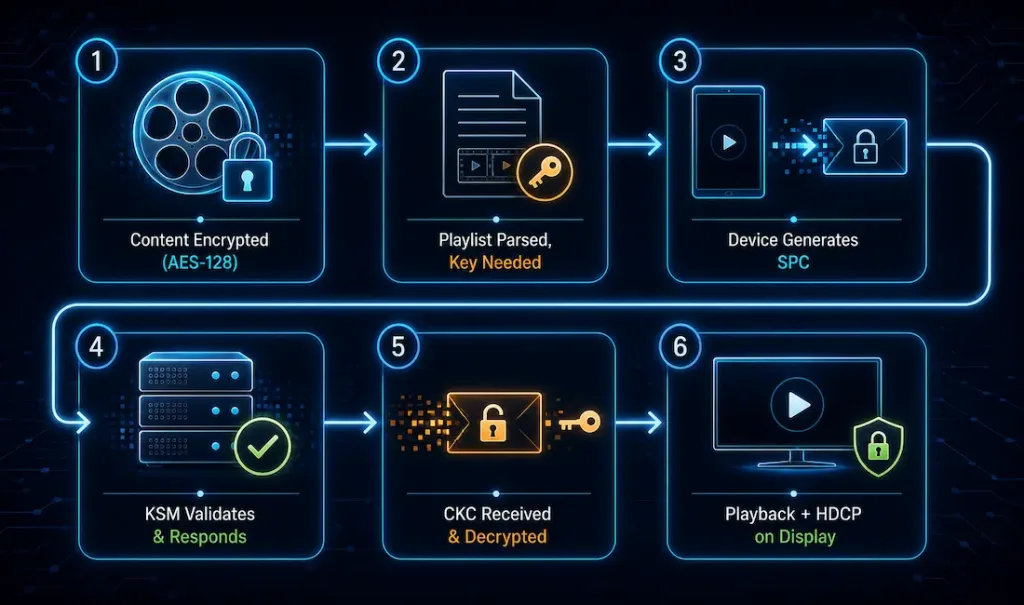
1. Content encryption at the source. Before a video is ever streamed, the content provider encrypts the HLS media segments using AES-128 encryption — commonly SAMPLE-AES with CBCS (cipher block chaining with ciphertext stealing) mode — on essentially a per-frame basis during the video’s ingest and packaging process. The encrypted segments are referenced in the stream’s .m3u8 HLS playlist, which includes an #EXT-X-KEY tag signaling that the content is encrypted and pointing to where a decryption key can be requested.
2. Playback request and key discovery. When a user hits play, Apple’s AVFoundation framework (or, in Safari, the Encrypted Media Extensions/EME and Content Decryption Module APIs) downloads and parses the .m3u8 playlist. Spotting the #EXT-X-KEY tag, it recognizes the content is encrypted and needs a decryption key before playback can begin.
3. Generating the Server Playback Context (SPC). The device generates an encrypted SPC message — a one-time, device-specific request containing a randomly generated AES-128 session key (unique to this playback attempt, even for the same content requested again), an encrypted content identifier, and anti-replay protection to prevent the same request from being captured and reused later.
4. The Key Security Module (KSM) responds. The SPC is sent to the content provider’s key server, generally called the Key Security Module. The KSM decrypts the SPC, validates the user’s rights to view the content (has it been purchased, rented, or is the subscription active?), looks up the correct content key and initialization vector for that specific asset, and wraps them into a Content Key Context (CKC) message — encrypted using the session key that was embedded in the original SPC.
5. Decryption and playback. The device receives the CKC, uses its session key to unwrap it, and extracts the actual content decryption key. AVFoundation (or the browser’s CDM) uses this key to decrypt the HLS media segments frame by frame as playback continues, handing decrypted frames directly to the video decoder rather than exposing the raw key or decrypted content to the application layer itself.
6. Display protection. For content played out to an external display, FairPlay enforces HDCP (High-bandwidth Digital Content Protection), which prevents an unprotected external output from being used to capture a clean copy of the video signal.
What Content Providers Need to Implement FairPlay
For a streaming service or app developer actually setting up FairPlay protection (rather than just consuming it as a viewer), the process requires a few concrete pieces from Apple and from the provider’s own infrastructure:
- Enrollment with Apple. A content provider registers as a licensed FairPlay Streaming partner and receives Apple-issued credentials unique to that company, including an Application Secret Key (ASK) and certificate materials used to authenticate the provider’s key server to Apple devices.
- A packaging tool. Raw video and audio files need to be encrypted and repackaged into HLS-compatible segments (TS or fragmented MP4/CMAF) with an accompanying
.m3u8playlist. Common tools for this include Apple’s own Media Stream Segmenter, Shaka Packager, or cloud-based options like AWS Elemental MediaPackage. - A key server (the KSM). This is the backend component that actually receives SPC requests, validates them, looks up the correct content key and initialization vector for the requested asset, and returns the CKC response — the core piece of custom infrastructure a provider needs to run or outsource to a specialized DRM vendor.
- Careful credential handling. The ASK and any private key material must stay strictly server-side and never get embedded in a client-side app, since exposing them would undermine the entire security model FairPlay is built on.
Given this complexity, many streaming platforms — particularly smaller ones — outsource the KSM and multi-DRM packaging entirely to specialized third-party DRM service providers rather than building and maintaining this infrastructure themselves, since getting the credential handling and key-server security wrong defeats the point of using DRM in the first place.
Content Key Expiration: Rental vs. Secure Lease
FairPlay supports two related mechanisms for time-limited access, both driven by an expiration time included in the CKC response:
- Video rental mode — the content key simply won’t decrypt anything once its expiration time (based on the playback device’s own time reference, not the server’s) has passed, reflecting a rental window like “48 hours after first play.”
- Secure lease mode — similar time-limited logic, but FairPlay continues the user’s playback experience gracefully if the key happens to expire mid-playback, rather than abruptly cutting off a video the user is actively watching.
These two modes can be used separately or combined, giving content providers meaningful flexibility for typical streaming business models — rentals, subscription-gated content, and preview windows can all be built on the same underlying key-expiration mechanism.
FairPlay vs. Other DRM Systems
FairPlay isn’t the only major DRM system in use — it’s part of a landscape that includes Google’s Widevine (used across Android and Chrome) and Microsoft’s PlayReady (used on Windows and Xbox). The three systems serve broadly the same purpose — protecting streamed content with a key-exchange mechanism tied to a specific device or session — but they’re not interoperable with each other, which is exactly why most major streaming platforms implement all three behind the scenes rather than picking just one. A viewer on an iPhone gets FairPlay-protected streams, the same viewer on an Android tablet gets Widevine-protected streams, and neither device is aware the other DRM system even exists.
Conclusion
Apple’s FairPlay Streaming is a genuinely well-engineered piece of content-protection infrastructure, built around a device-specific SPC/CKC key-exchange process, per-frame AES encryption of the underlying HLS video, and flexible expiration logic that supports common streaming business models like rentals and subscriptions. It’s not just a marketing checkbox — the underlying mechanism is a real, still widely-used cryptographic protocol that anyone building or evaluating a streaming platform for Apple devices needs to understand at more than a surface level.
FAQs
What is the difference between FairPlay and FairPlay Streaming?
“FairPlay” originally referred to Apple’s older DRM system used to protect purchased content like iTunes music and movies, tied to a limited number of authorized devices per Apple ID. “FairPlay Streaming” (FPS) is the newer, distinct system built specifically for protecting HLS-based video streaming on iOS, tvOS, and Safari, using the SPC/CKC key-exchange mechanism described above rather than a fixed device-authorization count. Modern discussions of “FairPlay DRM” in a streaming context are almost always referring to FairPlay Streaming specifically, even when the shorter name “FairPlay” is used.
Does FairPlay DRM work on non-Apple devices?
No — FairPlay Streaming is built specifically for Apple’s own platforms (iOS, iPadOS, tvOS, and Safari on macOS), and doesn’t work natively on Android, Windows, or other browsers. This is exactly why most major streaming services run a multi-DRM setup, pairing FairPlay for their Apple-device and Safari audience with Widevine for Android and Chrome, and PlayReady for Windows and Xbox, so the same piece of content can be protected appropriately regardless of which device or browser a given viewer is using.
How does FairPlay prevent someone from just recording their screen?
Strictly speaking, FairPlay’s cryptographic protection doesn’t stop screen recording directly — its SPC/CKC mechanism and per-frame encryption are designed to prevent unauthorized access to the raw decrypted stream and content key, not to detect a camera pointed at a screen or basic screen-capture software. In practice, most real-world piracy of DRM-protected content does come from exactly this kind of workaround (screen recording, or older/compromised devices) rather than anyone actually breaking FairPlay’s underlying encryption, which is why platforms combine DRM with things like forensic watermarking and HDCP enforcement on external outputs as additional layers, rather than relying on encryption alone to solve the whole piracy problem.
Why do streaming services need FairPlay, Widevine, and PlayReady all at once?
Each DRM system only works on a specific set of platforms — FairPlay for Apple devices and Safari, Widevine for Android and Chrome-based browsers, and PlayReady for Windows and Xbox — and none of them are cross-compatible with devices outside their own ecosystem. A streaming service that wants to reach the full range of devices its subscribers actually use has to implement all three (a “multi-DRM” setup) rather than picking one, encrypting and packaging the same source content separately (or with parallel key systems) for each DRM target so every viewer gets an appropriately protected stream for their specific device.
Is FairPlay-protected content completely unbreakable?
No DRM system is truly unbreakable in an absolute sense, and FairPlay is no exception — but its combination of device-specific session keys, per-frame content encryption, and hardware-level enforcement (including HDCP for external displays) makes large-scale, high-quality piracy of FairPlay-protected streams genuinely difficult compared to unprotected content. Most successful attacks against DRM-protected streaming content in practice exploit weaker links in the chain — compromised or outdated devices, screen recording, or implementation mistakes on the content provider’s side — rather than a direct cryptographic break of FairPlay’s SPC/CKC exchange itself.