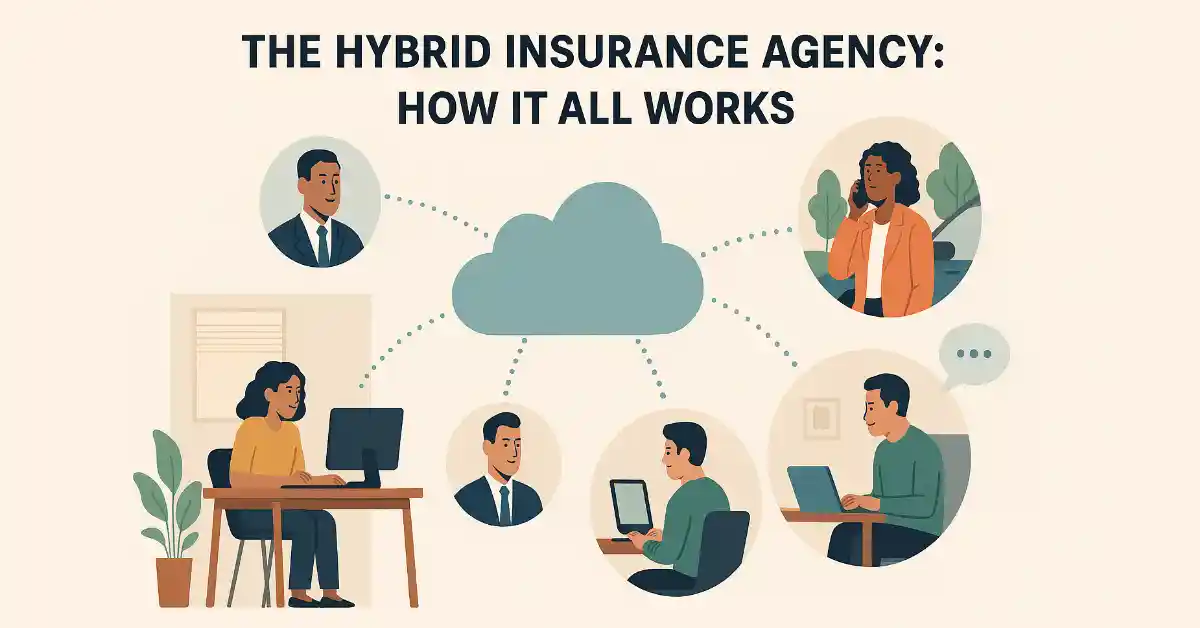
The traditional image of an insurance agency—rows of desks, phones ringing, stacks of paper everywhere—is quickly becoming outdated. These days, more agencies are operating in hybrid or fully remote models, with producers in the field, CSRs at home, and only a handful of staff in the office.
This setup brings a lot of flexibility. It also brings some serious challenges. How do you keep everyone connected? How do you maintain compliance standards when your team is scattered across zip codes? And how do you ensure clients still feel supported, no matter where your team is working from?
It’s absolutely doable—but it takes the right mix of systems, culture, and accountability.
Connection Isn’t Just About Zoom Calls
Sure, your team can hop on a video meeting—but that’s not the same as being connected in a way that supports daily work.
Connection in a hybrid agencies means shared visibility into client communications, access to the same tools, and confidence that everyone’s working from the same playbook.
It also means replacing hallway conversations with documented workflows. If someone’s out of the loop because they missed a Slack message or weren’t copied on an email, that’s a breakdown waiting to happen.
The right tech stack should create one shared workspace, whether your team is in the office, at home, or sitting in a client’s driveway.
Cloud-Based Tools Are the Baseline, Not the Goal
At this point, being cloud-based isn’t a nice-to-have—it’s the bare minimum.
Your agency’s core systems need to be accessible from anywhere: CRM, email, quoting, service desk, file storage. If a producer needs to pull up a client file while sitting in a car, or a CSR needs to respond to a claim from their home office, it should be seamless.
But just being “in the cloud” isn’t enough. Those tools also need to work well together, stay secure, and support workflows that actually make sense for how your agency runs.
Security and Compliance Don’t Have to Be a Headache
One of the biggest worries for hybrid agencies is compliance—and rightly so. With client data being accessed from laptops and phones in multiple locations, the risk of a breach increases if you don’t have the right safeguards in place.
Fortunately, this isn’t uncharted territory. Look for platforms that offer:
- Role-based access (so only the right people see sensitive info)
- Encrypted communication
- Audit trails for client interactions
- Secure document storage
- ISO27001-level compliance, or similar certifications
It also helps if your insurance broker CRM comes with built-in permission settings and activity logs. That way, you can ensure accountability without micromanaging.
Remote work doesn’t have to mean looser standards. With the right setup, you can be just as compliant—if not more so—than a traditional office.
Create Clear, Repeatable Processes
When teams aren’t sitting next to each other, clarity becomes even more important. Everyone should know how a new lead is handled, when a renewal is triggered, and who follows up with a missed payment.
This is where workflow automation and documented SOPs become crucial. Not to replace human judgment—but to support it.
A smart workflow system ensures tasks are assigned, deadlines are met, and handoffs are clean. No guessing, no bottlenecks, and no “I thought someone else was handling that.”
It also reduces the need for constant check-ins. Your team can move independently, knowing they’re following a process that’s already been proven to work.
Don’t Forget Culture and Communication
Technology solves a lot of logistical problems—but culture is what keeps a hybrid team thriving.
Make space for informal check-ins. Celebrate wins publicly. Be clear about expectations and outcomes, not just hours worked.
Encourage over-communication—especially when it comes to client updates or changes in policy status. A simple note in the CRM or a shared dashboard update can prevent a lot of confusion.
And give your team the tools to stay connected in real-time. Whether it’s Slack, Microsoft Teams, or another platform, choose something that encourages quick, casual collaboration throughout the day.
Train for Autonomy, Not Just Compliance
In a hybrid setup, micromanaging isn’t realistic (and frankly, it doesn’t work well in person either). Instead, train your team to be proactive, accountable, and confident in their decision-making.
This means giving them access to the information they need, trusting them to use their judgment, and creating systems that support visibility without requiring constant oversight.
It also means having an onboarding process that actually prepares new hires for remote or hybrid work. A few logins and a Zoom call won’t cut it. They need guided workflows, real examples, and clear expectations from day one.
The Hybrid Model Is Here to Stay—Make It Work for You
Agencies that embrace hybrid work have the opportunity to hire from a wider talent pool, reduce overhead, and offer more flexibility to their team. But to make that model work long-term, the foundation has to be solid.
That foundation isn’t just technology—it’s how your team uses it, how your workflows are built, and how your culture supports accountability and trust.
With smart systems, clear processes, and the right mindset, your agency can stay connected, stay compliant, and stay competitive—from anywhere.