In outdoor operations, tactical assignments, and industrial fieldwork, having a plan for serious injury isn’t optional. For businesses operating in remote or high-risk environments, a comprehensive approach to workplace trauma response is a core part of managing operational risk — not just a compliance checkbox. This guide covers what belongs in a professional outdoor first aid kit, how an IFAK fits into a broader safety strategy, and — critically — what training has to accompany the equipment before any of it is genuinely useful.
The Importance of an IFAK for Outdoor Safety
An IFAK (Individual First Aid Kit) is built for a narrower, more serious purpose than a standard first-aid box. While typical first-aid kits handle minor injuries — cuts, scrapes, small burns — an IFAK is designed for rapid trauma response: severe bleeding, airway obstruction, and other life-threatening situations where the time before professional medical help arrives is the critical variable.
Though IFAKs have military origins, their use has expanded well beyond that context into industrial and outdoor professional settings. For companies deploying teams into remote or high-risk locations, an IFAK serves as a bridge — stabilizing a serious injury until evacuation or professional medical care becomes available.
B2B companies in outdoor safety equipment, defense logistics, and expedition supply all have a genuine strategic interest in IFAK implementation — both for regulatory compliance and, more fundamentally, as a direct responsibility to the people they send into the field.
Why Every Business Should Include Outdoor Medical Solutions
Accidents in remote or industrial outdoor settings happen without warning. A well-structured outdoor first aid kit, paired with an IFAK for trauma-specific response, gives a team real capability to stabilize a situation before higher-level care is reached. Organizations operating in energy, construction, logistics, and outdoor education increasingly build this dual-kit approach — a general kit for common injuries, an IFAK for the serious ones — directly into their safety frameworks, and teams with this structure in place consistently report more confidence handling emergencies when they occur.
These medical kits are essential for operational continuity, not just individual safety — fewer disruptions, better morale, and a stronger safety record all follow from genuine preparedness rather than a checklist exercise.
Essential Categories for an Outdoor Professional First Aid Kit
Building a kit for outdoor and professional use comes down to two priorities: comprehensiveness and portability, without sacrificing either for the other.
1. Bleeding Control
Severe bleeding is among the most frequent and dangerous injuries in outdoor and industrial settings:
- Tourniquets (combat-proven models for reliable application under stress)
- Pressure dressings
- Hemostatic gauze for rapid clotting
- Medical gloves for contamination prevention
2. Airway and Breathing Support
Airway obstruction is a common and time-critical complication in trauma:
- Nasopharyngeal airway (NPA) tubes
- Chest seals for penetrating chest injuries
- Compact resuscitation masks
A Critical Note Before Going Further
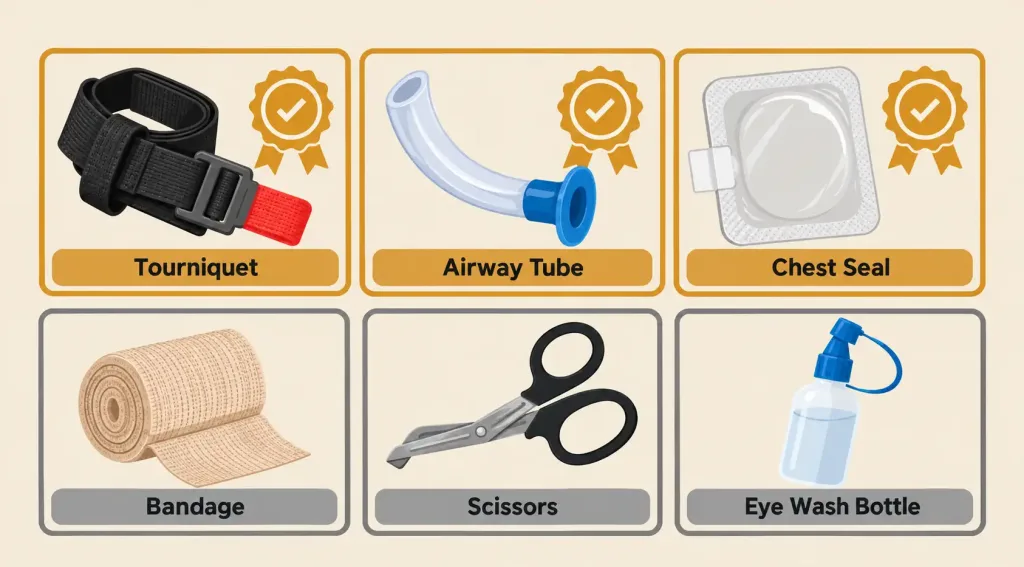
The items in these first two categories — tourniquets, NPAs, chest seals, hemostatic gauze — are genuinely life-saving when used correctly, and genuinely capable of causing harm when used incorrectly. A tourniquet applied with the wrong technique, a chest seal placed on the wrong type of wound, or an NPA inserted without proper training are not theoretical risks. None of this equipment should be treated as self-explanatory.
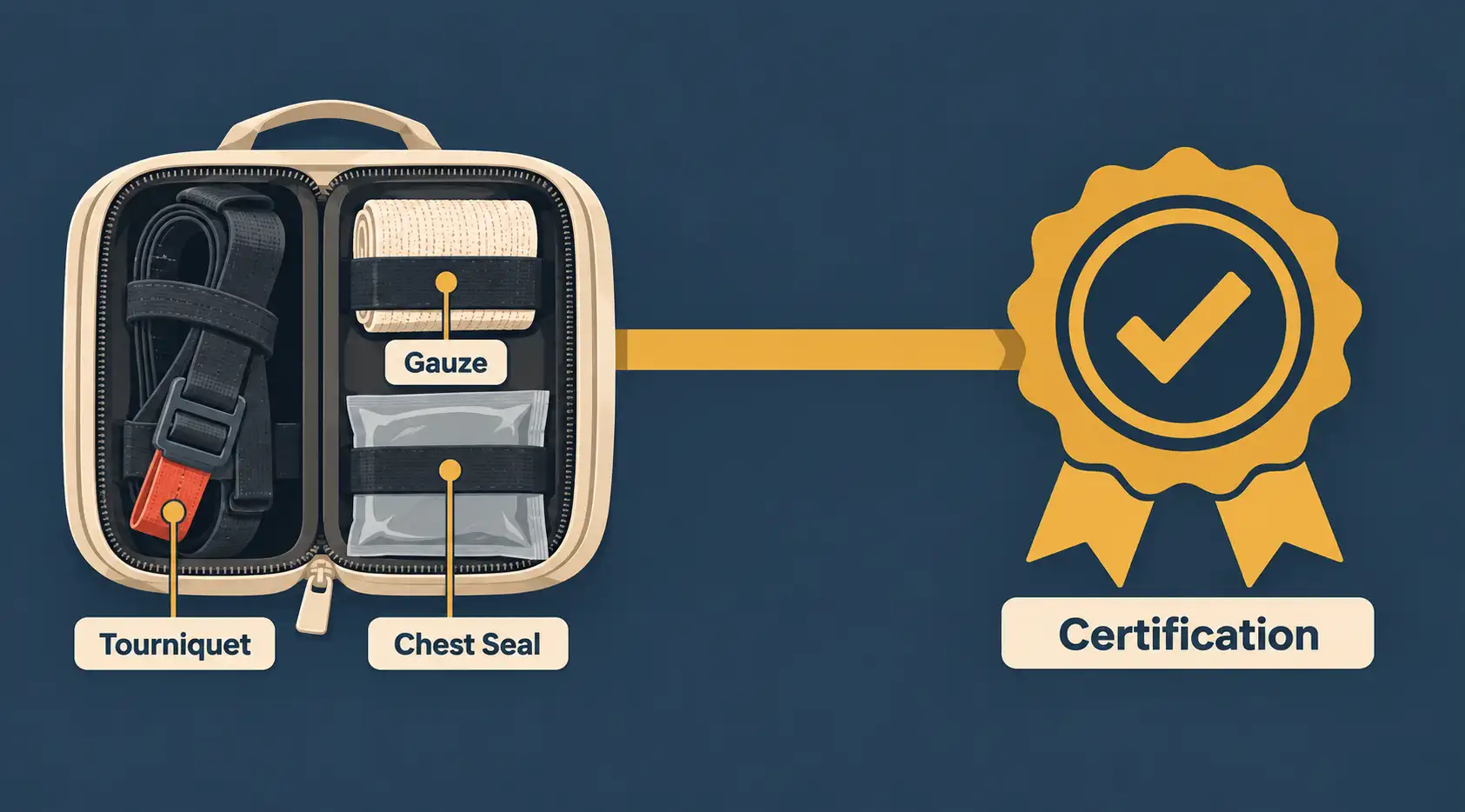
Every team member expected to use it needs specific, hands-on certification — Stop the Bleed, Tactical Combat Casualty Care (TCCC), or an equivalent recognized course — not just general workplace first-aid training. This isn’t a detail to cover later in an onboarding packet; it’s a prerequisite that should be in place before the equipment is ever deployed in the field.
3. Wound Care and Infection Control
For less severe but still genuinely important injuries:
- Antiseptic wipes and iodine pads
- Adhesive bandages and wound closure strips
- Sterile dressings and tape
- Tweezers and small scissors
4. Burn and Fracture Management
Thermal injuries and fractures are common enough in outdoor and industrial work to warrant dedicated supplies:
- Burn dressings and cooling gels
- SAM splints or foldable splints
- Elastic bandages for stabilization
5. Environmental and Survival Support
Depending on terrain and climate, a team may also need:
- Emergency blanket for hypothermia prevention
- Eye wash solution
- Sunscreen and insect repellent for extended exposure
- CPR shield and a first aid reference guide
Everything in the kit should be durable, waterproof, and organized for fast access under stress — and customizing contents to the specific terrain and risk profile of a deployment adds real value over a generic, one-size-fits-all kit.
The Business Case for IFAKs in a Safety Strategy
For organizations building out a medical readiness program, IFAKs offer genuine, practical advantages:
- Scalability. IFAKs travel with individual field personnel, while larger trauma kits stay at base or in vehicles — coverage at every level, not just a single central kit.
- Mobility. Lightweight, compact, and built for carrying through actual fieldwork rather than sitting in a cabinet.
- Compliance. Properly implemented IFAK programs help meet relevant safety and regulatory standards, though specific requirements vary by jurisdiction and industry — worth confirming against your actual regulatory obligations rather than assuming generic compliance.
- Training integration. A shared equipment standard across the organization gives trauma-response training a consistent foundation to build on.
- Credibility. Demonstrated safety investment builds real trust with employees, clients, and partners in safety-conscious industries.
Maintaining Medical Readiness: Beyond the Initial Purchase
A genuine IFAK program requires ongoing attention, not a one-time purchase:
1. Conduct real risk assessments. Understand the specific injury patterns and medical needs likely in your actual operational environments, rather than assuming a generic kit covers everything.
2. Provide — and verify — proper training. As covered above, this means specific trauma-response certification for anyone expected to use advanced items, not just general first-aid awareness.
3. Audit and maintain kits regularly. Check for expired items and missing supplies on a real schedule, ideally supported by a digital inventory system rather than relying on memory.
4. Allow for terrain-specific customization. A kit built for desert operations should look different from one built for mountaineering — hypothermia management and heat-injury management are genuinely different problems.
5. Build relationships with trusted suppliers. Consistent sourcing from established, reputable suppliers like IFAK providers helps ensure materials meet real safety standards rather than varying unpredictably between orders.
A Note on Liability and Legal Considerations
Before deploying advanced trauma equipment across a workforce, it’s worth confirming your organization’s specific legal position — Good Samaritan protections and workplace liability rules vary significantly by jurisdiction, and some advanced intervention equipment may carry oversight or medical-director requirements depending on where and how your teams operate. This is a conversation worth having with legal counsel and, where relevant, a medical director, rather than assuming equipment alone satisfies your organization’s safety and liability obligations.
Frequently Asked Questions
What’s the difference between a standard first aid kit and an IFAK?
A standard first aid kit handles minor injuries like cuts and scrapes. An IFAK is specifically built for trauma response — severe bleeding, airway obstruction, and other life-threatening situations — and requires specific training to use safely.
Do employees need special training to use IFAK equipment?
Yes, and this matters more than almost anything else in this guide. Items like tourniquets, NPAs, and chest seals require certified trauma-response training (Stop the Bleed, TCCC, or equivalent), not general workplace first-aid awareness.
How often should first aid kits and IFAKs be audited?
Regularly, on a defined schedule, checking for expired items and missing supplies — a digital inventory system can help make this consistent rather than relying on memory.
Does having an IFAK program satisfy legal liability requirements?
Not automatically. Liability protections and equipment oversight requirements vary by jurisdiction, and this is worth confirming with legal counsel rather than assumed.
Should IFAK contents be customized by terrain or industry?
Yes. A kit built for mountaineering (hypothermia-focused) should differ meaningfully from one built for desert operations (heat-injury focused) — generic kits leave real gaps.
The Bottom Line
A well-built outdoor first aid kit and IFAK program is a genuine operational asset for businesses working in remote or high-risk environments — but the equipment is only half the equation. Tourniquets, chest seals, and NPAs save lives in trained hands and can cause real harm in untrained ones, which makes certified trauma training a prerequisite, not an optional add-on. Build the kit, confirm your legal position, and make sure every person expected to use advanced equipment has actually completed the training to do so safely.